
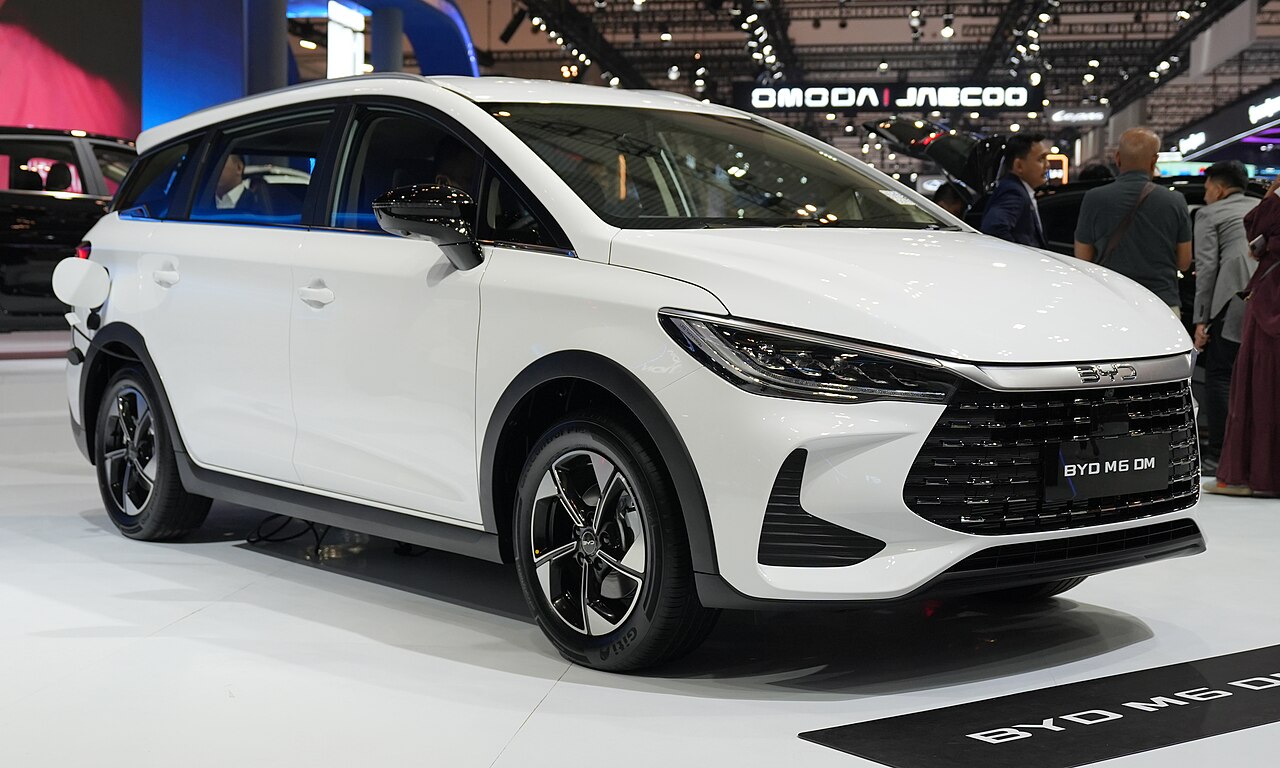
Top image: Photo: Andra Febrian, CC BY-SA 4.0, via Wikimedia Commons

Industry minister Muhammad Sarmuji used a visit to BYD’s factory in Subang, West Java, on Friday 13 November to press the Chinese carmaker to lift the local content of its Indonesian-built electric vehicles from about 45% today to 60% in 2027. BYD’s answer, according to CNBC Indonesia, was short: “It can, and it must” (translated from Indonesian), said Luther Panjaitan, head of public and government relations at PT BYD Motor Indonesia.
The exchange is a follow-up to BYD’s comments last month, when the company said its Subang-built cars already exceeded 40% local content and that it was confident of meeting the higher bar. The new figure of roughly 45% was cited by the minister himself.
Three asks from the ministry
According to Antara and Tribunnews, Sarmuji framed his visit around three commitments he wants from BYD:
- More investment, including a battery production facility in Indonesia.
- More domestic components, with mid-sized Indonesian firms brought into BYD’s supply chain to reach the 60% local-content (TKDN) level.
- More local jobs, partly through transferring skills from foreign staff to Indonesian workers.
The minister also said he plans to visit BYD’s headquarters in China to reaffirm the same points.
The battery question
The battery is the crux. Panjaitan told reporters that owning battery manufacturing is the most effective route to 60% TKDN, but that BYD is still calculating its plans and could not yet give an investment figure or a construction timeline, CNBC Indonesia reported. That matters because, as government officials have signalled, the 2027 rules are expected to require battery packs to be assembled locally, with locally made cells to follow later. Our TKDN explainer sets out how the thresholds work.
Panjaitan said BYD already works with more than 200 Indonesian suppliers, for items such as tyres, glass and braking components. He also repeated the headline numbers for the plant: Rp11 trillion invested on a 126-hectare site, capacity for up to 150,000 vehicles a year, and integrated stamping, welding, painting and assembly lines, according to Antara.
Local hiring and the protests
The visit followed weeks of tension at the site. Kompas.com reports that mass organisations (ormas) and local residents protested at the factory several times from late October to mid-November over local hiring and industrial waste management. Residents point to BYD’s promise of 20,000 jobs; the plant currently employs about 6,000 people, a figure Panjaitan also gave to Antara. By our calculation, that is under a third of the target.
Sarmuji said around 80% of the workforce comes from West Java and 30% from Subang itself, which he described as fair, though he asked BYD to hire more locally and said residents’ skills training must match the company’s needs. On the dispute, he said: “Right now it feels like it is resolved, and resolved permanently” (translated from Indonesian), Kompas.com reported.
What it means for buyers
Local content is what keeps an EV eligible for Indonesia’s tax incentives, so BYD’s ability to move from about 45% to 60% (a 15 percentage-point gap, by our calculation) will shape what its Indonesian-built models cost from 2027. A public commitment is not the same as a certified TKDN score, and without a confirmed battery plant the path is not yet clear. Buyers weighing a BYD purchase should watch for a battery investment announcement in the coming months; for now, current prices and incentives are unaffected.
Sources: CNBC Indonesia; Antara; Tribunnews; Kompas.com
Comments
One response to “BYD tells industry minister it can hit 60% local content in Indonesia by 2027”
[…] comments follow BYD telling the industry minister it could reach 60% local content and Wuling saying five of its EVs were already at that […]