
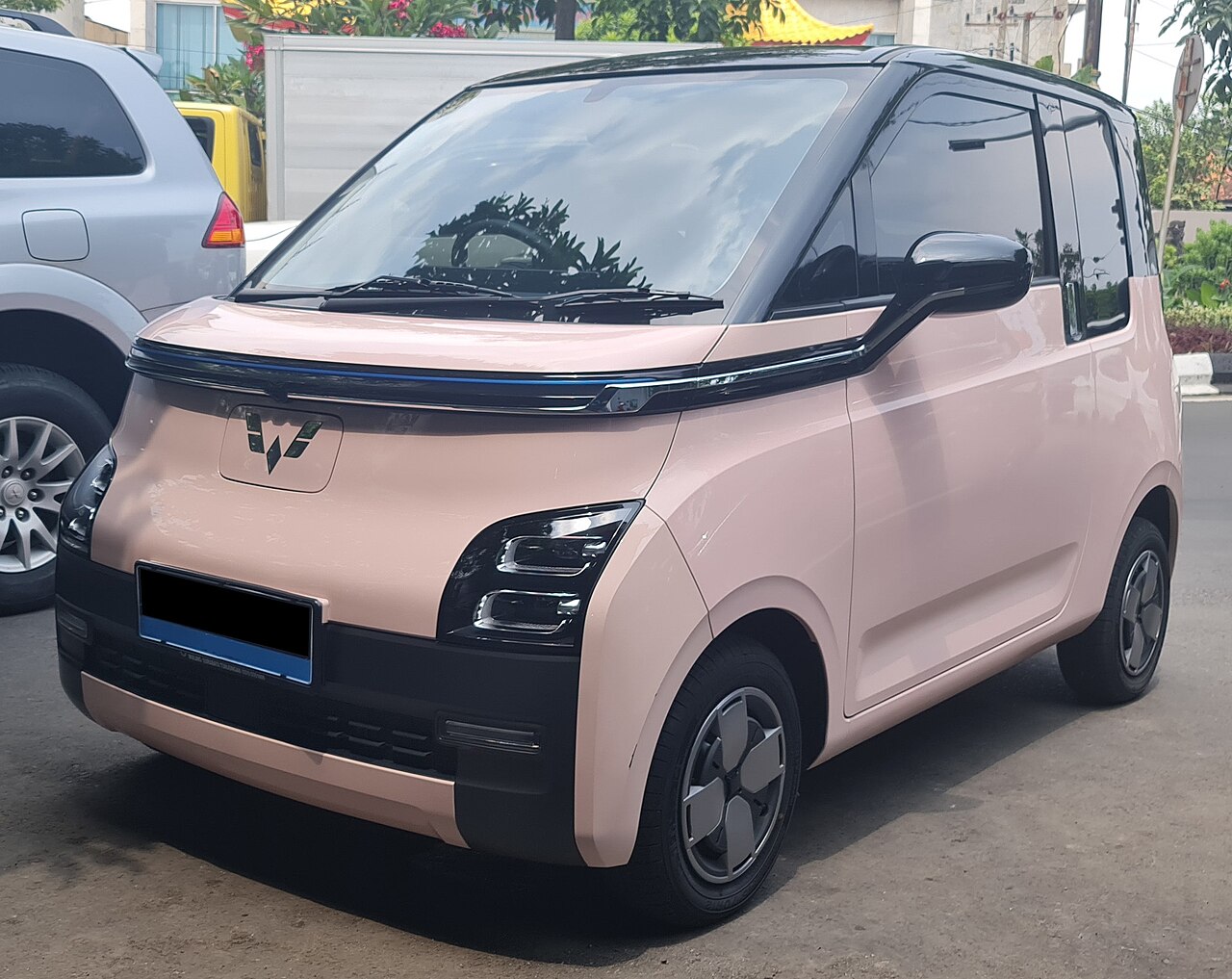
Top image: Photo: Alex Neman, CC BY-SA 4.0, via Wikimedia Commons

Indonesia’s first big wave of electric cars, led by the Wuling Air ev and Hyundai Ioniq 5 that arrived in 2022, is now three to four years old, and more of these cars are turning up on used-car lots and marketplaces. For buyers, that means a battery-electric car can now cost less than a new low-cost petrol hatchback. It also means taking on risks that don’t come with a used petrol car. This guide covers what used EVs cost, why prices have fallen so far, and what to check before you pay.
Why used EV prices have fallen so fast
Depreciation is the defining feature of Indonesia’s used EV market. In March, OLXmobbi director Agung Iskandar told detikOto that EVs can lose 50% or more of their value in three to four years, which is not the case with petrol cars. His example was a 2022 Ioniq 5 that now sells for about Rp 350 million, against a new price of around Rp 800 million.
He gave two main reasons. First, newer EVs keep arriving that are better equipped and often cheaper, so an older model looks dated. Second, buyers worry that the battery wears out each year. He added that some battery warranties lapse once a car changes hands. He also blamed launch promotions, such as special prices for the first 2,000 buyers, which set a lower reference price that used cars then have to undercut.
Ricky Prawiro, secretary general of the Indonesian Used Car Association (AMBI), told GridOto in July that depreciation varies a lot by brand. He said the Ioniq had lost around half its value, partly because Hyundai later adjusted the new-car price. He described BYD’s resale values as still strong and stable. Whenever a maker cuts the price of a new model, he said, used prices for the same model drop with it.
What used EVs cost now
Asking prices change quickly, so treat the figures below as a guide to the market, not a quote.
- Wuling Air ev: Moladin listed a 2023 Long Range automatic at about Rp 93 million in October. In August, detikOto found marketplace listings of Rp 95 million for a 2024 Standard Range with 5,000 km, and from Rp 125 million for a 2025 Long Range with 30,000 km. Most 2025 cars were listed at Rp 120–130 million. A new Air ev now costs Rp 214–307.5 million, depending on version.
- Wuling BinguoEV: about Rp 195 million for a 2024 Premium Range (Moladin, October). New prices run from Rp 289 million to Rp 319 million.
- Wuling Cloud EV: about Rp 249 million for a 2024 Pro (Moladin). New prices run from Rp 299 million to Rp 443 million.
- BYD Atto 1: about Rp 209 million for a 2025 Premium (Moladin), against Rp 245 million new for the same trim.
New prices above are OTR Jakarta figures from a November 2026 price list. On our own rough calculation, the year-old Atto 1 Premium is about 15% cheaper than new. The 2024 Cloud EV Pro is about 44% below the current top-trim price. The two-to-three-year-old Air ev is often more than 50% below. These comparisons are approximate, because model years, trims and new prices have changed since the cars were first sold. Our new EV buying guide has current new prices.
The finance problem: be ready to pay cash
The biggest practical hurdle is money. In early March, Iskandar told detikOto that lenders were steering clear of used EVs. They fear the outstanding loan could end up worth more than the car.
“No finance company is willing to fund [used electric car purchases].” — Agung Iskandar, OLXmobbi, to detikOto (translated from Indonesian)
He said around half of OLXmobbi’s used-car buyers normally buy on credit. Not being able to borrow therefore removes roughly half the potential buyers. In that interview he also said EVs made up only about 1% of used-vehicle deals on the platform, with the Air ev the most common. By July, AMBI’s Prawiro said the association had been talking to leasing companies to keep EV financing available. Even so, budget on paying cash, and ask any lender for a firm answer before you agree a price.
Battery health: the check that matters most
The battery is the most expensive part of an EV, and its condition largely sets the car’s value. AMBI’s Prawiro advised buyers to have the car checked at an official dealer to find out its battery state of health (SoH). This is the battery’s remaining capacity compared with when it was new. Before you commit:
- Ask the seller for a dealer-issued battery health report, or make the sale conditional on one.
- Look at the full service history. In 2025, Iskandar told kumparanOTO that a car should have been serviced regularly at an authorised workshop. Stopping official servicing can put the warranty at risk.
- Compare the range shown on a full charge with the official figure. A big gap is a warning sign worth investigating.
- Test the charging port with both a home charger and a public charger.
Warranty: read the transfer terms
Battery warranties differ by brand, and so do the rules on whether they pass to a second owner. ITB automotive expert Yannes Martinus Pasaribu told detikOto in January that cars bought from authorised dealers usually carry battery warranties of five to ten years.
The same article cited BYD Indonesia’s terms. The battery is covered for 8 years or 160,000 km, with a 70% state-of-health threshold, and the traction motor for 8 years or 150,000 km. The rest of the car is covered for 6 years or 150,000 km. According to the article, the cover passes to the next owner if the car has been serviced at official BYD workshops using genuine parts.
Not every brand works this way. Some long or “lifetime” battery warranties apply only to the original owner. Before you buy, ask the brand’s dealer to confirm in writing what cover is left for the car’s chassis number, and what you must do to keep it. Brand pages in our EV directory, such as Wuling, BYD and Hyundai, link to each maker’s official site.
Other checks before you buy
- Software: EVs depend on software updates. Ask an authorised workshop whether the car is running current software, a point made in a Zigwheels buyer’s guide.
- Tyres, brakes and suspension: EVs are heavy, so these parts can wear faster. Check them on a test drive.
- Paperwork and tax: make sure the registration documents match the car. Ask how the annual vehicle tax and transfer fees will be charged. EV tax relief is a national policy that regions apply themselves, and it is under review. Our EV tax guide explains the current rules.
- Home charging: work out whether your home electricity connection can support a wallbox. See our charging guide.
What it means for buyers
Indonesia’s used EV market is small and illiquid, but it is starting to grow. In March, used-car dealer Kemal Arfan of Auto ZIR told GridOto that every EV on his lot had sold that month, including Air ev, Sealion 7, Atto 3 and Cloud EV units. He said demand had risen since late 2025.
If you can pay cash and get a dealer-verified battery report, a used city EV such as the Air ev can be a very cheap way into electric driving, with low running costs (see our running-costs guide). The same steep depreciation will hit you when you sell, though, so treat any used EV as a car to keep, not one to trade up from quickly.
Sources: detikOto (10 Mar 2026); detikOto (6 Mar 2026); detikOto (14 Jan 2026); detikOto (27 Aug 2026); GridOto (5 Jul 2026); GridOto (9 Mar 2026); Moladin (6 Oct 2026); Beritanasional (13 Nov 2026); kumparanOTO (28 Jan 2025); Zigwheels (8 Jan 2024).