
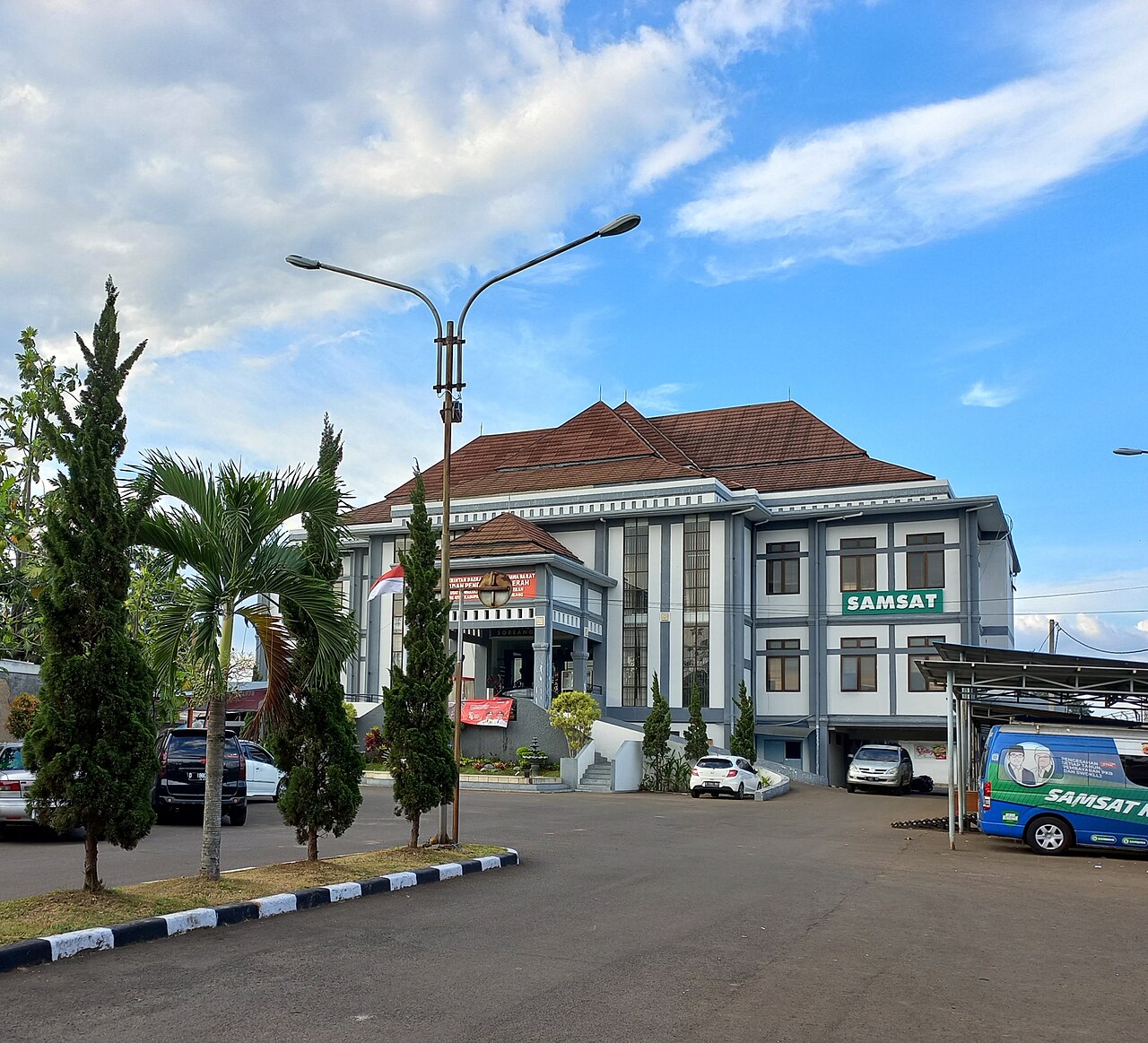
Top image: Photo: Ilham jayakesuma, CC BY-SA 4.0, via Wikimedia Commons

For most of 2024 and 2025, buying an electric car in Indonesia came with a stack of tax breaks: duty-free imports for brands that promised to build locally, a government-paid slice of VAT, and zero regional vehicle tax. In 2026 that stack has been largely dismantled, a replacement has been promised repeatedly but not yet delivered, and the rules now differ depending on where the car is made and where you live. This guide sets out what has changed, what still applies and what is still pending, based on reporting up to the end of September 2026.
What ended on 31 December 2025
The CBU import scheme
Since 2024, brands that committed to building EVs in Indonesia could import fully built (CBU) electric cars without import duty or luxury tax (PPnBM). CNN Indonesia reported that this cut import duty from 50% to 0% and PPnBM from 15% to 0%, and that the scheme, under Industry Ministry Regulation 6/2023, was not extended beyond 2025.
The catch for manufacturers is that the bill is not over. According to Kumparan, companies that used the scheme must build as many cars locally as they imported, by the end of 2027, backed by bank guarantees. Kumparan listed nine brands moving from imports to local production (Geely, BYD, VinFast, GWM, AION, Volkswagen, Xpeng, Citroën and Maxus), alongside six already assembling locally (Hyundai, Wuling, Chery, Polytron, Neta and MG). Brands that stayed out, such as BMW, Mercedes-Benz and Volvo, now face import duty of up to 50%, 12% VAT and 15% luxury tax on imported EVs, the outlet reported.
The 10% VAT discount
The other big break was PPN DTP, a portion of VAT paid by the government. Under Finance Ministry Regulation (PMK) 12/2025, the state covered 10 percentage points of VAT on four-wheeled battery EVs with at least 40% local content, from 4 February to 31 December 2025, Tempo reported. The same rule gave hybrids a 3% luxury-tax discount. CNN Indonesia confirmed in January that no new rule had been issued to carry the VAT break into 2026.
The replacement incentive: promised, redesigned, delayed
A new incentive has been under discussion all year, and its shape has changed several times:
- May: Finance Minister Purbaya Yudhi Sadewa said the government would cover between 40% and 100% of VAT on electric cars depending on battery type, plus a Rp5 million subsidy per electric motorbike, for 100,000 of each, starting in June, Antara reported.
- Late May: Purbaya postponed the scheme by a month because the calculations were not finished, CNBC Indonesia reported.
- June: Coordinating Economic Minister Airlangga Hartarto confirmed a further delay. DDTC News reported the proposal as 100% VAT cover for cars with nickel-based (NMC) batteries and 40% for those using alternatives such as lithium iron phosphate (LFP).
- August: At GIIAS, Purbaya said President Prabowo Subianto would announce the incentives within weeks, with the quota raised to 500,000 cars and 500,000 motorbikes, CNN Indonesia reported.
- September: The motorbike element had been reshaped into Rp3 million per locally made e-motorbike, with a Rp3 trillion budget and a target of up to one million units, detikOto reported. On 24 September, ministers said they were still waiting for the Finance Ministry regulation, according to Telset.
We have not found any report that the car VAT incentive has been put into force. Until a regulation is published, buyers should treat dealer talk of a coming “government discount” as unconfirmed. Our latest report on the e-motorbike subsidy has the most recent position on the two-wheeler scheme.
“Yes, it’s delayed again, while we examine it first.” — Airlangga Hartarto, Coordinating Minister for Economic Affairs, to DDTC News, June 2026 (translated from Indonesian)
Regional vehicle tax: no longer automatically zero
Annual vehicle tax (PKB) and the transfer fee paid on a new registration (BBNKB) are regional taxes. EVs used to be exempt nationwide. Home Affairs Ministry Regulation 11/2026, effective from April, ended the automatic exemption and handed the decision to regional governments, which may grant a full exemption or a reduction, Antara and Liputan6 reported.
“It still really needs incentives. But of course, we have to consider our fiscal situation.” — Deputy Industry Minister Faisol Riza, to Antara
In practice, many EV owners are still paying nothing. Jakarta, the largest EV market, has kept PKB and BBNKB at zero and still exempts battery EVs from the odd-even traffic restriction, FIN reported in May. A Home Affairs circular dated 22 April (No. 900.1.13.1/3764/SJ) is cited as the basis; local reports differ on whether it simply permits governors to keep the exemption or instructs them to. Either way, the position can vary by province, so check with your local Samsat office or the provincial revenue agency (Bapenda) before you buy.
Local content (TKDN): the rule behind every incentive
Almost every EV incentive in Indonesia is tied to local content, known as TKDN. Battery-electric cars need 40% local content through 2026, rising to 60% from 2027 and 80% from 2030, as the Industry Ministry restated this week. Parts makers have warned that the 2027 step will be hard to meet without local battery cells, as we reported in our GIAMM story. If a future VAT incentive also depends on battery chemistry, as proposed, the price gap between models could widen depending on where and how they are built.
Where the market stands
The loss of incentives has not stopped growth. Electric cars reached 101,171 sales in January–August 2026, or 16.88% of the 599,491-unit market, Suara reported. The electric motorbike market has been weaker, which manufacturers partly blame on buyers waiting for the subsidy. See our report on the e-motorcycle sales slump.
What it means for buyers
- Locally assembled EVs are now the value end of the market. With the CBU scheme gone, brands that build locally have the clearest tax advantage. Brands still importing have to absorb the duty or pass it on in their prices.
- Do not count on a VAT discount yet. If one arrives, it may favour cars with nickel-based batteries over LFP models. Ask the dealer whether a price-protection or refund clause applies if an incentive is introduced shortly after you buy.
- Check your province. Whether you pay PKB and BBNKB now depends on where the car is registered. Jakarta remains at zero, but other regions can set their own rates.
- Motorbike buyers have the most to gain from waiting. A Rp3 million subsidy is a large share of the price of an entry-level e-scooter, but there is still no firm start date.
For models and current prices, see our electric car buying guide, our electric motorbike buyer’s guide and the IndoEVs directory of brands on sale in Indonesia. We will update this guide when the new incentive regulations are published.
Related: EV running costs in Indonesia: home charging, SPKLU, tax and petrol compared
Sources: CNN Indonesia (6 Jan 2026); Kumparan; Tempo (19 Feb 2025); Antara (7 May 2026); CNBC Indonesia (26 May 2026); DDTC News (23 Jun 2026); CNN Indonesia (4 Aug 2026); detikOto (1 Sep 2026); Telset (24 Sep 2026); Antara (22 Apr 2026); Liputan6; FIN (5 May 2026); Suara (1 Oct 2026).
Comments
4 responses to “EV taxes and incentives in Indonesia in 2026: what buyers now pay”
[…] tax could be lower. Under current rules, most battery-electric cars are taxed lightly anyway. Our guide to EV taxes and incentives in 2026 explains how this […]
[…] of Indonesia’s EV policy so far has been about money, such as the tax incentives and the local-content (TKDN) rules. Day-to-day questions about how EVs are treated on the road and […]
[…] matters. Whether these cars are imported or locally assembled will affect the final price; our 2026 EV tax and incentive guide explains […]
[…] EVs as automatically exempt from those regional taxes, leaving each province to decide. Our guide to EV taxes and incentives in 2026 explains how those levies […]