
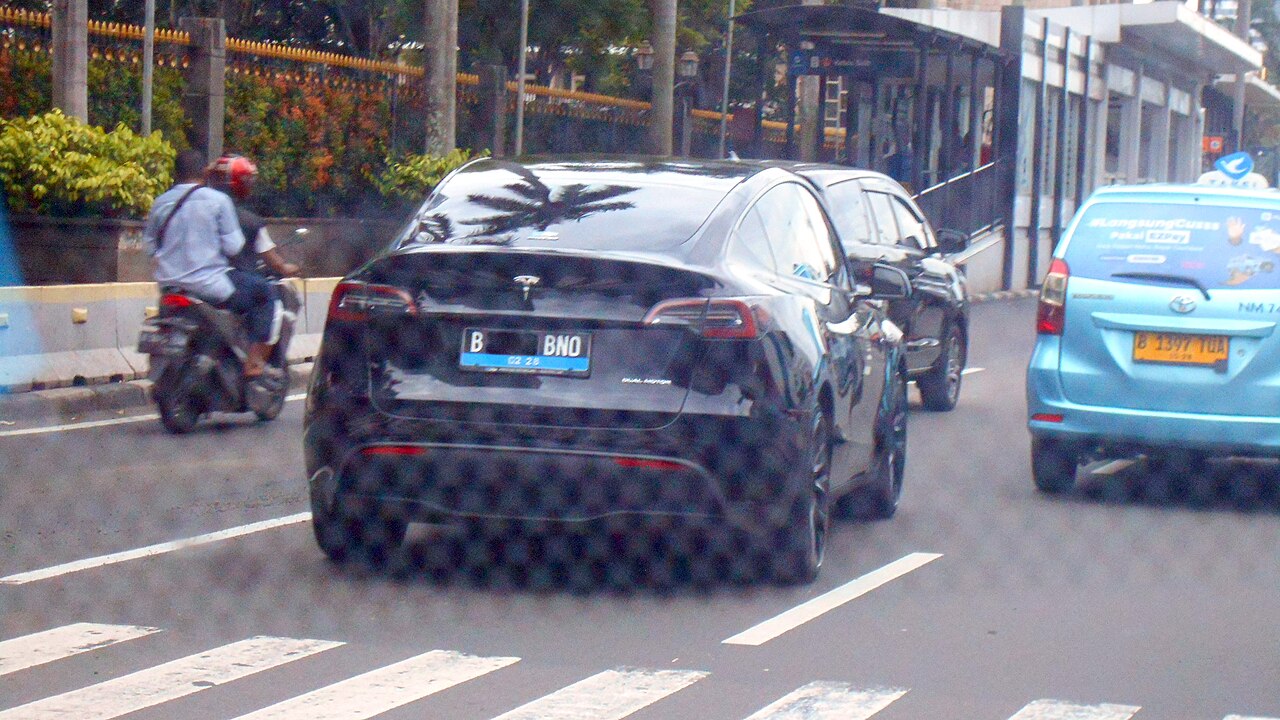
Top image: Photo: Firzafp, CC BY 4.0, via Wikimedia Commons

Battery electric cars may not keep their exemption from Jakarta’s odd-even (ganjil genap) traffic rule forever, according to Moeldoko, chairman of the Indonesian Electric Vehicle Industry Association (Periklindo). But he suggests the perk, and government purchase incentives, should stay in place until EVs make up roughly 30% of the vehicle population, a level Indonesia is still a long way from.
The comments, reported by Bisnis.com on Monday 26 October, add an industry view to a debate that has been building for a fortnight. Jakarta’s transport agency is reviewing the odd-even scheme, and Industry Minister Muhammad Sarmuji has proposed extending the exemption to hybrids and range-extender EVs.
A 30% threshold
Moeldoko told Bisnis he had discussed the rule with Jakarta Governor Pramono Anung, and that it is a matter for regional governments to weigh. His position is that the exemption can reasonably go once EVs are common on the roads, but not yet.
“If the electric vehicle population reaches around 30%, the odd-even exemption may need to be revoked.” (translated from Indonesian)
Because the EV population is still relatively small, he argued, the current policy can be kept for now. He applied the same logic to incentives: in his view, government support is still needed to drive adoption until EVs reach about 30%, after which the market should be stable enough to stand on its own.
He also played down the risk that losing the exemption would kill demand. Lower running costs, he said, remain a strong draw for buyers while non-subsidised petrol prices stay high.
Where EV adoption stands
Bisnis cited Gaikindo wholesale data showing 117,218 battery electric vehicles shipped to dealers in January–September 2026, up 112.25% from 55,225 a year earlier. That was 17.26% of the 679,020 cars wholesaled nationally over the nine months. The figures match those we reported in our look at EV sales to September.
It is worth stressing that the 17% figure is a share of new car sales. Moeldoko’s 30% refers to the vehicle population, meaning cars already on the road. Bisnis did not give a current figure for that, but because Indonesia’s fleet is dominated by petrol and diesel cars bought over many years, the EV share of the total stock is far below the share of new sales (our observation). On that measure, the 30% mark looks some years away.
Part of a wider Periklindo push
The remarks fit a pattern for the association in recent days. Periklindo has called for incentives for electric buses and trucks, and has questioned plans to favour nickel-battery cars in a new incentive package. The association is also co-organising the PEVS 2026 show, which opens at JIExpo Kemayoran on 29 October.
What it means for buyers
- No change yet: battery electric cars in Jakarta are still exempt from the odd-even rule. Nothing has been decided, and the provincial review is ongoing.
- Don’t count on the perk forever: both the industry body and the city now openly discuss an end point. If the exemption is a main reason to buy, factor in that it may not last the life of the car.
- Running costs remain the core case: as Moeldoko notes, the fuel savings do not depend on traffic rules. Our EV running-costs guide sets out the numbers.
Update, 28 October 2026: Industry minister Muhammad Sarmuji says the government will hear Periklindo’s full case before deciding on the exemption. Read the follow-up.
Explainer: how the rule works, which roads and vehicles it covers and what the review could mean for buyers, in our guide to Jakarta’s odd-even rule and EVs.
Sources: Bisnis.com – Moeldoko Bicara Sinyal Mobil Listrik Tak Lagi Bebas Ganjil Genap (26 Oct 2026); Gaikindo wholesale data as reported by Bisnis.com.
Comments
2 responses to “Moeldoko: EVs could lose Jakarta odd-even exemption at 30% of fleet”
[…] EVs could be reconsidered once electric vehicles make up roughly 30% of the vehicle population. As we reported on 27 October, he framed it as a future step rather than an immediate change. According to Suara.com, Moeldoko […]
[…] Moeldoko’s recent comments about eventually ending EVs’ exemption from Jakarta’s odd-even rule are covered in our earlier report. […]