
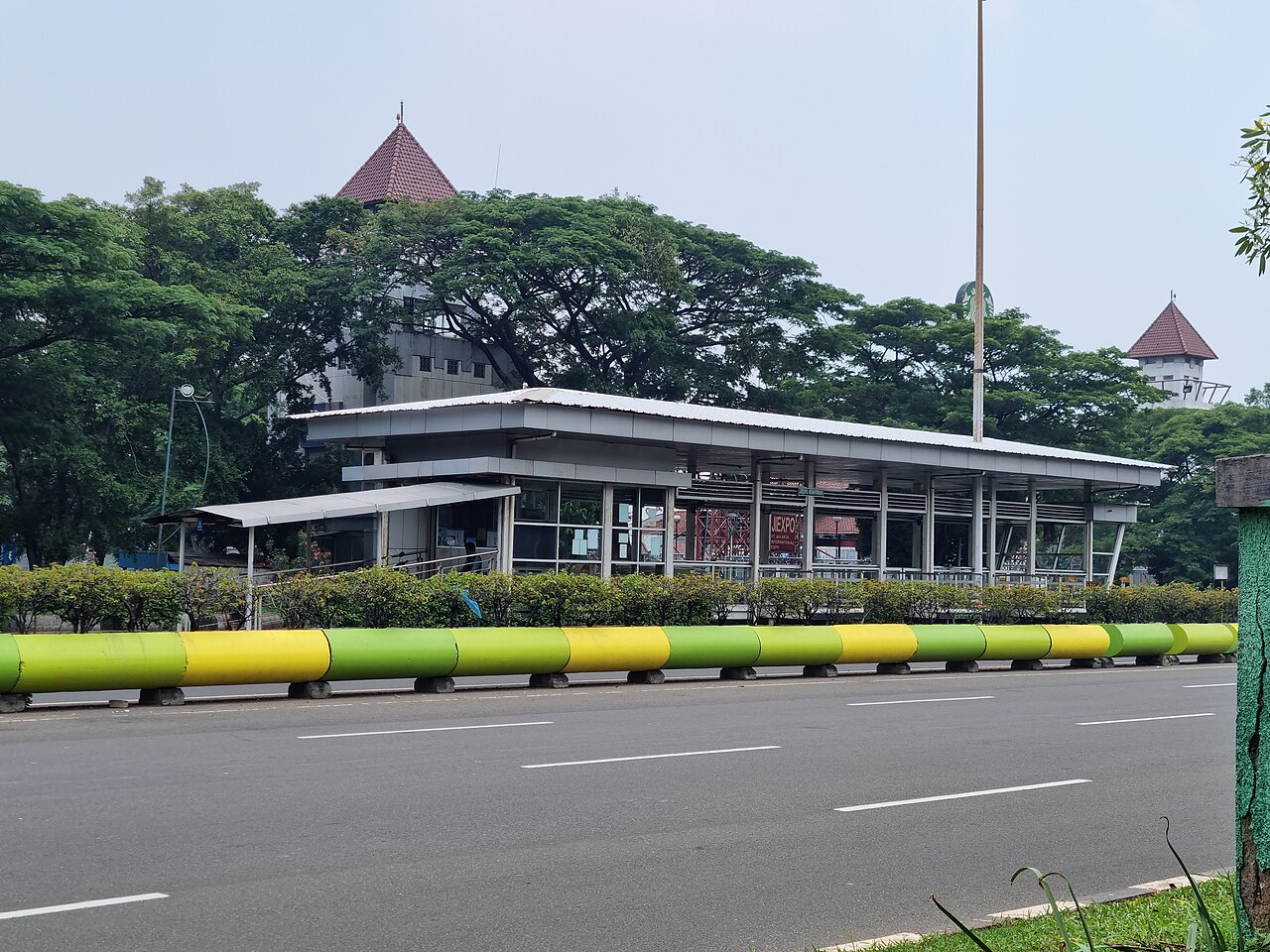
Top image: Photo: Irvan Cahyo N, CC BY-SA 4.0, via Wikimedia Commons

The fifth Periklindo Electric Vehicle Show (PEVS) opened at JIExpo Kemayoran in Central Jakarta on Thursday 29 October, and the government used the occasion to put a number on how quickly electric cars are moving into the mainstream. According to industry ministry data presented at the opening, battery electric vehicles (BEVs) accounted for 16.88% of Indonesia’s four-wheeler market by August 2026, up from about 0.99% in 2022, Liputan6 reported.
The show, which we previewed last week, runs until Sunday 1 November.
From under 1% to almost one in six
The figures were set out in a speech on behalf of the Minister of Industry, read by Setia Diarta, the ministry’s Director General of Metal, Machinery, Transportation Equipment and Electronics Industries (ILMATE). The speech said the increase showed growing public acceptance of electric vehicles, but added that market growth needs to be matched by more domestic production capacity.
The ministry also put Indonesia’s total electric vehicle population at 541,000 units as of August 2026, a figure that covers two-, three- and four-wheelers as well as commercial and special-purpose vehicles. CNN Indonesia, citing the same national industry data, gave earlier totals of 243,000 units in 2024 and 406,000 in 2025. By our calculation, that means roughly 135,000 electric vehicles were added in the first eight months of 2026, against about 163,000 in the whole of 2025.
Reports of the opening framed the share figures slightly differently. CNN Indonesia described BEVs as about 16% and hybrids (HEVs) as about 9%, citing data to April 2026, while Liputan6 reported the 16.88% figure as BEVs’ share of the four-wheeler market as of August. Neither outlet published the full underlying dataset, so the numbers are best read as an indication of direction rather than a precise like-for-like comparison.
Local content rules restated
The ministry also restated its local-content (TKDN) path for battery electric vehicles under Presidential Regulation 55/2019 (as amended by Regulation 79/2023) and industry ministry rules: a minimum of 40% until the end of 2026, rising to 60% for 2027–2029 and 80% from 2030. Batteries and battery management systems were singled out as priorities for local production. We have covered how carmakers are preparing for the step up, including BYD’s plans for its Subang plant and the role of locally made batteries.
Who is exhibiting
Organisers Dyandra Promosindo and Periklindo list nine car brands — BAIC, BYD, Chery, Danza, DFSK, MAB, MG, Polytron and Wuling — and six electric motorbike brands: Alva, AHM (Astra Honda Motor), Indomobil E-Motor, Polytron, Selis and United, according to Medcom. There are also air-mobility exhibitors showing cargo drones and eVTOL aircraft, and electric boat makers.
Periklindo chairman Moeldoko, who formally opened the show, repeated his argument that EVs can cut household running costs and the fuel-subsidy bill. Bappenas head Rachmat Pambudy also attended. Speaking to KatadataOTO, Moeldoko said:
“We (Indonesia) must not just be spectators; we must be a main player in responding to EV developments in Indonesia.” (translated from Indonesian)
Moeldoko’s recent comments about eventually ending EVs’ exemption from Jakarta’s odd-even rule are covered in our earlier report.
What it means for buyers
For anyone shopping for an EV, the show is mainly a chance to compare models side by side and try them: organisers are running indoor test drives and test rides, and say buyers who order a car or motorbike at the show can claim cashback worth up to Rp200 million, depending on the brand and model. Entry is free, according to KatadataOTO. Opening hours are 10:00–19:00 WIB on 30 and 31 October and 10:00–18:00 WIB on 1 November.
Moeldoko again cited running costs of around Rp800,000 a month for an EV against Rp6–8 million for a petrol car. That is his illustration rather than a measured average, and real savings depend on mileage and how you charge — our guide to EV running costs in Indonesia breaks down the numbers.
Update: for the electric motorbike deals on offer at the show, see PEVS 2026: Honda, Polytron and United cut electric motorbike prices.
Follow-up: PEVS 2026 closed on 1 November with 35,257 visitors; read our wrap-up, including the Just EV coalition’s report card for carmakers.
Sources: Liputan6; CNN Indonesia; Medcom.id; KatadataOTO.
Comments
2 responses to “PEVS 2026 opens as battery EVs reach 16.88% of Indonesia’s car market”
[…] Polytron, Alva and Indomobil eMotor are also running show-only discounts. The exhibition, which opened on Thursday 29 October at JIExpo Kemayoran, closes on Sunday 1 […]
[…] was offered on purchases of two- and four-wheel EVs. (We covered the opening-day market data in PEVS 2026 opens as battery EVs reach 16.88% of the car market, and the motorbike price cuts in our report on Honda, Polytron and United […]