Author: jeremy

  • BYD says Subang-built EVs already top 40% local content, eyes 60% for 2027

    BYD says Subang-built EVs already top 40% local content, eyes 60% for 2027

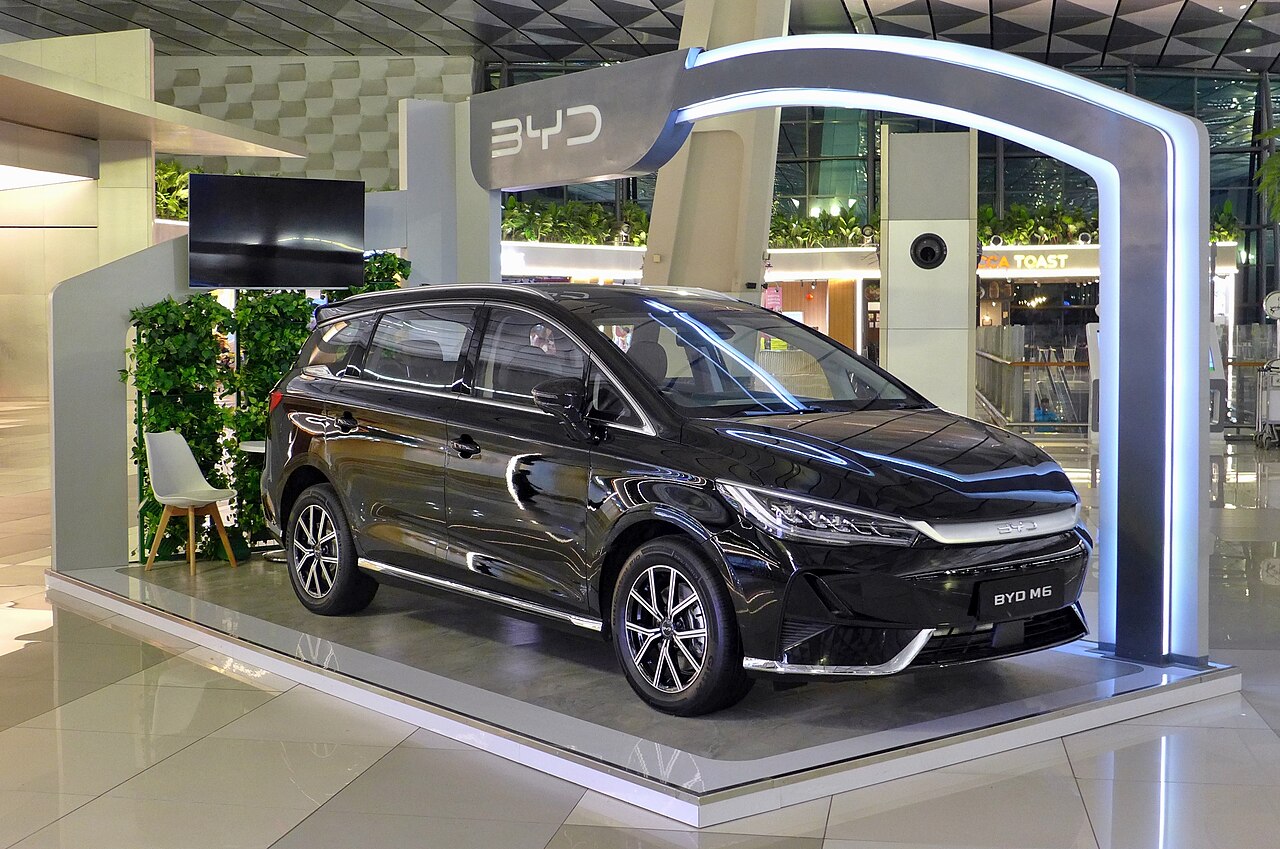
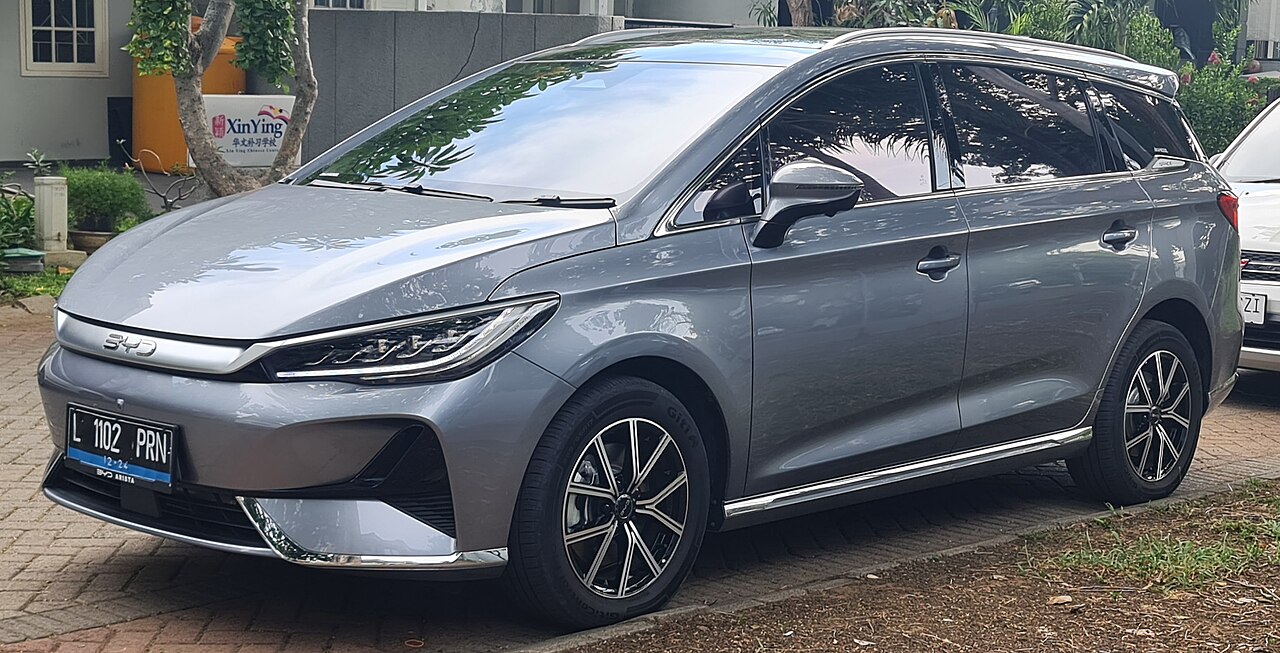
    Top image: Photo: Alex Neman, CC BY-SA 4.0, via Wikimedia Commons. Pictured: a BYD M6 in Surabaya; the M6 is one of three BYD models now built at the Subang plant.

    BYD Motor Indonesia says the cars rolling out of its new factory in Subang, West Java, already exceed 40% local content, and that it is confident of clearing the higher 60% threshold that Indonesia’s electric-vehicle rules set from 2027.

    The comments, made by Luther Panjaitan, BYD Indonesia’s head of public relations and government relations, at a press event in South Jakarta and reported by Suara.com on 19 October, are the clearest signal yet that the market’s best-selling EV brand intends to keep its models eligible for incentives once the local-content bar rises.

    What BYD said

    According to Suara.com and an earlier interview with KatadataOTO, Panjaitan said:

    • Units produced at BYD’s own Indonesian facility already have local content (TKDN) of more than 40%.
    • Three models are now made locally: the Atto 1 city car, the M6 EV and the M6 DM plug-in hybrid. BYD said localising these models was a response to demand and would speed up deliveries to dealers.
    • Because the Subang plant has its own stamping, welding, painting and assembly lines, the company says it has the flexibility to raise local content further.

    Panjaitan argued that owning a factory is currently one of the most realistic ways for a carmaker to reach 60%. “We are very confident and will meet the government’s request to reach that target as soon as possible,” he said (translated from Indonesian, via Suara.com).

    KatadataOTO also reported that one model from BYD’s premium Danza line-up will be assembled at a BYD facility in future, although no timing was given.

    The Subang plant

    The factory, in the Subang Smartpolitan industrial park, was inaugurated on 3 September. At the opening, BYD Indonesia president director Eagle Zhao said it can build up to 150,000 vehicles a year, that more than 5,000 local workers had already joined the company with a target of around 20,000, and that BYD was aiming to reach 60% TKDN from January 2027, Republika reported. Zhao also said BYD planned to carry out some battery-related assembly work in Indonesia, but gave no details of capacity or timing.

    What the rules require

    Local-content requirements for battery EVs are set by Presidential Regulation 79 of 2023. As summarised by KatadataOTO, the minimum is 40% for 2022–2026, rising to 60% for 2027–2029 and 80% from 2030. (Suara.com’s report describes the 60% stage as covering 2027–2028; we have followed the regulation’s dates as reported by KatadataOTO.)

    BYD is not the only route to compliance. As we reported last week, the Ministry of Industry says brands could also reach 60% by using batteries from Indonesian producers, without needing to build their own plants. The ministry has also reaffirmed that the 60% rule will start in 2027.

    Why it matters

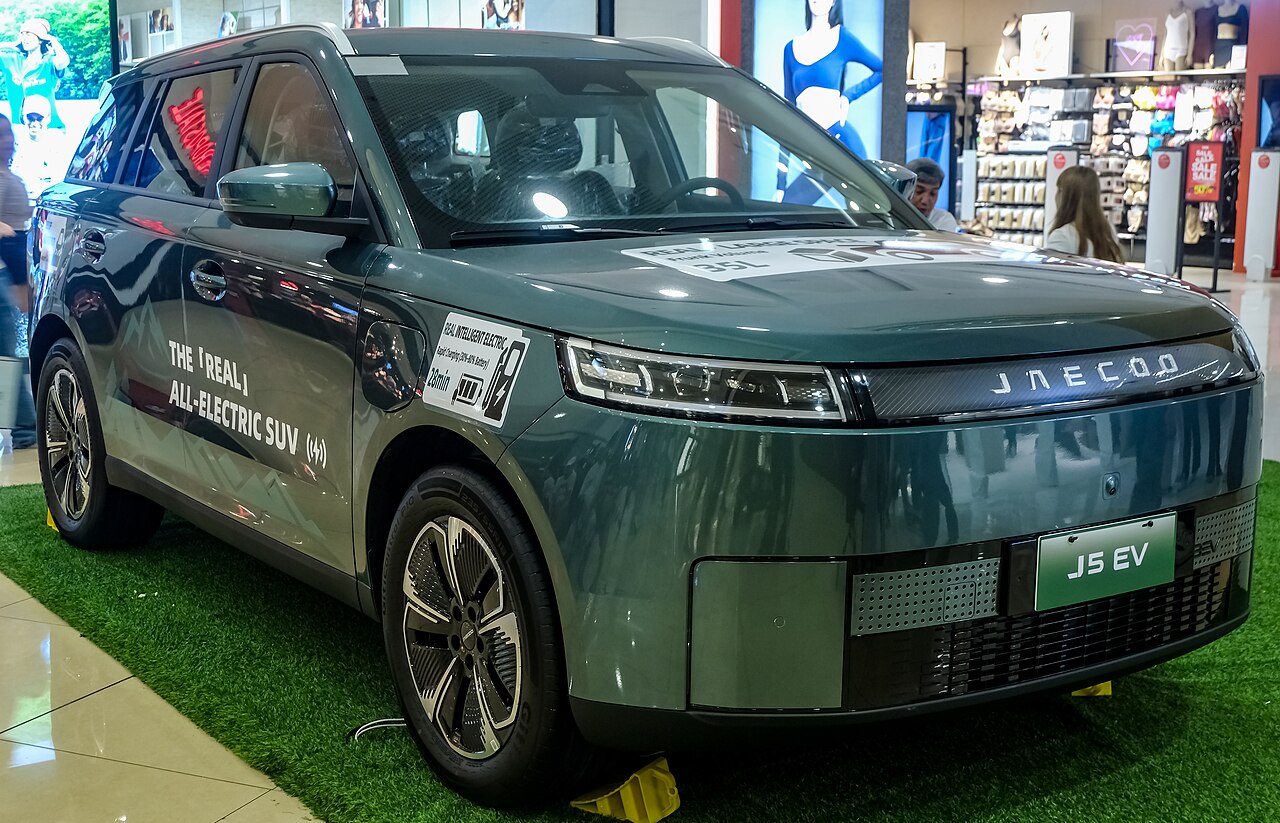
    BYD’s locally built Atto 1 topped EV wholesales in September with 4,840 units, ahead of the Jaecoo J5 EV (3,276) and Geely EX2 (1,890), according to Gaikindo figures cited by KatadataOTO. Keeping that model compliant is therefore important both for BYD’s volumes and for the wider market (see our January–September EV sales round-up).

    What it means for buyers

    For now, nothing changes at the showroom: the Atto 1, M6 EV and M6 DM are already built in Subang. The bigger question is 2027. Models that cannot show 60% local content may lose access to tax incentives, which could push up prices, while brands with Indonesian plants, or access to Indonesian-made batteries, should be better placed to hold prices steady. Buyers weighing an imported EV against a locally built one may want to ask dealers how each model will be treated after January 2027. Current BYD prices and models are listed in our EV directory entry for BYD.

    Update (3 November 2026): The National Economic Council has since said the 60% requirement will apply from 2027 together with locally assembled battery packs. Read our follow-up.

    Sources: Suara.com (19 Oct 2026); KatadataOTO (16 Oct 2026); Republika (3 Sep 2026).
  • GAC, LEPAS and BAW line up new EV debuts for November’s Gaikindo Auto Week

    GAC, LEPAS and BAW line up new EV debuts for November’s Gaikindo Auto Week

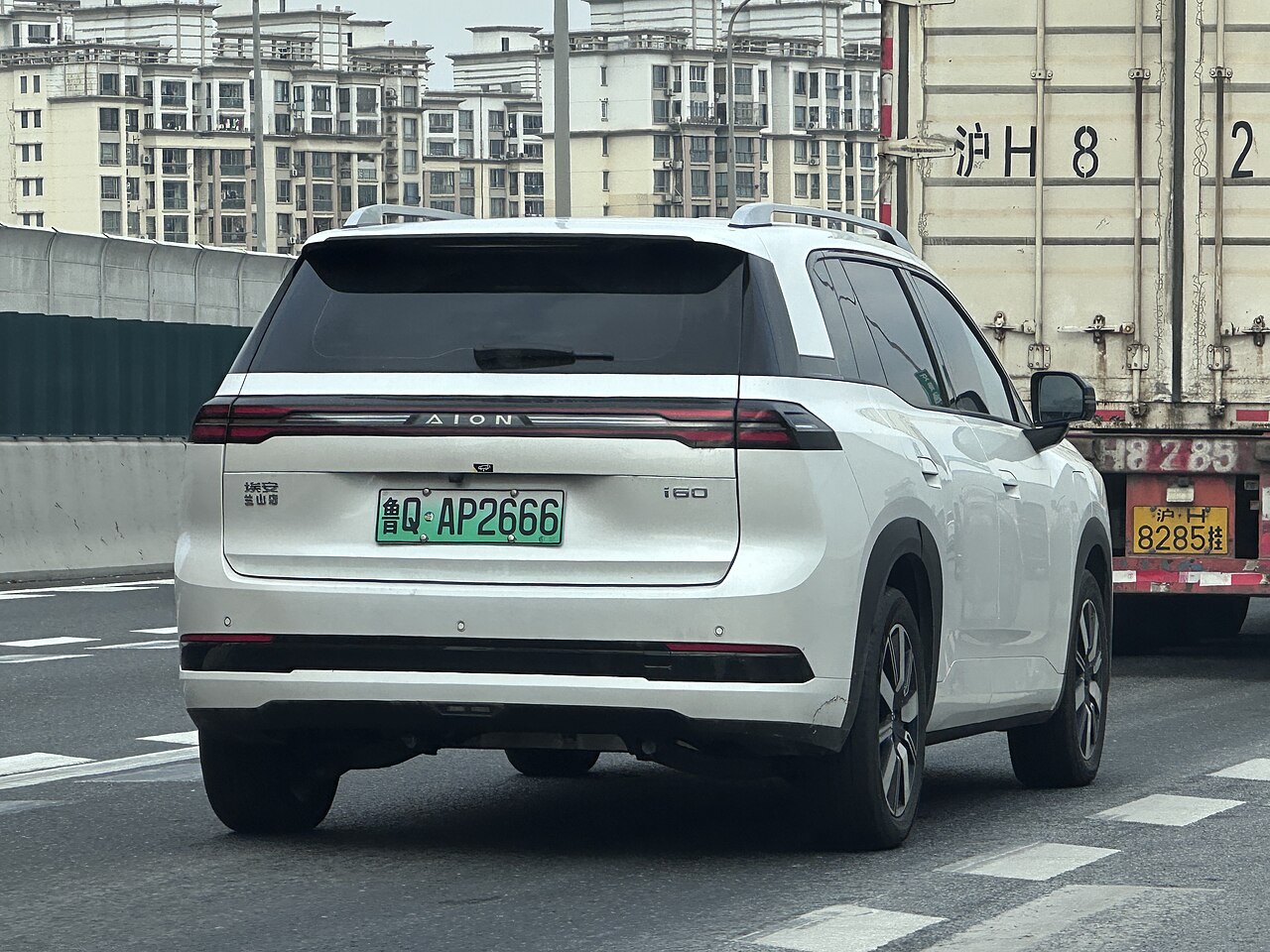
    Top image: Photo: JustAnotherCarDesigner, CC0, via Wikimedia Commons

    Update, 8 November 2026: GAC has since confirmed the model as the Aion i60 and opened pre-bookings. Read our follow-up.

    Three Chinese brands have now confirmed, or strongly signalled, new electric models for Gaikindo’s year-end motor show, setting up a busy November for Indonesian EV shoppers. GAC Indonesia says an electric SUV never before shown in the country is coming, LEPAS has confirmed its E6 SUV is on schedule, and newcomer BAW plans to put a price on its M8 electric people carrier.

    The show, officially the Permata Bank GAIKINDO Auto Week 2026 (GAW 2026, still widely called GJAW), runs from 20 to 29 November at ICE BSD City in Tangerang, according to the organiser’s website. For the first time, smaller satellite exhibitions will run simultaneously from 25 to 29 November in nine other cities, including Bali, Bandung, Makassar, Medan and Surabaya, IDN Times reported.

    GAC: an Aion SUV new to Indonesia

    GAC Indonesia plans to unveil a new battery-electric SUV at its next event, which OtoDream understands to be GAW 2026. Speaking in Bekasi, Iqbal Taufiqurrahman, who leads product planning and strategy at GAC Indonesia, did not name the model but stressed its novelty:

    “This has never been displayed in Indonesia at all.” – Iqbal Taufiqurrahman, GAC Indonesia, to OtoDream (translated from Indonesian)

    OtoDream names the Aion i60 and Aion N60, two mid-size electric SUVs sold in China, as the likely candidates. In Chinese specification both use a 165 kW (about 224 PS) front motor and share a 2,775 mm wheelbase. The i60’s battery-electric version offers 56.68 kWh or 77.65 kWh packs with up to 520 km and 700 km of range on China’s generous CLTC test cycle, while the N60 is offered with three packs rated at up to 410, 510 or 610 km (CLTC). GAC has not confirmed which model, battery or price Indonesia will get, so these figures should be treated as indicative only. The new SUV would join the Aion line-up already on sale here, which runs from the compact UT to the Hyptec HT.

    LEPAS E6 “on track”

    Chery Group’s new-energy brand LEPAS says the E6 electric SUV remains on schedule for its public national debut at the November show, Bisnis Market reported on 16 October. Vice country director Temmy Wiradjaja confirmed the timing while opening a new dealer in Puri Indah, West Jakarta. Full specifications and variants are being held back for the show’s press day.

    The E6 is an adaptation of the LEPAS L6 EV that debuted at the Beijing show this year. In global form the L6 has a single 178 kW front motor, a 67 kWh lithium iron phosphate (LFP) battery and up to 510 km of range on the older NEDC cycle; Indonesian figures may differ. See our new LEPAS directory entry.

    BAW M8: a big electric MPV

    Beijing Automobile Works (BAW), which first showed five models at GIIAS in July, has chosen the M8 electric MPV as the first vehicle it will actually sell in Indonesia. Brand marketing director Rifkie Setiawan told JawaPos that the seven-to-nine-seat model suits Indonesian buyers who often travel in groups, and that the price and full specification will be announced at GAW 2026. CleanTechnica has reported an 81 kWh LFP battery and up to 505 km of claimed CLTC range for the M8, and that BAW plans knock-down assembly in West Java. We have added BAW to our EV directory.

    What it means for buyers

    • More choice in family-sized EVs. Two mid-size SUVs and a large MPV would add competition in segments where buyers already compare models such as the MG S6 EV and the Danza D9 MPV.
    • No prices yet. None of the three brands has published Indonesian pricing, and Chinese-market range figures (CLTC) are typically optimistic compared with real-world driving.
    • Tax status matters. Whether these cars are imported or locally assembled will affect the final price; our 2026 EV tax and incentive guide explains why.

    Sources: OtoDream (18 Oct 2026); Bisnis Market (16 Oct 2026); JawaPos (13 Oct 2026); CleanTechnica (10 Aug 2026); IDN Times (22 Sep 2026); GAIKINDO Jakarta Auto Week.

  • EV running costs in Indonesia: home charging, SPKLU, tax and petrol compared

    EV running costs in Indonesia: home charging, SPKLU, tax and petrol compared

    Top image: Photo: MoCars, CC0, via Wikimedia Commons

    Purchase price gets most of the attention when Indonesians compare an electric car with a petrol one. Over several years of ownership, though, the running costs matter just as much. This guide sets out what electricity costs at home and at public SPKLU chargers in late 2026, how that compares with fuel at the pump, where the regional vehicle tax now stands, and which other costs and perks to factor in. All tariffs and prices below were current in mid-October 2026. Our own calculations are labelled as such.

    Home charging: the cheapest option

    Most EV owners do most of their charging at home, so the household electricity tariff is the number that matters most. The government left PLN’s non-subsidised tariffs unchanged for the October–December 2026 quarter. Energy and Mineral Resources Minister Bahlil Lahadalia confirmed on 5 October that prices would stay as they were, according to a summary of the tariff table. Earlier in the month he had hinted that a rise was unlikely, Bisnis.com reported.

    The household rates per kWh this quarter are:

    • 900 VA (non-subsidised, R-1): Rp1,352
    • 1,300 VA and 2,200 VA (R-1): Rp1,444.70
    • 3,500–5,500 VA (R-2) and 6,600 VA and above (R-3): Rp1,699.53

    Most homes need at least 2,200 VA to run a car charger alongside everyday appliances, and many owners upgrade further. That can push them into the higher R-2 band, so it is worth checking where you will land before you increase your connection.

    The PLN home-charging discount

    Owners who sign up for PLN’s Home Charging Service (HCS) get a 30% discount on electricity used for charging between 22:00 and 05:00. In August, Investor Trust reported that PLN was offering HCS installation from Rp11.7 million under a promotion running until 31 December 2026, with electricity vouchers of up to Rp1.3 million. It also reported that home-charging customers had passed 92,000 by June.

    Our calculation: with the 30% discount, a 2,200 VA household pays about Rp1,011 per kWh overnight, and an R-2 or R-3 household about Rp1,190.

    Public charging at SPKLU

    Public chargers cost more. Recent guides from Auto2000 and Navigasi put PLN’s SPKLU energy rate at roughly Rp2,466–2,475 per kWh. Fast chargers (about 25–50 kW) add a service fee of up to Rp25,000 per session, and ultra-fast chargers (above 50 kW) add up to Rp57,000.

    Navigasi gives a worked example. Charging a 45 kWh battery from 10% to 80% (about 31.5 kWh) on a fast charger comes to around Rp114,000 once the session fee and 11% VAT are included. In practice, public fast charging costs well over twice as much per kWh as overnight charging at home. It makes sense for long trips, but it is an expensive way to cover your everyday driving. For details on finding chargers and connector types, see our guide to charging in Indonesia and the PLN SPKLU directory entry.

    How this compares with petrol

    Fuel prices did not change on 1 October. Pertamina’s prices stayed at Rp10,000 a litre for subsidised Pertalite, Rp15,950 for Pertamax (RON 92) and Rp19,600 for Pertamax Turbo, Katadata reported. BP 92 and Vivo Revvo 92 were listed at Rp16,130.

    To compare like with like, we used two assumptions of our own. They are illustrative figures, not test results. The electric car uses 15 kWh per 100 km, which is typical of a compact EV in mixed driving. The petrol car averages 12 km per litre, which is typical of a small hatchback or MPV in city traffic. On those assumptions, our calculation of the energy cost per 100 km is:

    • Home charging at 2,200 VA, with the HCS night discount: about Rp15,200
    • Home charging at 2,200 VA, without the discount: about Rp21,700
    • SPKLU energy only (Rp2,475/kWh, before any session fee or VAT): about Rp37,100
    • Pertalite at Rp10,000/litre: about Rp83,300
    • Pertamax at Rp15,950/litre: about Rp132,900

    Over 15,000 km a year, the gap is large. On our assumptions, discounted home charging costs about Rp2.3 million a year, against roughly Rp12.5 million on Pertalite or Rp19.9 million on Pertamax. Your own figures will depend on your car, your driving and how much you use public chargers. Keep in mind too that access to subsidised Pertalite is restricted for many cars, so Pertamax is often the fairer comparison.

    Regional vehicle tax: no longer automatically zero

    For several years, battery EVs in most provinces paid little or no annual vehicle tax (PKB) and no transfer duty (BBNKB). That is changing. Home Affairs Minister Tito Karnavian signed Permendagri No. 11 of 2026 on 1 April. Under it, battery EVs are treated as ordinary motor vehicles and are no longer named as exempt, Tirto explained. Provinces can still grant relief, but it is no longer automatic.

    Provinces are responding differently. West Java’s governor, Dedi Mulyadi, said in April that he wants EV tax to remain a source of regional revenue, Liputan6 reported. In Jakarta, Bapenda said in May that the PKB and BBNKB exemptions were unchanged for now, according to CNN Indonesia. In July, however, a special adviser to the governor, Firdaus Ali, described a scheme still under study. It would tax EVs on a sliding scale, from a possible exemption below Rp150 million up to 75% of the normal rate for luxury models, Suara reported. No final regulation had been named in that report.

    The practical advice is to check your provincial Bapenda’s current rate before you buy, and to budget for some annual tax even if the first year is free. Our guide to EV taxes and incentives in 2026 covers the national VAT and luxury-tax side.

    Other costs and perks

    Servicing

    An electric drivetrain has no engine oil, spark plugs, fuel filters or clutch, so routine servicing is usually simpler. Tyres, brakes, suspension, air-conditioning and the 12-volt battery still need attention. Before you sign, ask the dealer for the scheduled service prices and check the battery warranty terms, including the duration and any mileage cap.

    Jakarta’s odd-even exemption

    Battery EVs remain exempt from Jakarta’s odd-even (ganjil genap) number-plate restriction. Transport agency head Syafrin Liputo confirmed in May that the city would keep the policy, CNN Indonesia reported. For commuters on restricted roads, that can be worth as much as the fuel savings.

    Insurance and resale

    Insurance premiums are linked to the vehicle’s value, so a pricier EV will cost more to insure than a cheaper petrol rival. Resale values for many newer Chinese EV brands are still being established. Shop around for cover, and treat resale assumptions with caution.

    What it means for buyers

    If you can charge at home overnight, an EV’s energy bill is a fraction of what a petrol car costs to fuel. It stays far cheaper even against subsidised Pertalite. That advantage shrinks if you rely mainly on public fast chargers, and regional tax is becoming a cost to budget for rather than a perk to count on. Before you buy, check the tariff band your home will need, compare HCS installation offers, and confirm your province’s EV tax rate. You can compare models and prices in our electric car buying guide and the IndoEVs EV directory.

    Sources: Journalarta (PLN tariffs, Oct 2026); Bisnis.com; Investor Trust; Auto2000; Navigasi; Katadata; Tirto; Liputan6; CNN Indonesia; Suara.com.

  • MG opens MGS6 EV pre-orders in Indonesia at indicative Rp 550 million

    MG opens MGS6 EV pre-orders in Indonesia at indicative Rp 550 million

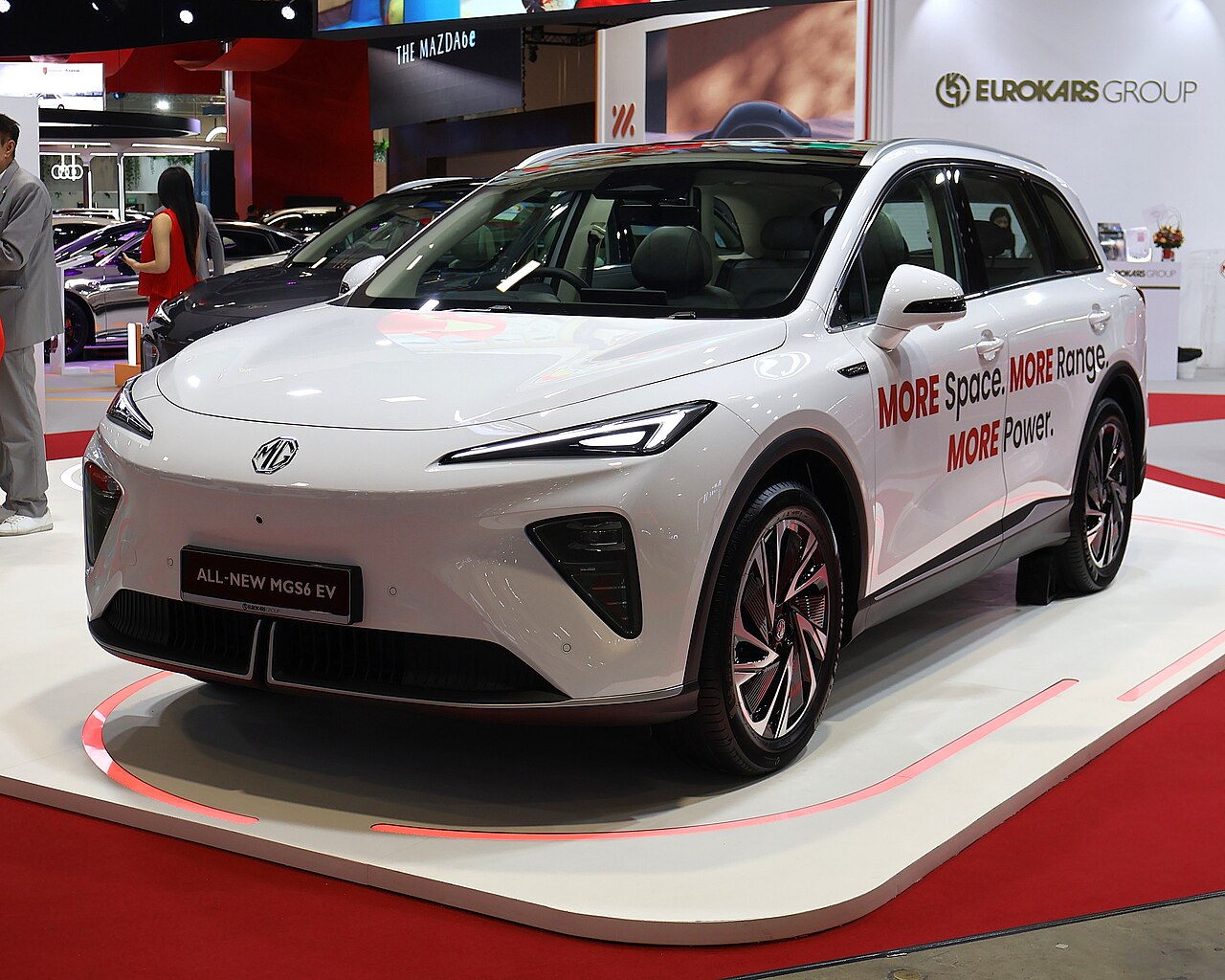
    Top image: MGS6 EV show car in Singapore. Photo: S5A-0043, CC BY 4.0, via Wikimedia Commons

    MG Motors Indonesia has opened pre-orders for the MGS6 EV, a five-seat electric SUV, but has not yet confirmed the price. The company unveiled the car in Jakarta on 14 October and gave an indicative starting price of Rp 550 million. The official price list is due at Gaikindo Auto Week (GAW) 2026, detikOto reported.

    Buyers can reserve a car now with a Rp 5 million booking fee and lock in the indicative price. MG says cars delivered to customers will be assembled locally at its Cikarang plant in West Java. Production is about to begin and deliveries are planned from December 2026.

    “Production will start soon, while deliveries will begin in December 2026,” said Harry Kurniawan, head of marketing at MG Motors Indonesia (translated from Indonesian).

    What buyers get

    The MGS6 EV comes in rear-wheel-drive (RWD) and all-wheel-drive (AWD) versions. The specifications MG published at the launch, as reported by CNN Indonesia and detikOto, are:

    • Output: up to 361 PS and 540 Nm. The AWD version reaches 100 km/h from a standstill in 5.1 seconds.
    • Battery and range: CATL cells, with up to 605 km of range on the NEDC cycle.
    • Charging: 30% to 80% in 32 minutes on a DC fast charger.
    • Safety: seven airbags, the MG Pilot driver-assistance suite with 16 ADAS functions, and a five-star NCAP rating.

    KatadataOTO gives separate figures for each version. It lists a 77 kWh NMC battery, 605 km of range for the RWD car and 550 km for the AWD car, and outputs of 241 hp and 350 Nm (RWD) and 356 hp and 540 Nm (AWD). That suggests the headline 361 PS figure applies to the AWD car only. The car measures 4,706 mm long on a 2,835 mm wheelbase. It has a front boot of 67–86 litres and a rear boot of 561 to 1,690 litres. MG has not confirmed the battery size or the per-version outputs for Indonesia, so buyers should check the final specification sheet at GAW.

    Where it fits on price

    At Rp 550 million, the MGS6 EV sits well above MG’s existing electric cars in Indonesia. In CNN Indonesia’s October price list, the MG S5 EV costs Rp 333.9 million to Rp 455.9 million, the MG4 EV costs Rp 405 million to Rp 419 million, and the ZS EV costs Rp 417.5 million. The MG Cyberster roadster, at Rp 1.704 billion, remains the brand’s flagship.

    Indonesian outlets have named the Deepal S07 and Xpeng G6 as the MGS6 EV’s closest rivals. The Deepal S07 is listed at Rp 619 million in the same CNN Indonesia list, while KatadataOTO quotes a Rp 599–619 million range. The Xpeng G6 costs Rp 679 million to Rp 769 million. On these figures, the MGS6 EV’s indicative price undercuts the Deepal by about Rp 50–70 million and the cheapest G6 by about Rp 129 million (IndoEVs calculation, based on published Jakarta prices).

    What it means for buyers

    The Rp 550 million figure is an indicative “from” price, not a confirmed one. MG has not said what the AWD version will cost, so buyers who book now are committing before the full price list is out. Local assembly matters too. Indonesia’s local-content (TKDN) rules for EVs tighten in 2027, and a car built in Cikarang is better placed for tax incentives than a fully imported rival. MG has not published a TKDN figure for the MGS6 EV. For background, see our coverage of the 60% local-content rule and our guide to EV taxes and incentives in 2026.

    The launch comes as the market’s top end gets busier: BYD’s premium brand Danza launched the D9 and Z9 GT the same week. You can find MG’s other models in our EV directory entry for MG.

    Sources: detikOto (16 Oct); detikOto (14 Oct); CNN Indonesia; KatadataOTO; CNN Indonesia October EV price list

  • BYD launches Danza D9 and Z9 GT in Indonesia with 1,500 kW flash charging

    BYD launches Danza D9 and Z9 GT in Indonesia with 1,500 kW flash charging

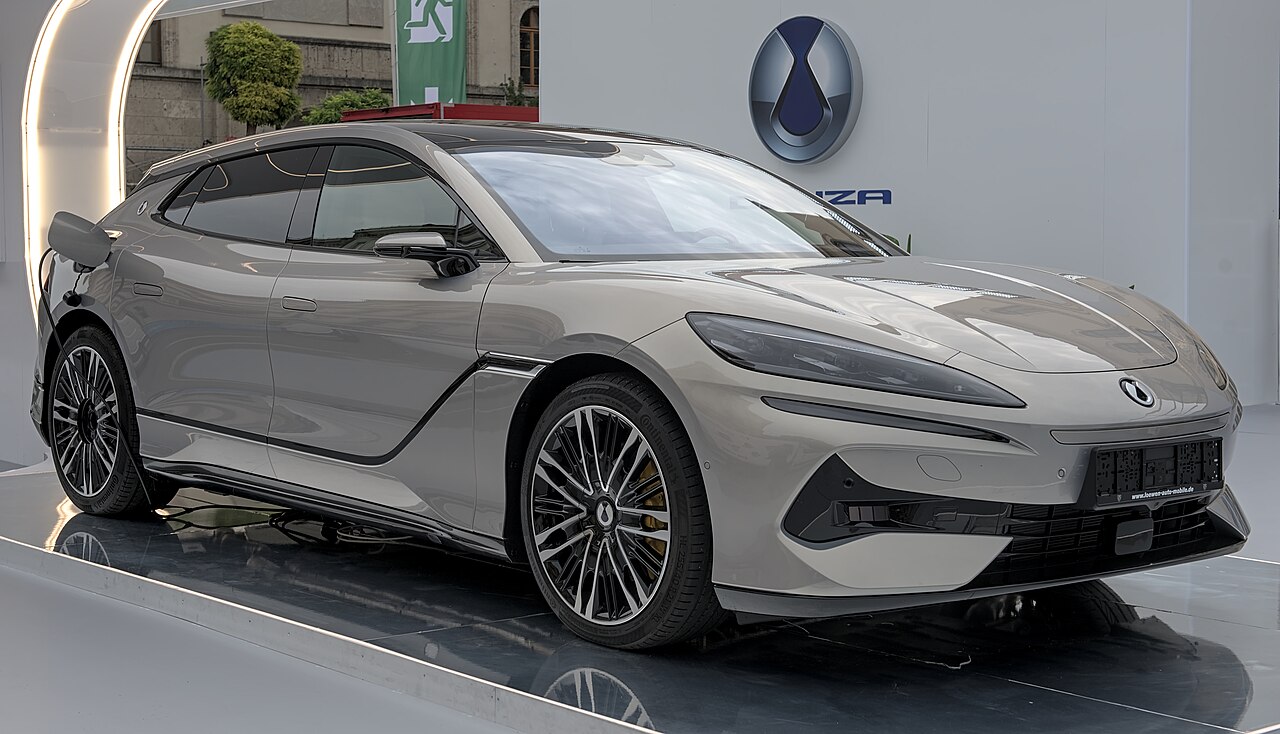
    Top image: Photo: Alexander Migl, CC BY-SA 4.0, via Wikimedia Commons. The Z9 GT pictured at IAA Mobility 2025 in Munich.

    BYD has put its premium Danza brand back in the spotlight in Indonesia, launching two new models in Jakarta on Wednesday 14 October and confirming that its megawatt-class “flash charging” system has arrived in the country. The New D9 luxury MPV and the Z9 GT grand tourer both run on BYD’s second-generation Blade Battery, which the company says can take a charge of up to 1,500 kW.

    The launch comes shortly after the brand switched from the Denza name in Indonesia following a trademark dispute, as we reported at the time.

    Prices and headline specifications

    According to CNN Indonesia and Kumparan, on-the-road Jakarta prices start at:

    • Danza New D9 (seven-seat MPV): from about Rp 1.08 billion
    • Danza Z9 GT (performance grand tourer): from about Rp 2.25 billion

    Neither outlet published a full variant price list or battery capacities, so only starting prices are confirmed so far.

    The updated D9 is quoted at up to 730 km of range on the NEDC test cycle. BYD has given it adaptive DiSus-C suspension, 10-point massage seats (up from four), a 16-speaker Devialet sound system, seats that rearrange automatically to free up luggage space, and a child presence detection system. Kumparan positions it as a rival to the Toyota Alphard, a long-time favourite in Indonesia’s executive MPV segment.

    The Z9 GT is the halo model. It uses three electric motors with a combined 850 kW (around 1,140 hp) and 1,210 Nm, and BYD claims 0–100 km/h in 2.7 seconds and about 701 km of NEDC range. Its rear wheels can steer by up to 15 degrees, enabling a sideways “crab walk” manoeuvre, and it rides on DiSus-A air suspension. NEDC figures are generally more generous than the WLTP figures used in Europe, so real-world range will be lower.

    How flash charging works

    The more significant announcement for the wider market may be the charger. BYD’s flash charger delivers up to 1,500 kW through a single overhead connector, the company said. Each unit has two connectors, and output drops to 1,000 kW each when both are in use, CNN Indonesia reported.

    BYD claims a 10–70% charge takes about five minutes and 10–97% about nine minutes in normal temperatures. Rather than drawing all that power straight from PLN’s grid, the station is fed by an integrated energy-storage system that buffers electricity, which BYD says reduces the load on the grid.

    Speaking at the launch, Eagle Zhao, President Director of PT BYD Motor Indonesia, said: “For the Indonesian market, all Danza EV products will be equipped with the second-generation Blade Battery and flash charging” (translated from Indonesian), according to detikOto.

    Where you can use it

    For now, the network is tiny. CNN Indonesia says the first flash charger is installed at the Danza dealer on Jalan Gatot Subroto in Jakarta, with plans to fit chargers at 10 Danza dealers and expand further next year. DetikOto describes the initial rollout as covering 10 Danza dealers, and adds that BYD is studying public locations, talking to charging operators, and in discussion with PLN.

    Only cars with the new battery can use the full speed. Cars with first-generation Blade batteries can plug in, but charge more slowly, CNN Indonesia reported. BYD says the technology will reach its mainstream brand gradually, starting with the BYD M6 and the upcoming Atto 2. Bisnis.com reports that BYD has confirmed the Atto 2 hatchback for Indonesia but has not given a launch date or local price; in China it sells from 96,800 yuan (about Rp 214.7 million, by Bisnis’s conversion).

    What it means for buyers

    • Danza buyers get BYD’s fastest charging technology, but only at a handful of dealer sites at first. Day-to-day charging will still mean home wallboxes or PLN’s public SPKLU network, which is covered in our guide to charging an EV in Indonesia.
    • Mainstream BYD buyers should watch the M6 and Atto 2. If those arrive with second-generation batteries and the charger network grows beyond dealers, five-minute top-ups could become relevant outside the luxury segment.
    • Existing BYD owners with first-generation batteries can use the chargers, but should not expect the headline times.

    Danza details, including the updated model line-up and prices, are in our EV directory entry for Danza. For the rest of BYD’s recent pricing moves, see our report on the Seal and Sealion 7 price rises.

    Sources: CNN Indonesia; Kumparan; detikOto; Bisnis.com.

  • Indonesia weighs halt to new semi-finished nickel smelters amid glut

    Indonesia weighs halt to new semi-finished nickel smelters amid glut

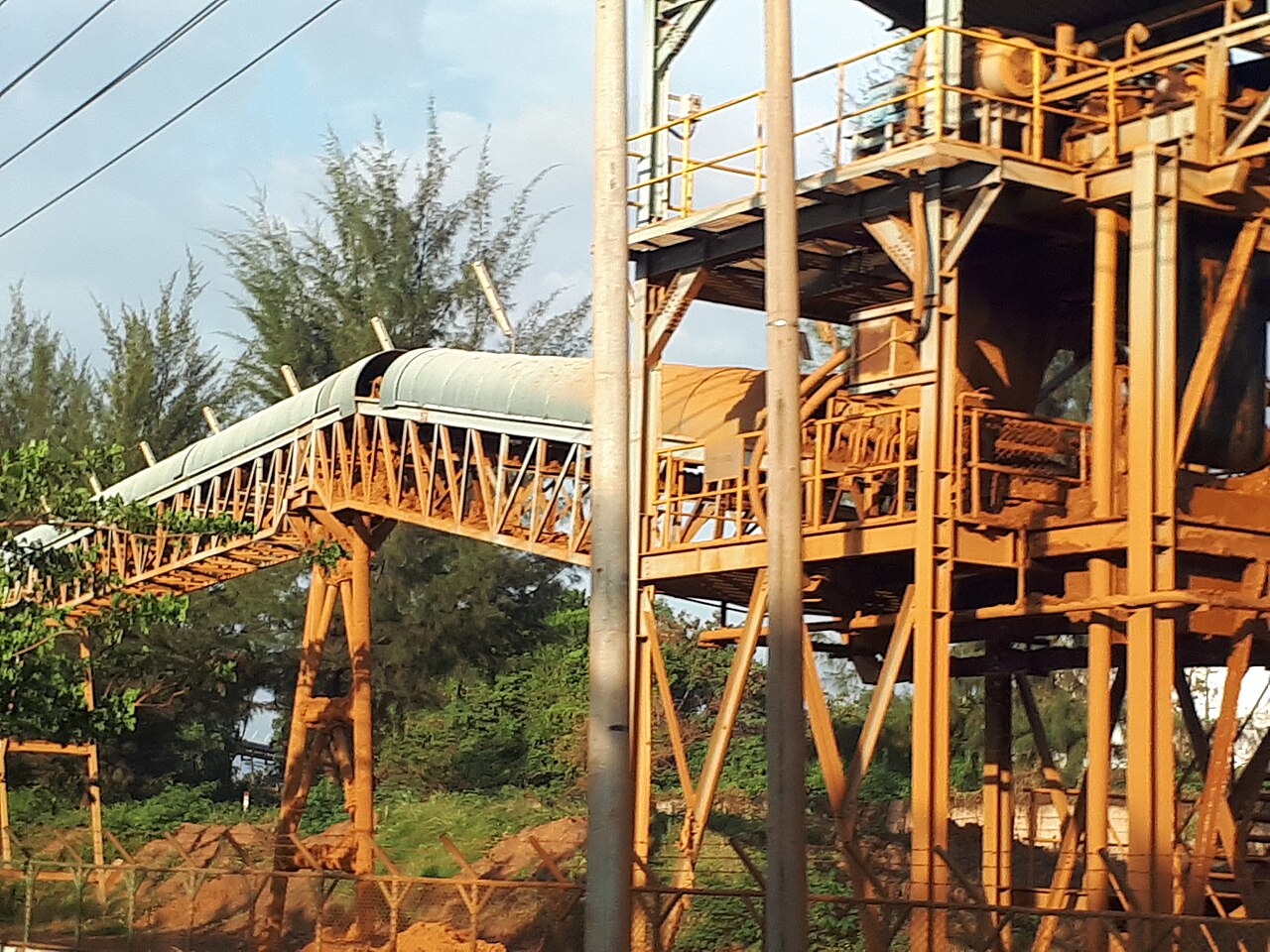
    Top image: Photo: Famhar1968, CC BY-SA 4.0, via Wikimedia Commons

    Indonesia is considering a halt to the construction of new nickel smelters that make semi-finished products, as a global surplus drags down prices of the metal at the heart of many electric vehicle batteries. The idea was raised by Bahlil Lahadalia, Coordinating Minister for Downstreaming and Energy Transition and Minister of Energy and Mineral Resources, and it has not yet become policy.

    What the minister said

    Speaking to reporters on the sidelines of the Investor Daily Summit in Jakarta on 7 October, Bahlil said that roughly 50–60% of the smelters now operating turn out semi-finished nickel, and that the government was weighing a moratorium on new plants of this kind while it pushes industries that make finished downstream products instead, according to Koran Jakarta, citing Antara. He said the option would be reported to President Prabowo Subianto.

    “This is oversupply, which is why prices are falling.”
    — Bahlil Lahadalia, reported by Koran Jakarta and CNBC Indonesia (translated from Indonesian)

    Bahlil tied the move to a surplus of about 2.5 million tonnes, CNBC Indonesia reported. detikFinance noted that the unit behind that figure was not spelled out in his remarks, so it should be treated with some caution.

    Which products could be affected

    Reports differ on the scope. The Antara-based report in Koran Jakarta lists ferronickel, nickel pig iron (NPI), nickel matte and mixed hydroxide precipitate (MHP) as Indonesia’s main semi-finished products. The South China Morning Post mentions NPI and nickel matte specifically. That distinction matters for the EV supply chain: NPI goes mostly into stainless steel, while matte and MHP are intermediate feedstocks for battery materials. Until the government publishes a rule, it is not clear whether battery-grade intermediates would be caught.

    The Oregon Group, a resources news site, reported that nickel fell to a 2026 low of US$15,510 a tonne on 2 October. It said Indonesia’s smelters would need about 415 million tonnes of ore a year at full capacity, against expected 2026 ore output of roughly 290 million tonnes. Citing Indonesian Nickel Miners Association (APNI) data via the OECD, it counted 55 RKEF smelters, 10 HPAL plants and 8 nickel-matte plants in the country.

    Industry and investor reaction

    The Indonesian Nickel Industry Forum (FINI) responded this week. Its chairman, Arif Perdana Kusumah, told CNBC Indonesia that the supply-demand balance has shifted sharply since late 2025 and that tighter government supply policy has, in theory, already rebalanced the market. FINI’s figures put Indonesia at about 60% of world nickel supply, with 2.5 million tonnes produced in 2025: 2.05 million tonnes of NPI, ferronickel and matte, and 450,000 tonnes of MHP and nickel sulphate. The forum expects Indonesian processed nickel output to fall by 3.5–4% in 2026, while MHP capacity, driven by HPAL projects, is set to more than double to over 900,000 tonnes by the end of 2027.

    Any freeze would land mostly on Chinese investors. detikFinance, summarising the SCMP report, cited an estimate from the US-based Center for Advanced Defense Studies that Chinese money accounts for about 75% of Indonesia’s nickel refining industry. Nukila Evanty of the Asia Centre said Chinese investors were likely to be significantly affected.

    What it means for EV buyers

    Nothing changes at the showroom for now. The proposal targets new semi-finished smelters, not existing plants, and it is still at the discussion stage. Over the longer term, the government’s stated aim is to move nickel further along the chain towards products such as battery cells, which ties in with the first EV battery export from Weda Bay earlier this month and with the ministry’s plan to let locally made batteries count towards the 60% local-content rule. If battery-grade intermediates are spared and cell-making grows, local supply for Indonesian-assembled EVs could improve. If they are not, battery-material projects could slow. The environmental footprint of the smelter parks, covered in our report on their largely coal-fired power base, is a separate question the proposal does not address.

    Update, 23 October: Chinese producers at the Morowali industrial park are now discussing coordinated output cuts, possibly including battery-grade MHP. Read our follow-up.

    Follow-up (4 November 2026): At Minerba Convex on 2 November, Bahlil said the government is now reviewing permits for new smelters that make only semi-finished products. Read more.

    Sources: Koran Jakarta (Antara), 7 Oct 2026; CNBC Indonesia, 14 Oct 2026; detikFinance, 10 Oct 2026; South China Morning Post, 10 Oct 2026; The Oregon Group, 9 Oct 2026

  • Imported EVs could hit 60% local content with local batteries, ministry says

    Imported EVs could hit 60% local content with local batteries, ministry says

    Top image: Photo: RudolfSimon, CC BY-SA 3.0, via Wikimedia Commons

    Electric car brands that do not build vehicles in Indonesia could still meet the country’s 60% local-content requirement from 2027, provided they use batteries made in Indonesia, the Ministry of Industry (Kemenperin) said on Tuesday 13 October.

    The comments, reported by Suara.com from the ministry’s offices in Jakarta, add a new wrinkle to the tightening TKDN (domestic component level) rules that we covered when the ministry reaffirmed the 60% threshold at the start of the month.

    What the ministry said

    Setia Diarta, director general of metal, machinery, transport equipment and electronics industries (ILMATE) at Kemenperin, said the ministry’s own simulations showed the 60% level was reachable whether or not a brand operates an assembly plant in Indonesia. “So whether you have a factory or not, it is actually possible,” he said (translated from Indonesian).

    He pointed to an unnamed brand that still assembles its cars overseas but already fits Indonesian-made batteries, saying that approach could help it catch up with the local-content target. Suara’s report does not explain how a vehicle assembled abroad would be scored under the TKDN system, and the ministry did not name the brand.

    The timetable

    The requirements come from Presidential Regulation (Perpres) No. 79 of 2023, which revised Perpres No. 55 of 2019 on accelerating battery-electric vehicles. Under it, the minimum local content for battery-electric cars is:

    • 40% for 2022–2026
    • 60% for 2027–2029
    • 80% from 2030

    Patia J. Monangdo, who leads the ministry’s battery-electric vehicle industry working team, said the average TKDN of electric cars in Indonesia is currently around 45–47%, with the best-performing product at 80%. More than 100 electric vehicle products now hold TKDN certificates, he said. On those averages, many models would need to add well over ten percentage points of local content within roughly 15 months (our estimate, based on the ministry’s figures).

    Why batteries matter so much

    The battery is the single most expensive part of an electric car, so localising it moves the TKDN score more than almost any other component. At a separate industry discussion, the same ministry team said batteries were the “crucial topic” for the next stage, Katadata reported. According to Katadata’s account, local battery packaging adds around 10% to a vehicle’s score, locally made housings and wiring harnesses around 20%, and a domestically produced battery management system around 30%, with local cell production also seen as important.

    Not every carmaker is ready. Toyota’s Indonesian manufacturing arm TMMIN, which began building the bZ4X locally in late 2025, said at the end of September that it was still studying whether it could meet the 2027 target, Katadata reported.

    The push lines up with the government’s battery ambitions. Indonesia shipped its first export of EV batteries from the Weda Bay industrial park in North Maluku on 8 October, and officials want more of that output to end up in cars sold at home.

    What it means for buyers

    TKDN is not just an industrial target: it decides which cars qualify for tax breaks. The 40% threshold has been the gateway to government incentives such as VAT relief, according to the ministry, so models that miss the higher bar from 2027 risk losing that support and becoming more expensive. If imported models can qualify through local batteries, buyers could see a wider choice of incentive-eligible cars. Until the ministry publishes how such vehicles would be assessed, though, shoppers should check a model’s current TKDN status before counting on a discount. Our guide to EV tax incentives explains how the current schemes work.

    Update: BYD says its Subang-built models already exceed 40% local content and that it expects to meet the 60% rule in 2027. Read our follow-up.

    Update (3 November 2026): The National Economic Council has since said the 60% requirement will apply from 2027 together with locally assembled battery packs. Read our follow-up.

    Sources: Suara.com (13 Oct 2026); Katadata (30 Sep 2026); GridOto (23 Nov 2025); Antara (8 Oct 2026).

  • EV sales pass 2025 total by September as Jaecoo J5 and BYD Atto 1 lead

    EV sales pass 2025 total by September as Jaecoo J5 and BYD Atto 1 lead

    Top image: Photo: Ethan Llamas, CC BY-SA 4.0, via Wikimedia Commons

    Indonesia has already sold more battery-electric cars in the first nine months of 2026 than in the whole of 2025, and the race for the top spot is tightening. Gaikindo wholesale figures reported by Kontan on Monday show 117,218 battery-electric vehicles (BEVs) shipped from factories to dealers between January and September, equal to about 17.3% of all new cars sold.

    That total is already above the 103,931 BEVs sold across all of 2025. Kontan describes the difference as growth of roughly 12.8%; note that this compares nine months of 2026 with twelve months of 2025, so the true year-on-year rate for the same period will be considerably higher.

    The ten best-selling electric cars, January–September 2026

    According to the Gaikindo data cited by Kontan, the top ten battery-electric models by wholesales were:

    • Jaecoo J5 EV: 26,635 units
    • BYD Atto 1: 24,749
    • Geely EX2: 11,659
    • BYD M6: 7,043
    • BYD Sealion 7: 4,266
    • Wuling Darion EV: 4,020
    • Denza D9: 3,009
    • MG S5 EV: 2,914
    • Geely EX5: 2,760
    • VinFast VF 3: 2,447

    The D9 appears under the Denza name in the data, but the brand now trades in Indonesia as Danza after a trademark dispute, as we reported earlier this month.

    A two-horse race at the top

    The Jaecoo J5 EV and BYD Atto 1 dominate the segment. On our own arithmetic, the two models together account for about 44% of all BEV wholesales so far this year, and the J5 EV alone for almost 23%. BYD’s three models in the top ten add up to 36,058 units, roughly 31% of the total.

    The gap between the two leaders is narrowing. Monthly figures published by detikOto show the Atto 1 was Indonesia’s best-selling car of any kind in September, with 4,840 units, ahead of every Toyota and Daihatsu model. The J5 EV was fifth overall with 3,276 units, and the Geely EX2 13th with 1,890. That left the Atto 1 about 1,900 units behind the J5 EV over nine months (our calculation), with a quarter still to run.

    Nine of the ten models come from Chinese brands; the VinFast VF 3, from Vietnam, is the exception. No Japanese, Korean or European model makes the list.

    How big was September?

    Gaikindo’s month-by-month BEV figure for September was not included in the reports we reviewed. As a rough guide only: in our September sales report we noted that Stapo.id, citing Gaikindo, put January–August BEV wholesales at about 101,171 units. Subtracting that from the new nine-month total would imply around 16,000 BEVs in September, slightly below August’s 17,413. Because the two totals come from different outlets, treat that estimate with caution.

    September was a softer month for the market overall: total car wholesales fell 2.7% from August to 79,540 units, according to detikOto.

    A growing fleet

    The sales surge is feeding a fast-growing fleet. Ministry of Industry data reported by Jawa Pos and featured again by Antara on Monday put the number of battery-electric vehicles on Indonesian roads at 541,678 by August 2026, up from 406,916 in 2025. Of these, 259,077 were cars and 280,136 motorbikes.

    What it means for buyers

    The two best-sellers sit at different price points. BYD’s Atto 1 starts at around Rp 199 million in Jakarta, while the Jaecoo J5 EV costs from about Rp 279.9 million after a second price rise in September. Both brands have been adjusting prices as currency and shipping costs bite (BYD also raised Seal and Sealion 7 prices in October), so buyers should confirm the current on-the-road price with a dealer before committing.

    Strong volumes also matter after the sale: popular models tend to have better parts availability, more independent specialists and firmer resale values. With the government’s 60% local-content rule due from 2027, it is also worth asking dealers whether a model is assembled locally, since that affects which tax incentives apply. Our guide to EV taxes and incentives explains the current rules, and the IndoEVs EV directory lists every brand on sale.

    Sources: Kontan (Gaikindo data, 12 Oct 2026); detikOto; Jawa Pos; Antara.

  • Nickel parks’ 15.9 GW power base, mostly coal, raises EV battery questions

    Nickel parks’ 15.9 GW power base, mostly coal, raises EV battery questions

    Top image: Photo: Ministry of Public Works of Indonesia (Kementerian PUPR), Public domain, via Wikimedia Commons

    Indonesia’s two biggest nickel processing hubs now have around 15.9 gigawatts (GW) of power capacity, most of it from coal plants the parks build and run for themselves. Energy experts quoted by Kontan on Sunday 11 October warned that this reliance on so-called captive coal power could weaken the appeal of the country’s nickel and EV battery materials in export markets that increasingly check carbon footprints.

    The debate follows last week’s ceremony at the Indonesia Weda Bay Industrial Park (IWIP) in North Maluku, where President Prabowo Subianto marked Indonesia’s first EV battery exports and the start of 11 industrial projects.

    Where the 15.9 GW figure comes from

    At the IWIP groundbreaking on Thursday 8 October, Investment and Downstreaming Minister and Danantara CEO Rosan Roeslani said installed and under-construction power capacity at IWIP exceeds 7.1 GW, while the Indonesia Morowali Industrial Park (IMIP) in Central Sulawesi has about 8.8 GW. He put the combined total at roughly 15.9 GW and compared it with Singapore’s total electricity use of 13.1 GW, according to Antara and Kontan.

    Antara’s report of the event put the 11 projects at US$10.2 billion. They include nickel-based battery materials, battery separators and electrolytes, aluminium smelting, electric mining trucks and solar glass. Antara did not describe the parks’ power mix. Kontan’s reporting says the capacity is dominated by captive coal-fired plants (PLTU captive), which operate outside the state utility PLN’s grid.

    Why smelters build their own coal plants

    Muhammad Kholid Syeirazi, a member of the National Energy Council (DEN), told Kontan that investors choose captive coal because it is seen as cheap, reliable and can be built anywhere, including areas PLN’s grid does not reach. Smelters need gigawatt-scale power that runs around the clock, and he said PLN’s systems in some industrial regions cannot yet supply that.

    “If industrial expansion continues to be powered by captive coal plants, the Net Zero Emission 2060 target could be missed.”
    — Muhammad Kholid Syeirazi, DEN, to Kontan (translated from Indonesian)

    He called for all new captive capacity to be written into the national energy and electricity plans (RUEN, RUKN and PLN’s RUPTL) so it can be tracked against transition goals. He also noted that global buyers increasingly look at the carbon footprint of nickel, steel, aluminium and EV battery materials, and that high-emission products could face trade barriers and higher compliance costs.

    Saleh Abdurrahman of the Indonesian Renewable Energy Society (METI) told Kontan that large industrial users usually build their own plants when PLN cannot guarantee the capacity and reliability they need. He said the government’s planned 100 GW solar programme would make net-zero commitments more credible if it is delivered, but that it still needs clear buyers for the power.

    Stranded-asset and revenue concerns

    Yusuf Rendy Manilet, a researcher at the Center of Reform on Economics (CORE), told Kontan that state revenue from the parks does not rise in step with export values, because of fiscal incentives, imported capital goods and profits sent abroad. He said the net benefit shrinks further once health, pollution and carbon costs are counted. He also pointed out that current rules still exempt captive coal plants linked to national strategic projects.

    He warned that high-carbon nickel could lose access to premium markets or face price penalties. He also said the coal plants being built now “have operating lives of decades, so they risk becoming stranded assets” (translated from Indonesian). His suggestions included requiring new smelters to use renewable or hybrid power, and opening “power wheeling” so parks can buy green electricity through PLN’s network.

    What it means for buyers

    For Indonesian EV buyers, nothing changes at the showroom today. Only a handful of EVs on sale locally use nickel-based batteries, as Suara noted earlier this year, so the parks’ power mix has little direct bearing on what most local buyers drive. The issue matters more for the bigger picture: whether Indonesia’s nickel-to-battery strategy, outlined in our battery industry guide, can produce materials that carmakers and overseas regulators regard as low-carbon. That will shape how much battery investment and value-added work stays in Indonesia, alongside the 60% local-content rule due from 2027.

    Update, 14 October 2026: the government is now weighing a moratorium on new smelters that make semi-finished nickel. Read more: Indonesia weighs halt to new semi-finished nickel smelters amid glut.

    Sources: Kontan – DEN on captive power (11 Oct 2026); Kontan – METI on industrial power demand (11 Oct 2026); Kontan – CORE on nickel exports (11 Oct 2026); Antara – 11 industrial projects worth US$10.2 billion (8 Oct 2026)

  • Car sales dip 2.7% in September as BYD and Jaecoo hold top-10 places

    Car sales dip 2.7% in September as BYD and Jaecoo hold top-10 places

    Top image: Photo: Bahnfrend, CC BY-SA 4.0, via Wikimedia Commons

    Indonesia’s new-car market cooled slightly in September after a record August, but the two Chinese brands that have led the shift to electric cars both kept their places among the ten best-selling makes. Data from the car manufacturers’ association Gaikindo, reported by CNN Indonesia and detikOto, show wholesales (factory to dealer) of 79,540 units, down 2.7% from August.

    The month-on-month dip follows an unusually strong August, which Bloomberg Technoz described as a record at 81,757 units. Compared with a year earlier the market is still growing quickly: September wholesales were 28.1% higher than the 62,090 units shipped in September 2025.

    The headline numbers

    • Wholesales, September: 79,540 units (down 2.7% month on month, up 28.1% year on year).
    • Retail sales, September: 81,243 units (dealer to customer), down 2.6% from August’s 83,421 and up 27.4% year on year.
    • January–September wholesales: 679,020 units, up 21% on the same period of 2025.
    • January–September retail: 676,223 units, up 15.4%.

    BYD third, Jaecoo eighth

    According to the brand ranking published by CNN Indonesia, BYD was the third-largest brand in September with 6,031 wholesale units, behind Toyota (21,877) and Daihatsu (11,558). On retail sales BYD did even better, with 7,421 units delivered to customers. By our calculation, that is around 1,390 more cars sold to buyers than were shipped to dealers, suggesting BYD’s network was drawing on existing stock during the month.

    Jaecoo, the Chery group brand whose J5 EV has become one of the market’s most popular electric cars, was eighth on both measures with 3,400 units. On our arithmetic, BYD took roughly 7.6% of September wholesales and Jaecoo about 4.3%.

    Over the first nine months, Bisnis.com puts BYD fifth overall with 43,727 wholesale units and a 6.4% share, behind Toyota, Daihatsu, Suzuki and Mitsubishi Motors. Jaecoo is eighth year to date with 27,234 units (4.0%).

    Electric-car figures still to come

    None of the reports we reviewed broke out battery-electric (BEV) sales for September, so the month’s EV total is not yet clear. For context, Stapo.id, citing Gaikindo, reported 17,413 BEVs in August and about 101,171 in the first eight months of the year. Update (12 October): Gaikindo data for January–September now show 117,218 battery-electric cars sold, already more than in all of 2025. See the top ten EV models so far this year.

    Price changes may also shape the final quarter. BYD raised prices on the Seal and Sealion 7 from October, and Jaecoo lifted the J5 EV Premium’s price in September, citing currency pressures.

    Can the industry hit its target?

    Gaikindo’s full-year target is 850,000 units. As detikOto notes, reaching it would require about 171,000 more wholesales between October and December, or roughly 57,000 a month. That is well below the monthly run rate of around 80,000 seen in August and September, so the target looks within reach unless demand falls sharply.

    What it means for buyers

    A busy market generally means less room to haggle, and with recent EV price rises from BYD and Jaecoo, buyers considering an electric car may find year-end discounts thinner than in previous years. It is worth comparing current list prices in our Indonesia EV directory and checking which models still qualify for tax incentives. Motorbike buyers can read our report on September motorbike sales and the delayed e-motorbike incentive.

    Sources: CNN Indonesia (sales totals); CNN Indonesia (top 10 brands); detikOto; Bisnis.com; Bloomberg Technoz; Stapo.id. Data: Gaikindo.

  • Converting a petrol motorbike to electric in Indonesia: costs and rules

    Converting a petrol motorbike to electric in Indonesia: costs and rules

    Top image: Photo: Tri Mega Widyawan, CC BY-SA 4.0, via Wikimedia Commons

    Indonesia’s energy minister has talked about speeding up the conversion of as many as 120 million petrol motorbikes to electric power, CNN Indonesia reported. One route is to buy a new electric motorbike. The other is to keep the bike you already own and have a workshop swap its engine for an electric motor and battery pack. This guide explains how conversion works in Indonesia, what the rules require, what it typically costs, and where the government’s conversion grant stands in late 2026.

    What conversion involves

    In a conversion, a workshop removes the petrol engine and its related parts, such as the fuel tank and exhaust, and fits an electric motor (typically a brushless BLDC unit), a lithium battery pack, a controller and new wiring for the lights and instruments. Consumer guides say automatic scooters are the most common candidates, because the battery can sit in the space under the seat. A 2026 guide from Mobil123 describes typical kits with a motor of about 2–3 kW and a 60V or 72V battery, giving roughly 50–70 km per charge. Those are the publication’s estimates rather than official figures, and real range depends on battery size and riding style.

    The legal rules: certified workshops and a new type test

    Conversion is legal, but you cannot do it yourself and ride on public roads. The basis is Transport Ministry regulation PM 65 of 2020 on converting combustion-engine motorbikes into battery-electric ones. When the rule came in, a Transport Ministry official told detikOto that only workshops holding a ministry permit may carry out conversions, and that each converted bike must be tested again to receive a new type-test certificate (SUT).

    The regulation also sets out what a conversion workshop needs. As summarised by Tirto, this includes at least one installation technician and one maintenance technician, special tools for fitting the electric drive, and equipment to test insulation resistance and protection against electric shock. In practice, this means that a cheap kit fitted by a general mechanic will leave you with a bike that does not match its registration papers.

    After conversion and testing, the vehicle’s registration documents (STNK and BPKB) have to be updated at Samsat to reflect the new electric motor. Mobil123 also notes that the bike must have complete, valid papers and no unpaid vehicle tax before work starts.

    How much it costs

    Estimates vary, and none is an official price list:

    • The energy ministry (ESDM) has put the typical cost of a conversion at around Rp15 million, according to Bisnis.com. The think tank INDEF puts it at Rp12–16 million.
    • The original 2023 programme rules capped the workshop fee at Rp17 million, CNN Indonesia reported.
    • Mobil123’s 2026 breakdown is higher, at Rp17.5–22.5 million before any grant. It covers the motor and controller (Rp8–10 million), the battery (Rp7–9 million), labour (Rp1.5–2 million) and testing and paperwork (Rp1–1.5 million).

    Energy minister Bahlil Lahadalia has suggested that cheaper technology could bring the cost down to about Rp5–6 million per bike, CNN Indonesia reported in July. That is a target, not a price you can get today.

    The government grant: lapsed for now, relaunch proposed for 2027

    The ministry’s conversion programme began with pilots in 2022. Under ESDM regulation 13 of 2023, the grant rose from Rp7 million to Rp10 million per bike. Eligible bikes had petrol engines of 100–150cc, according to CNN Indonesia, while Mobil123 gives the range as 110–150cc. Take-up fell far short of the targets. The rules aimed for up to 50,000 conversions in 2023 and 150,000 in 2024. Bisnis.com reports that only hundreds were done in 2023 and about 1,500 in 2024. In February 2026, Eniya Listiani Dewi, director general of renewable energy at ESDM, put the running total at 2,250 bikes.

    Under the previous scheme, the Rp10 million grant was topped up with company CSR funds so that owners paid nothing. Eniya described the arrangement to Bisnis.com:

    “At the time I mobilised CSR funds to cover the Rp5 million, so it was free for the public.” (translated from Indonesian)

    The regulation behind the grant ran only until 2024, and in July officials said its replacement was still in draft, with the ministry still studying whether to keep the old design. On 31 August, Bahlil told parliament’s Commission XII that the ministry was proposing Rp635.24 billion to convert 63,000 motorbikes in the 2027 budget. By our calculation, that works out to just over Rp10 million per bike. The figure was a proposal and could change during budget talks.

    Some consumer articles published this year still describe a Rp10 million grant as available now. Before you commit, check the ministry’s official conversion portal or ask a certified workshop whether any quota is actually open.

    Why take-up has been low

    Analysts quoted by Bisnis.com point to several problems:

    • Many older bikes lack complete papers, so they cannot qualify for the grant.
    • Owners worry about resale value and the safety of converted bikes.
    • Even after a grant, the cost is high relative to what an older scooter is worth.
    • Certified workshops are few and mostly in Greater Jakarta. CNN Indonesia counted 25 registered on the programme’s website.

    INDEF’s Andry Satrio Nugroho has argued for a scrap-and-replace scheme instead, in which old bikes are retired in exchange for new locally made electric ones. He has also suggested that ride-hailing and delivery fleets should come first.

    Convert or buy new? What it means for buyers

    For most private riders, conversion only makes sense when a grant is available. Without one, a conversion costing Rp15 million or more has to be weighed against the price of a new electric scooter, which comes with a factory warranty and dealer support. Our electric motorbike buyer’s guide covers the models and price bands. The purchase incentive for new e-motorbikes is also on hold, though, and buyers have been waiting for a decision for months.

    If you do go ahead:

    • Use only a workshop with Transport Ministry certification for conversions.
    • Make sure the price includes the type test and the update to your STNK and BPKB.
    • Ask what the battery chemistry and battery management system are, and what the warranty covers. Mobil123 suggests looking for at least three years on the battery.
    • Plan your charging. A converted bike charges like any e-motorbike, and our charging guide explains home charging and battery swapping.

    If the 2027 budget line survives, a new round of grants could make conversion cheap or free again for eligible owners. Until the rules are published, it is safest to treat any offer of a subsidised conversion with caution.

    FAQ

    Can I convert my own motorbike at home?

    No, not if you want to ride it legally on the road. Under PM 65/2020, a permitted workshop must do the conversion, and the bike must pass a new type test.

    Is there a conversion subsidy right now?

    The grant regulation ran only until 2024. As of July, officials said the replacement rules were still in draft, and the energy ministry has proposed funding for 63,000 conversions in 2027. Check the ministry’s official portal for current quotas.

    Which bikes can be converted?

    Under the past grant scheme, petrol bikes in roughly the 100–150cc range qualified, and sources differ on the exact lower limit. Automatic scooters are the most common choice. The bike also needs valid registration papers.

    Update, 25 October 2026: Bali’s governor has asked South Korea for partners to convert petrol vehicles to electric at no cost to owners; no scheme exists yet. Read our report.

    Sources: Bisnis.com; CNN Indonesia (Feb 2026); CNN Indonesia (Jul 2026); Periskop; Mobil123; detikOto; Tirto.

  • Indonesia ships first EV batteries from Weda Bay nickel hub

    Indonesia ships first EV batteries from Weda Bay nickel hub

    Top image: Photo: Muhammad ECTOR Prasetyo from Pamiers, Toulouse, France, CC BY 2.0, via Wikimedia Commons

    President Prabowo Subianto on Thursday, 8 October, launched what the government called Indonesia’s first export of electric vehicle batteries. The shipment came from the Indonesia Weda Bay Industrial Park (IWIP) in Central Halmahera, North Maluku, a nickel processing hub. He launched it at a virtual ceremony, together with a package of industrial projects that officials valued at about Rp180 trillion (US$10.2 billion), Antara reported.

    “This is concrete proof that our downstreaming policy is on the right track,” Prabowo said, as quoted by Antara.

    Four projects go commercial, seven break ground

    Four projects at the park entered commercial operation. According to Bisnis.com, they are:

    • PT REPT Battero Indonesia, the battery exporter, which makes nickel manganese cobalt (NMC) and lithium iron phosphate (LFP) batteries;
    • PT Blue Sparking Energy, which exports mixed hydroxide precipitate (MHP), an intermediate nickel product used in battery supply chains;
    • PT Pioneer Aluminium Industries, which makes aluminium products;
    • PT XCMG Indonesia Manufacturing, which makes heavy equipment.

    Construction began on seven more projects, including nickel-cobalt, battery materials, aluminium and solar glass plants, and a vehicle plant listed as Guangqing Motor Indonesia. OtoDream reported that the four commercial projects represent about US$3.4 billion of investment and the seven new ones about US$6.8 billion. The government expects them to create more than 10,000 jobs. Investment minister Rosan Roeslani, who also heads the Danantara sovereign fund, said the projects cover battery materials, battery separators and electrolytes, aluminium, electric mining and industrial trucks, and photovoltaic glass.

    What was actually shipped is not yet clear

    None of the reports we reviewed gave the destination, volume or value of the first battery shipment. Accounts also differ on what was exported. Bisnis.com describes REPT Battero’s product as NMC and LFP batteries. detikFinance calls them battery raw materials, which could mean components rather than finished cells. The two outlets also describe Pioneer Aluminium’s product differently, as electrolytic aluminium (Bisnis.com) or aluminium electrolytic capacitors (detikFinance).

    REPT Battero is a Chinese battery maker. In January 2025 it announced plans for an 8 GWh cell factory in Indonesia aimed mainly at stationary energy storage. In May this year it said it expected Indonesian local-content (TKDN) and national standard (SNI) certification and had signed deals with makers of passenger and commercial EVs, ESS News reported. So it is possible that some of the first exports were energy-storage batteries rather than packs for cars or motorbikes.

    Why it matters

    The government’s downstreaming policy aims to process nickel at home into higher-value products rather than shipping raw ore, and battery exports are the step it has long promised. The Weda Bay launch follows phased operations at the CATL–IBC battery plant in Karawang. Our guide to Indonesia’s battery industry explains how the pieces fit together.

    What it means for buyers: do not expect any immediate effect on showroom prices. In the longer term, more cells and battery materials made in Indonesia would make it easier for carmakers to meet the 60% local-content requirement from 2027, which decides whether EVs qualify for tax incentives. Whether batteries made at Weda Bay end up in cars sold in Indonesia, or mainly go abroad, is a question to watch.

    Follow-up: Experts have since raised questions about the coal-heavy power supply behind the Weda Bay and Morowali parks. Read Nickel parks’ 15.9 GW power base, mostly coal, raises EV battery questions.

    Related: Imported EVs could hit 60% local content with local batteries, ministry says

    Update, 14 October 2026: the government is now weighing a moratorium on new smelters that make semi-finished nickel. Read more: Indonesia weighs halt to new semi-finished nickel smelters amid glut.

    Sources: Antara; Bisnis.com; detikFinance; OtoDream; Energy-Storage.news; ESS News.