
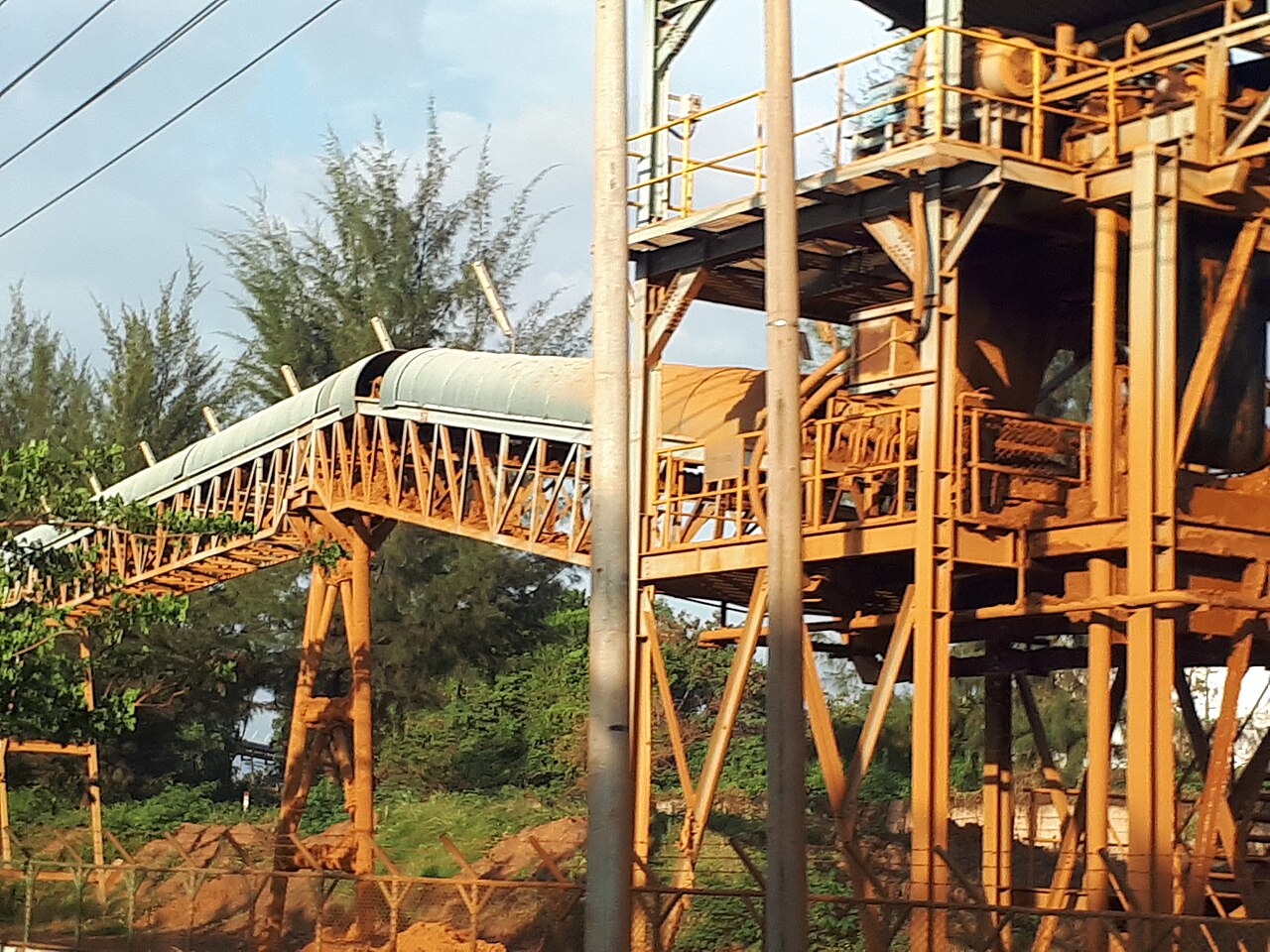
Top image: Photo: Famhar1968, CC BY-SA 4.0, via Wikimedia Commons

Indonesia is considering a halt to the construction of new nickel smelters that make semi-finished products, as a global surplus drags down prices of the metal at the heart of many electric vehicle batteries. The idea was raised by Bahlil Lahadalia, Coordinating Minister for Downstreaming and Energy Transition and Minister of Energy and Mineral Resources, and it has not yet become policy.
What the minister said
Speaking to reporters on the sidelines of the Investor Daily Summit in Jakarta on 7 October, Bahlil said that roughly 50–60% of the smelters now operating turn out semi-finished nickel, and that the government was weighing a moratorium on new plants of this kind while it pushes industries that make finished downstream products instead, according to Koran Jakarta, citing Antara. He said the option would be reported to President Prabowo Subianto.
“This is oversupply, which is why prices are falling.”
— Bahlil Lahadalia, reported by Koran Jakarta and CNBC Indonesia (translated from Indonesian)
Bahlil tied the move to a surplus of about 2.5 million tonnes, CNBC Indonesia reported. detikFinance noted that the unit behind that figure was not spelled out in his remarks, so it should be treated with some caution.
Which products could be affected
Reports differ on the scope. The Antara-based report in Koran Jakarta lists ferronickel, nickel pig iron (NPI), nickel matte and mixed hydroxide precipitate (MHP) as Indonesia’s main semi-finished products. The South China Morning Post mentions NPI and nickel matte specifically. That distinction matters for the EV supply chain: NPI goes mostly into stainless steel, while matte and MHP are intermediate feedstocks for battery materials. Until the government publishes a rule, it is not clear whether battery-grade intermediates would be caught.
The Oregon Group, a resources news site, reported that nickel fell to a 2026 low of US$15,510 a tonne on 2 October. It said Indonesia’s smelters would need about 415 million tonnes of ore a year at full capacity, against expected 2026 ore output of roughly 290 million tonnes. Citing Indonesian Nickel Miners Association (APNI) data via the OECD, it counted 55 RKEF smelters, 10 HPAL plants and 8 nickel-matte plants in the country.
Industry and investor reaction
The Indonesian Nickel Industry Forum (FINI) responded this week. Its chairman, Arif Perdana Kusumah, told CNBC Indonesia that the supply-demand balance has shifted sharply since late 2025 and that tighter government supply policy has, in theory, already rebalanced the market. FINI’s figures put Indonesia at about 60% of world nickel supply, with 2.5 million tonnes produced in 2025: 2.05 million tonnes of NPI, ferronickel and matte, and 450,000 tonnes of MHP and nickel sulphate. The forum expects Indonesian processed nickel output to fall by 3.5–4% in 2026, while MHP capacity, driven by HPAL projects, is set to more than double to over 900,000 tonnes by the end of 2027.
Any freeze would land mostly on Chinese investors. detikFinance, summarising the SCMP report, cited an estimate from the US-based Center for Advanced Defense Studies that Chinese money accounts for about 75% of Indonesia’s nickel refining industry. Nukila Evanty of the Asia Centre said Chinese investors were likely to be significantly affected.
What it means for EV buyers
Nothing changes at the showroom for now. The proposal targets new semi-finished smelters, not existing plants, and it is still at the discussion stage. Over the longer term, the government’s stated aim is to move nickel further along the chain towards products such as battery cells, which ties in with the first EV battery export from Weda Bay earlier this month and with the ministry’s plan to let locally made batteries count towards the 60% local-content rule. If battery-grade intermediates are spared and cell-making grows, local supply for Indonesian-assembled EVs could improve. If they are not, battery-material projects could slow. The environmental footprint of the smelter parks, covered in our report on their largely coal-fired power base, is a separate question the proposal does not address.
Update, 23 October: Chinese producers at the Morowali industrial park are now discussing coordinated output cuts, possibly including battery-grade MHP. Read our follow-up.
Sources: Koran Jakarta (Antara), 7 Oct 2026; CNBC Indonesia, 14 Oct 2026; detikFinance, 10 Oct 2026; South China Morning Post, 10 Oct 2026; The Oregon Group, 9 Oct 2026
Comments
One response to “Indonesia weighs halt to new semi-finished nickel smelters amid glut”
[…] and with tighter ore-mining quotas set by the Indonesian government. Jakarta has separately been weighing a halt to new semi-finished nickel smelters because of […]