
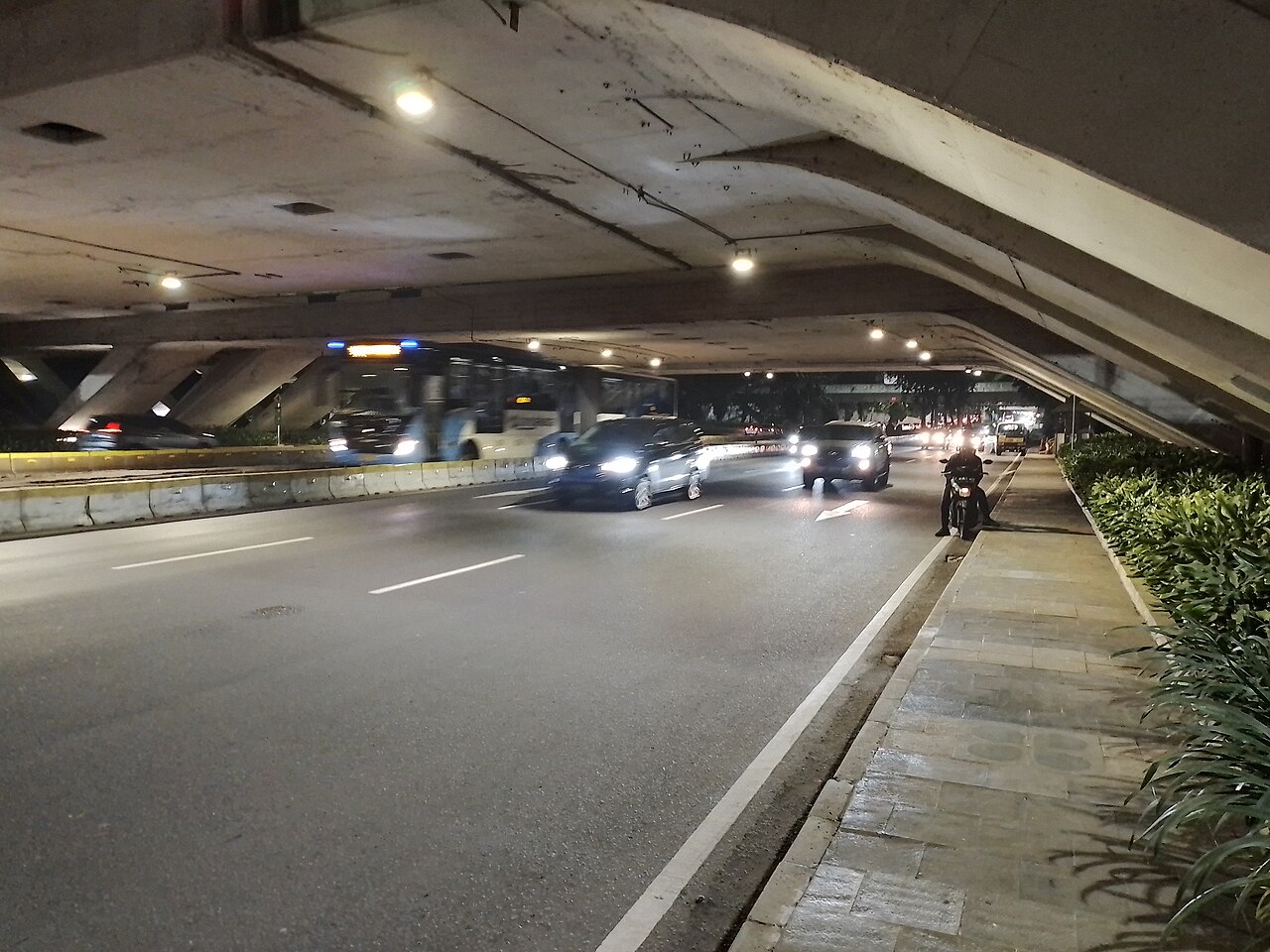
Top image: Photo: RasyaAbhirama13, CC BY-SA 3.0, via Wikimedia Commons

Indonesia’s Minister of Industry, Muhammad Sarmuji, says the government will not take a position on scrapping electric vehicles’ exemption from Jakarta’s odd-even traffic rule until it has heard the full case from the industry association that floated the idea.
Speaking to reporters at the Ministry of Industry in Jakarta on Wednesday 28 October, Sarmuji said the Indonesian Electric Vehicle Industry Association (Periklindo) would soon meet the ministry to explain its reasoning, CNBC Indonesia and Suara.com reported.
“Periklindo will hold an audience with us. We will listen more fully to what its aspirations are.” – Muhammad Sarmuji, Minister of Industry, quoted by Suara.com (translated from Indonesian)
What Periklindo proposed
The idea came from Periklindo chairman Moeldoko, who suggested that the odd-even exemption for EVs could be reconsidered once electric vehicles make up roughly 30% of the vehicle population. As we reported on 27 October, he framed it as a future step rather than an immediate change. According to Suara.com, Moeldoko said he had discussed the idea with Jakarta Governor Pramono Anung, and argued that the perk is still needed for now because EV numbers remain low.
“Right now the population is still small, so let [sales] stay buoyant first.” – Moeldoko, Periklindo chairman, quoted by Suara.com (translated from Indonesian)
A non-fiscal incentive with real weight
Jakarta’s odd-even scheme limits access to a set of major roads on alternating dates, depending on whether a car’s number plate ends in an odd or even digit. Battery electric vehicles are currently exempt, making it one of the most visible everyday advantages of owning an EV in the capital.
Sarmuji said the government would weigh the gains and losses before deciding whether to keep or drop this non-fiscal incentive, acknowledging that removing it would directly affect EV sales in Jakarta, Suara.com reported. CNBC Indonesia noted that no decision or timeline has been set. Jakarta’s provincial administration is also looking at the rules separately – see our earlier report on the odd-even review and industry warnings over the EV exemption.
Hybrids back in the frame
In the same remarks, Sarmuji repeated his view that plug-in hybrids (PHEVs) and range-extended EVs (REEVs) could merit incentives, arguing that their fuel savings could help reduce the state’s fuel-subsidy bill and improve air quality. He did not say what form or size any such incentive might take, according to CNBC Indonesia.
The minister first pushed the idea earlier this month, as covered in our report on hybrid and REEV incentives. On 27 October he also urged Toyota to step up battery-electric production and exports (read more).
What it means for buyers
- Nothing changes yet. Battery EVs remain exempt from Jakarta’s odd-even rule, and no decision or timetable has been announced.
- The proposed trigger is a long way off. Periklindo’s suggested threshold is an EV share of around 30%, and Moeldoko himself argues the perk should stay for now.
- Watch the hybrid debate. If PHEVs and REEVs gain incentives, the gap between them and pure EVs could narrow. Our guide to hybrids, PHEVs, REEVs and EVs explains the differences.
Explainer: how the rule works, which roads and vehicles it covers and what the review could mean for buyers, in our guide to Jakarta’s odd-even rule and EVs.
Sources: CNBC Indonesia – Respons Menperin Soal Usul Mobil Listrik Tak Perlu Lagi Insentif Gage (28 Oct 2026); Suara.com – Insentif Bebas Ganjil Genap untuk Mobil Listrik Mau Dicabut? Ini Kata Menperin (28 Oct 2026)