
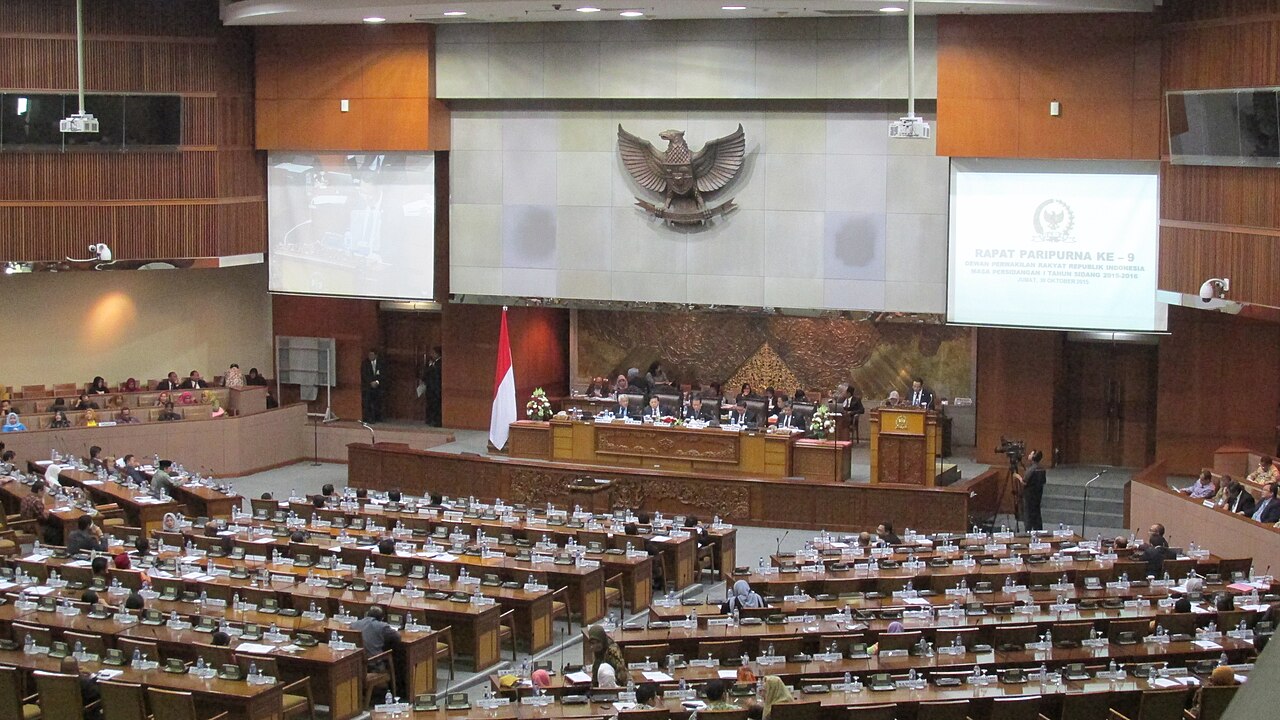
Top image: Photo: Andylala Waluyo (VOA), Public domain, via Wikimedia Commons

Electric vehicles and self-driving technology are set to get an explicit place in Indonesian road law for the first time. At a working meeting with the House of Representatives’ Commission V on 30 September, Transport Minister Dudy Purwagandhi said the government accepts lawmakers’ proposals to classify motor vehicles by their power source and to cover autonomous driving systems in a revised version of Law No. 22 of 2009 on Road Traffic and Transport (UU LLAJ), CNBC Indonesia and detikOto reported.
The current law dates from 2009, before battery-electric cars and motorbikes were on sale in meaningful numbers in Indonesia. Since then, EV rules have mostly been set through presidential and ministerial regulations rather than primary legislation.
What the draft would change for EVs
According to detikOto, the proposals sit in Chapter VII of the bill, which deals with vehicle types. The revision would set out:
- Vehicle categories by use: private vehicles, public transport and shared or ride-hailing services, each with its own requirements.
- Classification by power source: vehicles grouped by fuel or energy type, which brings battery-electric vehicles into the law’s own definitions.
- Autonomous technology: rules for steering systems with partial or full automated control.
Autonomous vehicles will not become a separate vehicle category. Instead, detikOto reported, self-driving is treated as a development of steering technology with automatic control systems. Kumparan added that the bill also anticipates electronic traffic enforcement.
A much wider rewrite
The EV provisions are one part of a broad overhaul. Viva reported that the government’s list of issues (DIM) proposes revising 89 articles, adding 56 new ones and deleting five. The headline changes concern ride-hailing (ojol) platforms, including tariffs and the obligations of app companies, and tougher criminal penalties for over-dimension, overloaded (ODOL) trucks that would extend liability from drivers to vehicle owners, companies and cargo owners.
The minister wants the work done quickly. “Our hope is this can be completed in 2026, so it can be implemented in 2027,” he said, as quoted by Viva (translated from Indonesian). CNBC Indonesia noted that the bill is on the 2026 priority legislation list (Prolegnas). No detailed EV wording has been published yet, and the bill still has to pass through committee deliberations before a plenary vote.
Why it matters
Much of Indonesia’s EV policy so far has been about money, such as the tax incentives and the local-content (TKDN) rules. Day-to-day questions about how EVs are treated on the road and in transport services have been handled piecemeal. This year, for example, some owners have faced refusals on ferries while operators set their own charging and safety rules. Bringing power source into the main traffic law could give regulators a clearer base for EV-specific technical, safety and transport rules later on.
The ride-hailing provisions also matter for electrification, because app-based fleets are among the fastest adopters of electric cars and motorbikes in Jakarta, including the VinFast-based Green SM services.
What it means for buyers
Nothing changes yet for people who own or are buying an electric car or motorbike. Registration, taxes and incentives stay under the existing rules until the revised law is passed and its implementing regulations are issued, which on the government’s timetable would be 2027 at the earliest. The practical details, such as how EVs will be defined, what technical requirements follow, and how driver-assistance features are treated, will depend on the final text and the regulations that come after it. We will report on them as they emerge.
Sources: CNBC Indonesia; detikOto; Viva; Kumparan