
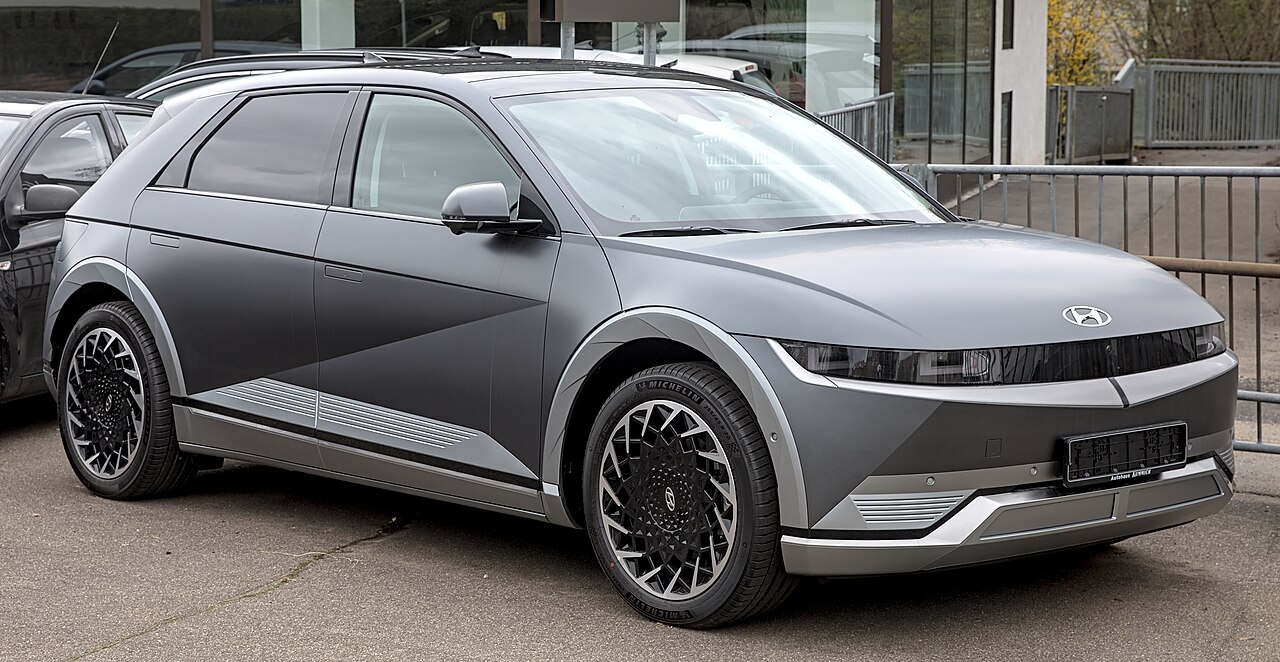
Top image: Photo: Alexander-93, CC BY-SA 4.0, via Wikimedia Commons
Electric cars have gone from niche to mainstream in Indonesia remarkably quickly. Battery electric vehicle (BEV) wholesales reached 101,171 units in the first eight months of 2026, almost double the same period of 2025, according to Gaikindo data reported by Kompas. There is now a model for almost every budget, from compact city cars under Rp200 million to luxury SUVs costing billions. This guide sets out what electric cars cost in Indonesia in 2026, which models people are buying, which incentives apply, and what it costs to run one compared with a petrol car.
What electric cars cost in Indonesia: price bands
The prices below are on-the-road (OTR) Jakarta figures unless stated, taken mainly from Kompas’s September 2026 price list. Prices elsewhere in the country are usually higher because of shipping and regional taxes.
Entry level: under about Rp250 million
- Wuling Aira EV: Rp155 million (Standard Range) to Rp175 million (Long Range).
- VinFast VF 3: Rp152 million with a battery-rental plan, or around Rp215 million with the battery included, according to Moladin.
- Wuling Air EV Lite: Rp214 million to Rp251 million.
- BYD Atto 1: Rp205 million (Dynamic) and Rp245 million (Premium), per Kompas.
- Geely EX2: Rp239.9 million (Pro) and Rp269.9 million (Max).
- Chery Q: Rp249.9 million to Rp269.9 million at normal list price.
Mid-range: roughly Rp250 million to Rp500 million
This is where the family crossovers sit. The Jaecoo J5 EV costs Rp279.9 million to Rp324.9 million. The MG S5 EV runs from Rp355.9 million and the BYD M6 seven-seater from Rp423 million. Several newcomers launched at GIIAS 2026 with introductory prices, including the Changan Nevo Q05 from Rp309 million and the BAIC T1 at a retail price of Rp393 million.
Upper and premium: Rp500 million and above
Above the mid-range you will find the BYD Sealion 7 Performance (Rp719 million), the Hyundai Kona Electric (about Rp565 million to Rp690 million) and the Ioniq 5 (Rp809 million to around Rp926 million). Past the Rp1 billion mark are cars such as the Hyundai Ioniq 6 (Rp1.237 billion) and the Lexus ES 350e (Rp1.48 billion).
The models Indonesians are actually buying
Chinese brands have almost all of the market. Gaikindo’s January to August 2026 figures, compiled by Kompas, show that all of the ten best-selling BEVs are Chinese:
- Jaecoo J5: 23,359 units
- BYD Atto 1: 19,909
- Geely EX2: 9,769
- BYD M6: 6,694
- BYD Sealion 7: 4,251
Most sales are compact, affordable models. For many buyers an EV is now priced like a mid-spec petrol hatchback or small SUV, not like a luxury car.
Incentives: what applies in 2026
National taxes: PPN DTP and PPnBM
Until the end of 2025, locally built EVs with at least 40% local content (TKDN) had 10 percentage points of the 12% VAT paid by the government (PPN DTP), so buyers paid 2%. That scheme, set out in PMK 12/2025, expired in December 2025. The import-duty and luxury-tax exemptions for fully imported (CBU) EVs also ended on 31 December 2025. Qualifying BEVs have also been exempt from luxury-goods sales tax (PPnBM), according to Kompas.
In May 2026 the government announced a new PPN DTP scheme of 40% to 100% for pure battery EVs only (no hybrids), with a quota of 100,000 cars. Kompas reported that nickel-based batteries would get the larger discount. The launch was pushed back more than once, first from June and then into August. In September the industry minister said the government was also studying incentives tied to local content, and the required TKDN is due to rise from 40% now to 60% in 2027–2029 and 80% in 2030. Ask the dealer in writing which tax treatment applies to the exact variant you are buying.
Regional taxes and Jakarta’s odd-even exemption
Annual vehicle tax (PKB) and the transfer-of-ownership fee (BBNKB) are set by each province. In May 2026 Jakarta confirmed that EVs remain exempt from both. Jakarta EVs are also still exempt from the odd-even number-plate restriction under Governor Regulation 88/2019. Outside Jakarta the rules vary, so check with your local Samsat office.
Running costs: electricity versus petrol
Here is a simple monthly comparison for 1,000 km of driving. We assume an EV covers about 6.6 km per kWh, a figure the energy ministry has used (Republika), and a petrol car does 12 km per litre. Both are illustrative. Your own car and driving style will change the numbers.
- EV, home charging (about 152 kWh at Rp1,444.70/kWh for 1,300–2,200 VA households): around Rp219,000. PLN also offers a 30% discount for night charging between 22:00 and 05:00, which brings this down to roughly Rp153,000.
- EV, public SPKLU (Rp2,467/kWh): around Rp374,000, plus a service fee of up to Rp25,000 per fast-charging session or Rp57,000 per ultra-fast session.
- Petrol car on Pertalite (Rp10,000/litre): around Rp833,000.
- Petrol car on Pertamax (Rp15,950/litre in Java and Bali from 1 September 2026): around Rp1.33 million.
These figures leave out local electricity taxes and the car’s charging losses, but the gap is clear. Mostly charging at home costs a fraction of running a petrol car, and EVs also need less routine servicing because they have no oil changes.
What to check before you buy
- Battery ownership. Some brands sell cars with a battery-rental plan. The price looks lower, but you pay a monthly fee. Compare the total cost over the years you expect to own the car.
- Warranty. Confirm how long the battery warranty lasts, what mileage it covers and what capacity it guarantees, and check whether it transfers to the next owner.
- Home power supply. Many homes need a higher electricity connection before they can use a wallbox charger. Include that cost in your budget.
- Service network. Several brands are new to Indonesia. Check where the nearest authorised workshop is, especially outside Java.
- Resale value. Used EV prices are still settling, and battery health is the main thing buyers look at.
Prices, tariffs and incentive rules in Indonesia change often, sometimes month to month. Figures here were correct according to the sources linked at the time of writing; always confirm current prices, promotions and eligibility with an authorised dealer or the relevant provider before you commit.
FAQ
What is the cheapest electric car in Indonesia?
In September 2026 the cheapest listed options were the VinFast VF 3 at Rp152 million on a battery-rental plan and the Wuling Aira EV from Rp155 million with the battery included.
Are EVs exempt from Jakarta’s odd-even rule?
Yes. Battery electric vehicles remain exempt under Governor Regulation 88/2019, and Jakarta also still waives PKB and BBNKB for EVs.
Is the 2026 PPN DTP discount in force?
The scheme of 40% to 100% depending on battery type has been announced but delayed several times. Check its current status with the dealer before you sign.
Do hybrids get the same incentives?
No. The government has said the new PPN DTP scheme covers pure battery EVs only, not hybrids.
Sources: Kompas – Update Daftar Harga Mobil Listrik September 2026; Kompas – Cicilan Mobil Listrik Rp 200 Jutaan: BYD Atto 1 dan Geely EX2; Kompas – Daftar Mobil Listrik Terlaris hingga Agustus 2026; Moladin – 15 Mobil Listrik Termurah September 2026; CNN Indonesia – Daftar Insentif Mobil Listrik yang Disetop; Kompas – Insentif Mobil Listrik Berakhir 2026; Kompas – Menkeu Targetkan Insentif Mobil dan Motor Listrik Mulai Juni 2026; CNBC Indonesia – Purbaya Tunda Insentif Mobil Listrik; DDTCNews – Subsidi dan PPN DTP untuk Kendaraan Listrik Akan Segera Diluncurkan; Antara – Pemerintah kaji insentif kendaraan listrik berbasis TKDN; Kompas – Mobil Listrik Tetap Bebas Ganjil Genap di Jakarta; Republika – Isi Daya Fast Charging di SPKLU Kena Tambahan Biaya; Nasional.news – Tarif Listrik PLN September 2026; GridOto – PLN Diskon 50 Persen Pemasangan Home Charging; Antara – Harga BBM 1 September 2026
Leave a Reply