Tag: Gaikindo

  • Industry minister seeks hybrid and REEV incentives, including odd-even exemption

    Industry minister seeks hybrid and REEV incentives, including odd-even exemption

    Top image: Photo: Alex Neman, CC BY-SA 4.0, via Wikimedia Commons

    Indonesia’s Industry Minister, Muhammad Sarmuji, says his ministry will push for a package of incentives for hybrid, plug-in hybrid (PHEV) and range-extended electric vehicles (REEV). The proposed perks include exemption from city odd-even traffic rules and dedicated parking. Until now those benefits have been closely tied to battery electric vehicles (BEVs). Not everyone is convinced: a think-tank warns that the money and perks should stay focused on cars that burn no fuel at all.

    What the minister proposed

    Sarmuji spoke on Wednesday 21 October after meeting the car industry association Gaikindo at the ministry in Jakarta, CNBC Indonesia and detikFinance reported. He gave two reasons: cutting fuel consumption and emissions as fuel prices rise, and giving the domestic car industry a boost.

    According to the two reports, the ideas fall into two groups:

    • Non-fiscal incentives: easier administration, exemption from odd-even (ganjil genap) restrictions in cities, dedicated parking spaces and possibly charging facilities.
    • Fiscal incentives: some form of tax relief, which the government will study. Sarmuji said this would not necessarily match what BEVs receive.

    “The tax relief doesn’t have to be the same. What matters is that there is an incentive so the industry grows too,” he said, as quoted by detikFinance (translated from Indonesian).

    The minister acknowledged that no specific scheme exists yet for hybrids, PHEVs or REEVs. He argued that these vehicles suit local factories because they pair a battery with a combustion engine, so carmakers would not need to overhaul their existing component base. He said he would raise the plan with the Finance Ministry and other stakeholders and hoped to hold a meeting before the end of October. He is aiming to finish it this year, with early next year as a fallback, CNBC Indonesia reported. Because traffic and parking rules belong to other agencies and local governments, the ministry would also need to coordinate with them.

    Gaikindo chairman Putu Juli Ardika backed the move. He told reporters that the association’s survey, which it shared with the ministry, found that most vehicles produced in Indonesia can meet the 60% local-content (TKDN) requirement, detikFinance reported. The report did not say how a TKDN threshold would apply to hybrids specifically.

    Think-tank: keep the focus on battery EVs

    The proposal drew criticism from the INDEF Green Transition Initiative (INDEF GTI). According to KatadataOTO, the group urged President Prabowo Subianto’s government to channel incentive funding into battery-powered cars instead. It argues that BEVs give the biggest fuel saving for each rupiah of incentive, and that this would ease pressure on the state budget.

    Andry Satrio Nugroho, who heads industrial and transport decarbonisation at INDEF GTI, put it plainly: “Hybrid cars still fill up at the petrol station; electric cars don’t” (translated from Indonesian).

    INDEF GTI also pointed to fuel shortages in some regions. According to the figures KatadataOTO reported, consumption of subsidised fuel reached about 13.4 million kilolitres by September, up 9.1% on a year earlier. Energy subsidies and compensation payments have reached Rp 376.8 trillion, or 84.3% of the 2026 budget ceiling.

    Why the odd-even question matters

    The timing is sensitive. Jakarta is already reviewing its odd-even scheme, including whether BEVs should keep their exemption, and Leapmotor has already warned about what losing it could mean for EV demand. If the exemption were also given to hybrids, PHEVs and REEVs, it would cover far more cars and become less valuable to each one, especially on congested corridors where the rule is meant to cut traffic.

    Hybrids have had tax help before. Under the 2025 rules covered in our guide to EV taxes and incentives, battery EVs with at least 40% local content had 10 percentage points of VAT covered by the state, while hybrids got a smaller luxury-tax discount. The ministry is also still waiting on the Finance Ministry over a separate, long-delayed electric motorbike incentive.

    What it means for buyers

    For now, nothing has changed. No hybrid incentive has been drafted, and any tax relief needs Finance Ministry approval. Any traffic perk also depends on decisions by Jakarta and other cities. If you are choosing between a hybrid and a battery EV mainly for the odd-even exemption, that advantage could narrow, either because hybrids gain the exemption or because Jakarta changes the BEV rule. It is worth keeping an eye on the Finance Ministry meeting Sarmuji hopes to hold before the end of the month.

    Update, 23 October: Periklindo has since urged the government to extend EV incentives to buses and logistics trucks, while backing support for hybrids. Read our follow-up.

    Explainer: how hybrids, plug-in hybrids, REEVs and battery EVs differ, and which suits which driver, in our guide to choosing an electrified car in Indonesia.

    Update (27 October 2026): Periklindo chairman Moeldoko has also weighed in on the odd-even exemption. Read our follow-up.

    Update: On 27 October Sarmuji also asked Toyota to step up full battery-electric production in Indonesia. Read our follow-up.

    Explainer: how the rule works, which roads and vehicles it covers and what the review could mean for buyers, in our guide to Jakarta’s odd-even rule and EVs.

    Sources: CNBC Indonesia; detikFinance; KatadataOTO.
  • GAC, LEPAS and BAW line up new EV debuts for November’s Gaikindo Auto Week

    GAC, LEPAS and BAW line up new EV debuts for November’s Gaikindo Auto Week

    Top image: Photo: JustAnotherCarDesigner, CC0, via Wikimedia Commons

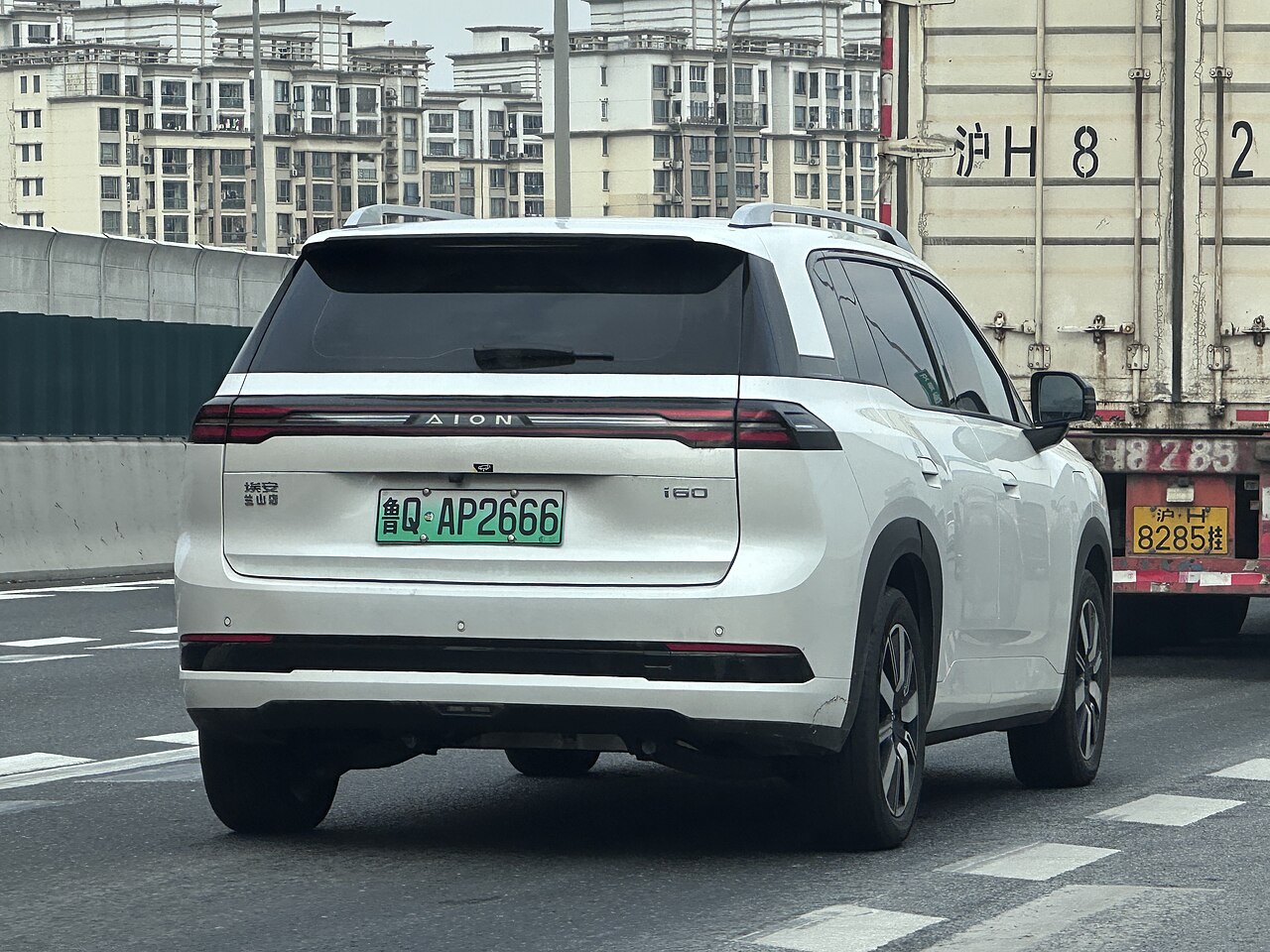
    Update, 8 November 2026: GAC has since confirmed the model as the Aion i60 and opened pre-bookings. Read our follow-up.

    Three Chinese brands have now confirmed, or strongly signalled, new electric models for Gaikindo’s year-end motor show, setting up a busy November for Indonesian EV shoppers. GAC Indonesia says an electric SUV never before shown in the country is coming, LEPAS has confirmed its E6 SUV is on schedule, and newcomer BAW plans to put a price on its M8 electric people carrier.

    The show, officially the Permata Bank GAIKINDO Auto Week 2026 (GAW 2026, still widely called GJAW), runs from 20 to 29 November at ICE BSD City in Tangerang, according to the organiser’s website. For the first time, smaller satellite exhibitions will run simultaneously from 25 to 29 November in nine other cities, including Bali, Bandung, Makassar, Medan and Surabaya, IDN Times reported.

    GAC: an Aion SUV new to Indonesia

    GAC Indonesia plans to unveil a new battery-electric SUV at its next event, which OtoDream understands to be GAW 2026. Speaking in Bekasi, Iqbal Taufiqurrahman, who leads product planning and strategy at GAC Indonesia, did not name the model but stressed its novelty:

    “This has never been displayed in Indonesia at all.” – Iqbal Taufiqurrahman, GAC Indonesia, to OtoDream (translated from Indonesian)

    OtoDream names the Aion i60 and Aion N60, two mid-size electric SUVs sold in China, as the likely candidates. In Chinese specification both use a 165 kW (about 224 PS) front motor and share a 2,775 mm wheelbase. The i60’s battery-electric version offers 56.68 kWh or 77.65 kWh packs with up to 520 km and 700 km of range on China’s generous CLTC test cycle, while the N60 is offered with three packs rated at up to 410, 510 or 610 km (CLTC). GAC has not confirmed which model, battery or price Indonesia will get, so these figures should be treated as indicative only. The new SUV would join the Aion line-up already on sale here, which runs from the compact UT to the Hyptec HT.

    LEPAS E6 “on track”

    Chery Group’s new-energy brand LEPAS says the E6 electric SUV remains on schedule for its public national debut at the November show, Bisnis Market reported on 16 October. Vice country director Temmy Wiradjaja confirmed the timing while opening a new dealer in Puri Indah, West Jakarta. Full specifications and variants are being held back for the show’s press day.

    The E6 is an adaptation of the LEPAS L6 EV that debuted at the Beijing show this year. In global form the L6 has a single 178 kW front motor, a 67 kWh lithium iron phosphate (LFP) battery and up to 510 km of range on the older NEDC cycle; Indonesian figures may differ. See our new LEPAS directory entry.

    BAW M8: a big electric MPV

    Beijing Automobile Works (BAW), which first showed five models at GIIAS in July, has chosen the M8 electric MPV as the first vehicle it will actually sell in Indonesia. Brand marketing director Rifkie Setiawan told JawaPos that the seven-to-nine-seat model suits Indonesian buyers who often travel in groups, and that the price and full specification will be announced at GAW 2026. CleanTechnica has reported an 81 kWh LFP battery and up to 505 km of claimed CLTC range for the M8, and that BAW plans knock-down assembly in West Java. We have added BAW to our EV directory.

    What it means for buyers

    • More choice in family-sized EVs. Two mid-size SUVs and a large MPV would add competition in segments where buyers already compare models such as the MG S6 EV and the Danza D9 MPV.
    • No prices yet. None of the three brands has published Indonesian pricing, and Chinese-market range figures (CLTC) are typically optimistic compared with real-world driving.
    • Tax status matters. Whether these cars are imported or locally assembled will affect the final price; our 2026 EV tax and incentive guide explains why.

    Sources: OtoDream (18 Oct 2026); Bisnis Market (16 Oct 2026); JawaPos (13 Oct 2026); CleanTechnica (10 Aug 2026); IDN Times (22 Sep 2026); GAIKINDO Jakarta Auto Week.

  • EV sales pass 2025 total by September as Jaecoo J5 and BYD Atto 1 lead

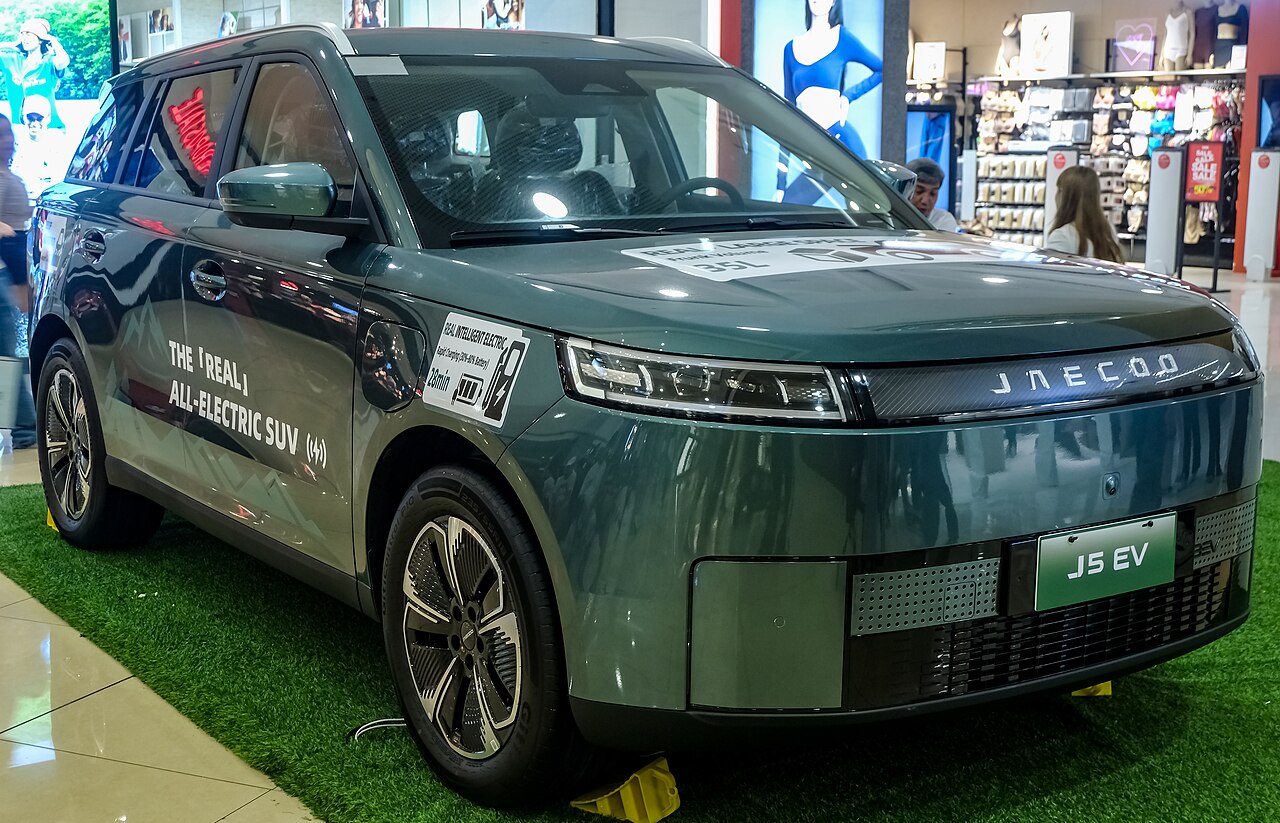
    EV sales pass 2025 total by September as Jaecoo J5 and BYD Atto 1 lead

    Top image: Photo: Ethan Llamas, CC BY-SA 4.0, via Wikimedia Commons

    Indonesia has already sold more battery-electric cars in the first nine months of 2026 than in the whole of 2025, and the race for the top spot is tightening. Gaikindo wholesale figures reported by Kontan on Monday show 117,218 battery-electric vehicles (BEVs) shipped from factories to dealers between January and September, equal to about 17.3% of all new cars sold.

    That total is already above the 103,931 BEVs sold across all of 2025. Kontan describes the difference as growth of roughly 12.8%; note that this compares nine months of 2026 with twelve months of 2025, so the true year-on-year rate for the same period will be considerably higher.

    The ten best-selling electric cars, January–September 2026

    According to the Gaikindo data cited by Kontan, the top ten battery-electric models by wholesales were:

    • Jaecoo J5 EV: 26,635 units
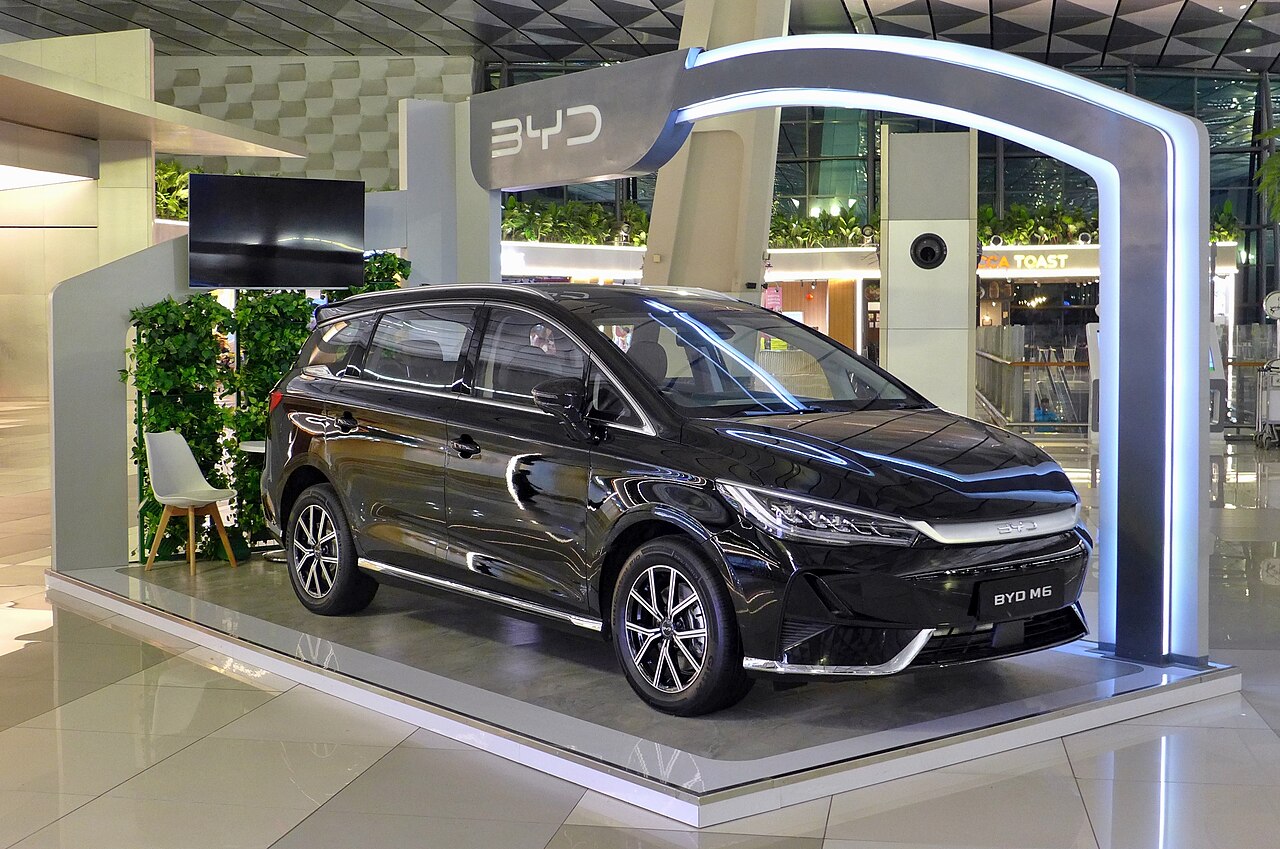
    • BYD Atto 1: 24,749
    • Geely EX2: 11,659
    • BYD M6: 7,043
    • BYD Sealion 7: 4,266
    • Wuling Darion EV: 4,020
    • Denza D9: 3,009
    • MG S5 EV: 2,914
    • Geely EX5: 2,760
    • VinFast VF 3: 2,447

    The D9 appears under the Denza name in the data, but the brand now trades in Indonesia as Danza after a trademark dispute, as we reported earlier this month.

    A two-horse race at the top

    The Jaecoo J5 EV and BYD Atto 1 dominate the segment. On our own arithmetic, the two models together account for about 44% of all BEV wholesales so far this year, and the J5 EV alone for almost 23%. BYD’s three models in the top ten add up to 36,058 units, roughly 31% of the total.

    The gap between the two leaders is narrowing. Monthly figures published by detikOto show the Atto 1 was Indonesia’s best-selling car of any kind in September, with 4,840 units, ahead of every Toyota and Daihatsu model. The J5 EV was fifth overall with 3,276 units, and the Geely EX2 13th with 1,890. That left the Atto 1 about 1,900 units behind the J5 EV over nine months (our calculation), with a quarter still to run.

    Nine of the ten models come from Chinese brands; the VinFast VF 3, from Vietnam, is the exception. No Japanese, Korean or European model makes the list.

    How big was September?

    Gaikindo’s month-by-month BEV figure for September was not included in the reports we reviewed. As a rough guide only: in our September sales report we noted that Stapo.id, citing Gaikindo, put January–August BEV wholesales at about 101,171 units. Subtracting that from the new nine-month total would imply around 16,000 BEVs in September, slightly below August’s 17,413. Because the two totals come from different outlets, treat that estimate with caution.

    September was a softer month for the market overall: total car wholesales fell 2.7% from August to 79,540 units, according to detikOto.

    A growing fleet

    The sales surge is feeding a fast-growing fleet. Ministry of Industry data reported by Jawa Pos and featured again by Antara on Monday put the number of battery-electric vehicles on Indonesian roads at 541,678 by August 2026, up from 406,916 in 2025. Of these, 259,077 were cars and 280,136 motorbikes.

    What it means for buyers

    The two best-sellers sit at different price points. BYD’s Atto 1 starts at around Rp 199 million in Jakarta, while the Jaecoo J5 EV costs from about Rp 279.9 million after a second price rise in September. Both brands have been adjusting prices as currency and shipping costs bite (BYD also raised Seal and Sealion 7 prices in October), so buyers should confirm the current on-the-road price with a dealer before committing.

    Strong volumes also matter after the sale: popular models tend to have better parts availability, more independent specialists and firmer resale values. With the government’s 60% local-content rule due from 2027, it is also worth asking dealers whether a model is assembled locally, since that affects which tax incentives apply. Our guide to EV taxes and incentives explains the current rules, and the IndoEVs EV directory lists every brand on sale.

    Sources: Kontan (Gaikindo data, 12 Oct 2026); detikOto; Jawa Pos; Antara.

  • Car sales dip 2.7% in September as BYD and Jaecoo hold top-10 places

    Car sales dip 2.7% in September as BYD and Jaecoo hold top-10 places

    Top image: Photo: Bahnfrend, CC BY-SA 4.0, via Wikimedia Commons

    Indonesia’s new-car market cooled slightly in September after a record August, but the two Chinese brands that have led the shift to electric cars both kept their places among the ten best-selling makes. Data from the car manufacturers’ association Gaikindo, reported by CNN Indonesia and detikOto, show wholesales (factory to dealer) of 79,540 units, down 2.7% from August.

    The month-on-month dip follows an unusually strong August, which Bloomberg Technoz described as a record at 81,757 units. Compared with a year earlier the market is still growing quickly: September wholesales were 28.1% higher than the 62,090 units shipped in September 2025.

    The headline numbers

    • Wholesales, September: 79,540 units (down 2.7% month on month, up 28.1% year on year).
    • Retail sales, September: 81,243 units (dealer to customer), down 2.6% from August’s 83,421 and up 27.4% year on year.
    • January–September wholesales: 679,020 units, up 21% on the same period of 2025.
    • January–September retail: 676,223 units, up 15.4%.

    BYD third, Jaecoo eighth

    According to the brand ranking published by CNN Indonesia, BYD was the third-largest brand in September with 6,031 wholesale units, behind Toyota (21,877) and Daihatsu (11,558). On retail sales BYD did even better, with 7,421 units delivered to customers. By our calculation, that is around 1,390 more cars sold to buyers than were shipped to dealers, suggesting BYD’s network was drawing on existing stock during the month.

    Jaecoo, the Chery group brand whose J5 EV has become one of the market’s most popular electric cars, was eighth on both measures with 3,400 units. On our arithmetic, BYD took roughly 7.6% of September wholesales and Jaecoo about 4.3%.

    Over the first nine months, Bisnis.com puts BYD fifth overall with 43,727 wholesale units and a 6.4% share, behind Toyota, Daihatsu, Suzuki and Mitsubishi Motors. Jaecoo is eighth year to date with 27,234 units (4.0%).

    Electric-car figures still to come

    None of the reports we reviewed broke out battery-electric (BEV) sales for September, so the month’s EV total is not yet clear. For context, Stapo.id, citing Gaikindo, reported 17,413 BEVs in August and about 101,171 in the first eight months of the year. Update (12 October): Gaikindo data for January–September now show 117,218 battery-electric cars sold, already more than in all of 2025. See the top ten EV models so far this year.

    Price changes may also shape the final quarter. BYD raised prices on the Seal and Sealion 7 from October, and Jaecoo lifted the J5 EV Premium’s price in September, citing currency pressures.

    Can the industry hit its target?

    Gaikindo’s full-year target is 850,000 units. As detikOto notes, reaching it would require about 171,000 more wholesales between October and December, or roughly 57,000 a month. That is well below the monthly run rate of around 80,000 seen in August and September, so the target looks within reach unless demand falls sharply.

    What it means for buyers

    A busy market generally means less room to haggle, and with recent EV price rises from BYD and Jaecoo, buyers considering an electric car may find year-end discounts thinner than in previous years. It is worth comparing current list prices in our Indonesia EV directory and checking which models still qualify for tax incentives. Motorbike buyers can read our report on September motorbike sales and the delayed e-motorbike incentive.

    Sources: CNN Indonesia (sales totals); CNN Indonesia (top 10 brands); detikOto; Bisnis.com; Bloomberg Technoz; Stapo.id. Data: Gaikindo.

  • Indonesia’s EV sales hit record in August as 2025 total nearly matched

    Indonesia’s EV sales hit record in August as 2025 total nearly matched

    Top image: Photo: TTTNIS, CC0, via Wikimedia Commons

    Indonesia’s battery electric vehicle (BEV) market posted its strongest month on record in August 2026, and the eight-month total has already come within touching distance of everything sold in the whole of 2025. Wholesale figures from the Indonesian Automotive Industry Association (Gaikindo), reported by several Indonesian outlets this month, show demand for fully electric cars continuing to climb even as the wider car market grows at a more modest pace.

    A record month

    According to a tally of Gaikindo data compiled by KilasJatim, BEV wholesales (factory-to-dealer shipments) reached 17,413 units in August, up 24.6% on July’s 13,972 units and the highest monthly figure yet recorded. That took the January–August total to 101,171 units, almost double (up 99.4%) the 50,749 units shipped in the same period of 2025. The full-year 2025 total was 103,931 units, meaning the market needed only around 2,760 more units to overtake it with four months of the year still to run.

    The overall market was also firm. iNews reported that total car wholesales reached 81,756 units in August, the best month of the year so far, bringing the year-to-date figure to 599,491 units. By IndoEVs’ calculation, fully electric cars therefore accounted for just over a fifth of all wholesales in August.

    Chinese brands fill the top ten

    The BYD Atto 1 was the standout model. Gaikindo’s own monthly bestseller report placed the compact hatchback second among all cars sold in Indonesia in August, with about 5,560 units, behind only the Daihatsu Gran Max and ahead of long-established favourites such as the Toyota Innova and Avanza. The Jaecoo J5 also made the overall top six with 3,214 units.

    VIVA published the August BEV top ten, every one of which came from a Chinese brand:

    • BYD Atto 1 – 5,560 units
    • Jaecoo J5 – 3,214
    • Geely EX2 – 1,595
    • Wuling Air EV – 754
    • BYD M6 – 679
    • AION V – 563
    • iCAR V23 – 500
    • Geely EX5 – 487
    • Wuling Darion EV – 443
    • MG S5 EV – 428

    An analysis by Maybank Investment Bank, reported by TNGlobal, put BYD’s share of the BEV segment at 32.7% over the first eight months, followed by Jaecoo at 23% and Geely at 12%. Maybank estimated that electrified vehicles of all types (battery electric, hybrid and plug-in hybrid) made up 28% of car sales over the period, with BEVs alone at 18%.

    Why buyers are switching

    Gaikindo attributes the surge mainly to product and price. Speaking to JawaPos, Jongkie Sugiarto, Gaikindo’s deputy chair for market development, said the jump reflected the arrival of well-designed BEVs at affordable prices. JawaPos also pointed to higher oil prices driven by geopolitical tensions, the growth of local assembly by global manufacturers, and a wave of new models unveiled at the GIIAS motor show in July.

    Mr Sugiarto was nonetheless cautious about how quickly electric cars would displace petrol models:

    “Replacing ICE, perhaps not yet, but their market share will keep rising. BEVs will keep growing.” – Jongkie Sugiarto, Gaikindo, to JawaPos (translated from Indonesian)

    What it means for buyers

    For Indonesian car shoppers, the numbers point to a market that is maturing quickly. A broader range of affordable models means more choice below the price points that once defined the segment, and strong volumes should help dealers and service networks expand beyond the big cities. Buyers should, however, keep an eye on how prices and incentives evolve now that the tax breaks for fully imported BEVs have ended and manufacturers are shifting to local production. Checking a model’s local-content status and the availability of after-sales support in their area remains sensible before signing.

    With the 2025 total all but matched by the end of August, 2026 is on track to be a new annual record for electric car sales in Indonesia. IndoEVs will report September’s figures when Gaikindo releases them.

    Follow-up: for brand-by-brand rankings and the rise of plug-in hybrids, see Plug-in hybrid sales pass 2025 total as BYD leans on Atto 1 and M6 DM.

    Sources: JawaPos – Mobil Listrik Makin Laris, Gaikindo Ungkap Harga Terjangkau jadi Kunci; VIVA – 10 Mobil Listrik Terlaris Agustus 2026; Gaikindo – Mobil Terlaris Agustus 2026; KilasJatim – Penjualan Mobil Listrik Indonesia Tembus 101 Ribu Unit; iNews – Penjualan Mobil Indonesia Tembus 599 Ribu Unit hingga Agustus 2026; TNGlobal – Maybank sees EV adoption continues to accelerate in Indonesia