Tag: Electric motorbikes

  • PEVS 2026 closes with 35,257 visitors as activists grade carmakers

    PEVS 2026 closes with 35,257 visitors as activists grade carmakers

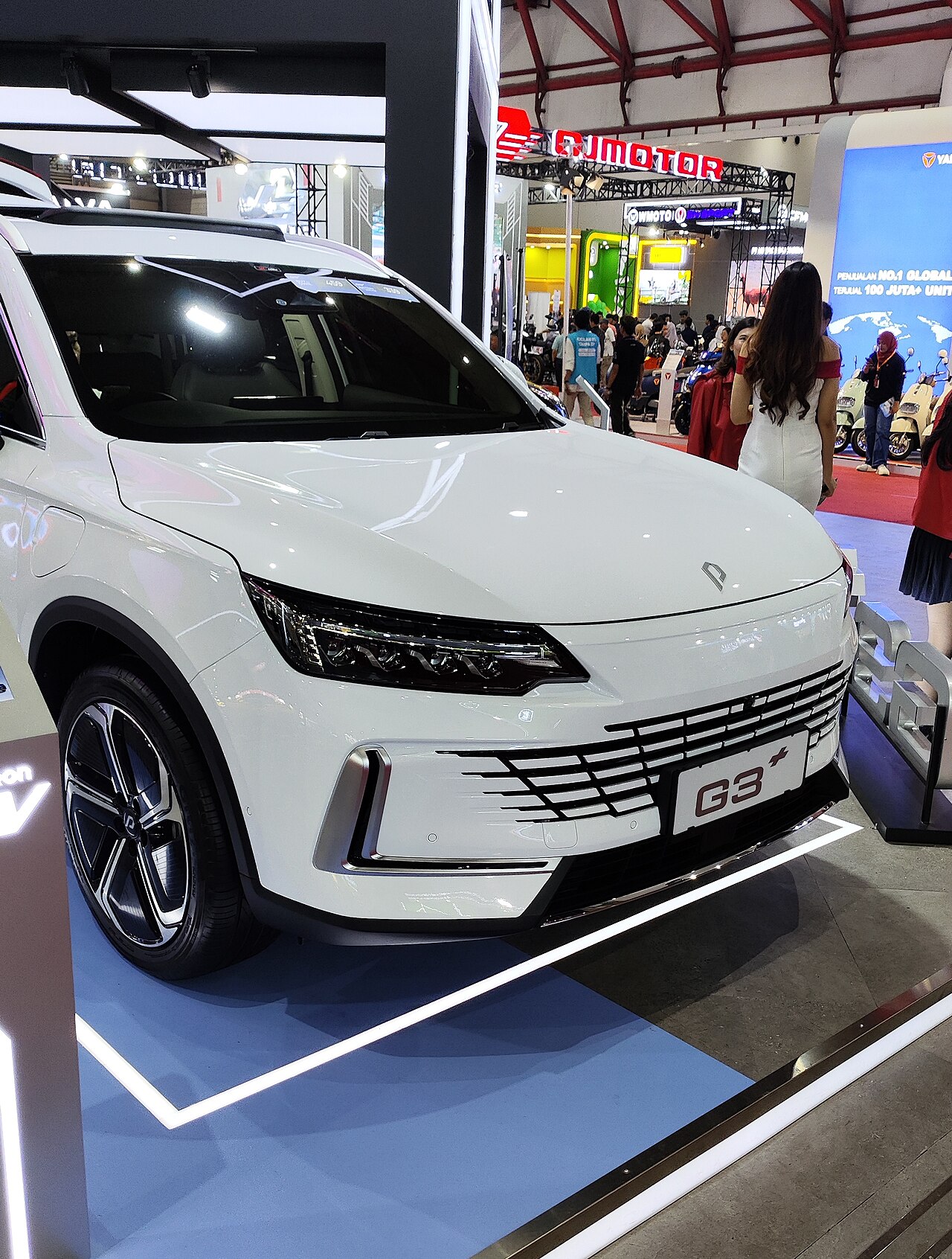
    Top image: Polytron G3+ electric SUV. Photo: Turbo Time 6, CC BY-SA 4.0, via Wikimedia Commons

    The Periklindo Electric Vehicle Show (PEVS) 2026 closed at JIExpo Kemayoran in Jakarta on Sunday 1 November, with organisers reporting 35,257 visitors over four days. The figure was counted at 15:00 WIB, three hours before the doors shut, so the final tally may be slightly higher, Antara and Jawa Pos reported.

    The closing day also brought a reminder that the electric transition has critics as well as customers: a civil-society coalition used the show to hand carmakers a symbolic “report card” on their supply chains.

    Visitors, exhibitors and deals

    According to Antara, 45 exhibitors took part, spanning car and motorbike brands and the wider supply industry. Names on the floor included BYD, Chery, Hyundai, MG, VinFast, Wuling, Alva, Polytron, Selis and United E-Motor, while Transjakarta, MRT Jakarta and LRT Jakarta also had stands. Visitors could test-drive cars and test-ride motorbikes inside the venue, and cashback of up to Rp200 million was offered on purchases of two- and four-wheel EVs. (We covered the opening-day market data in PEVS 2026 opens as battery EVs reach 16.88% of the car market, and the motorbike price cuts in our report on Honda, Polytron and United discounts.)

    Periklindo chairman Moeldoko said the attendance showed a positive public response to EVs, praising visitors’ “enthusiasm that did not fade from the first day to the closing” (translated from Indonesian), as quoted by Jawa Pos. Rumpoko Hadi, director of co-organiser Dyandra Promosindo, said the numbers reflected growing interest in electric vehicles.

    Neither organiser published a transaction total at the close. Back in May, Moeldoko told Antara the show was targeting Rp500 billion in sales; the same report said the previous edition attracted more than 40,000 visitors. On those figures, this year’s provisional attendance is roughly 12% lower (our calculation), although the comparison is not like-for-like because the 2026 count stopped before closing time.

    Activists’ “report card” for carmakers

    On the final day, the Just EV coalition, which includes the groups Satya Bumi, CERAH and Enter Nusantara, unfurled a banner at the show reading “Automaker Accountability Report Card”, Suara.com reported. Citing analysis by the international campaign Lead the Charge, the coalition said 18 major carmakers each scored below 50% on supply-chain environmental impact, support for climate policy, and respect for the rights of indigenous peoples and workers. Suara did not list the brands or their individual scores. Lead the Charge’s 2026 leaderboard, published in March, put even its top-ranked company, Tesla, just under 50% overall, Ford Authority noted.

    The coalition’s concerns centre on battery minerals. It linked nickel and cobalt mining to pollution and land conflicts in West Papua, North Maluku, Central Sulawesi and North Kalimantan, and pointed to the heavy reliance of nickel processing on coal-fired power, an issue we examined in our report on captive coal at nickel parks. It also argued that hybrids, which still burn fuel, keep adding to transport emissions.

    “The transition we want is not merely a change of technology.” Tamimah Ashilah, Satya Bumi (translated from Indonesian), via Suara.com

    Agung Budiono, executive director of CERAH, said EV makers should set standards for raw materials produced without fossil energy, while Enter Nusantara coordinator Reka Maharwati said the report card voiced young people’s concerns about green claims in the energy transition.

    What it means for buyers

    • Show discounts may linger: dealers often extend exhibition offers for a short time after a show ends. If you missed PEVS, ask whether the show price or cashback is still available before paying list price.
    • Battery chemistry and sourcing are becoming a talking point: as policy debates over nickel versus LFP batteries continue, expect more questions about where battery materials come from. Buyers who care can ask brands for their supply-chain or sustainability disclosures.
    • Compare brands in one place: many PEVS exhibitors, including Polytron, are listed in our EV directory for Indonesia.

    Sources: Antara (2 Nov 2026); Jawa Pos; Antara (22 May 2026); Suara.com; Ford Authority
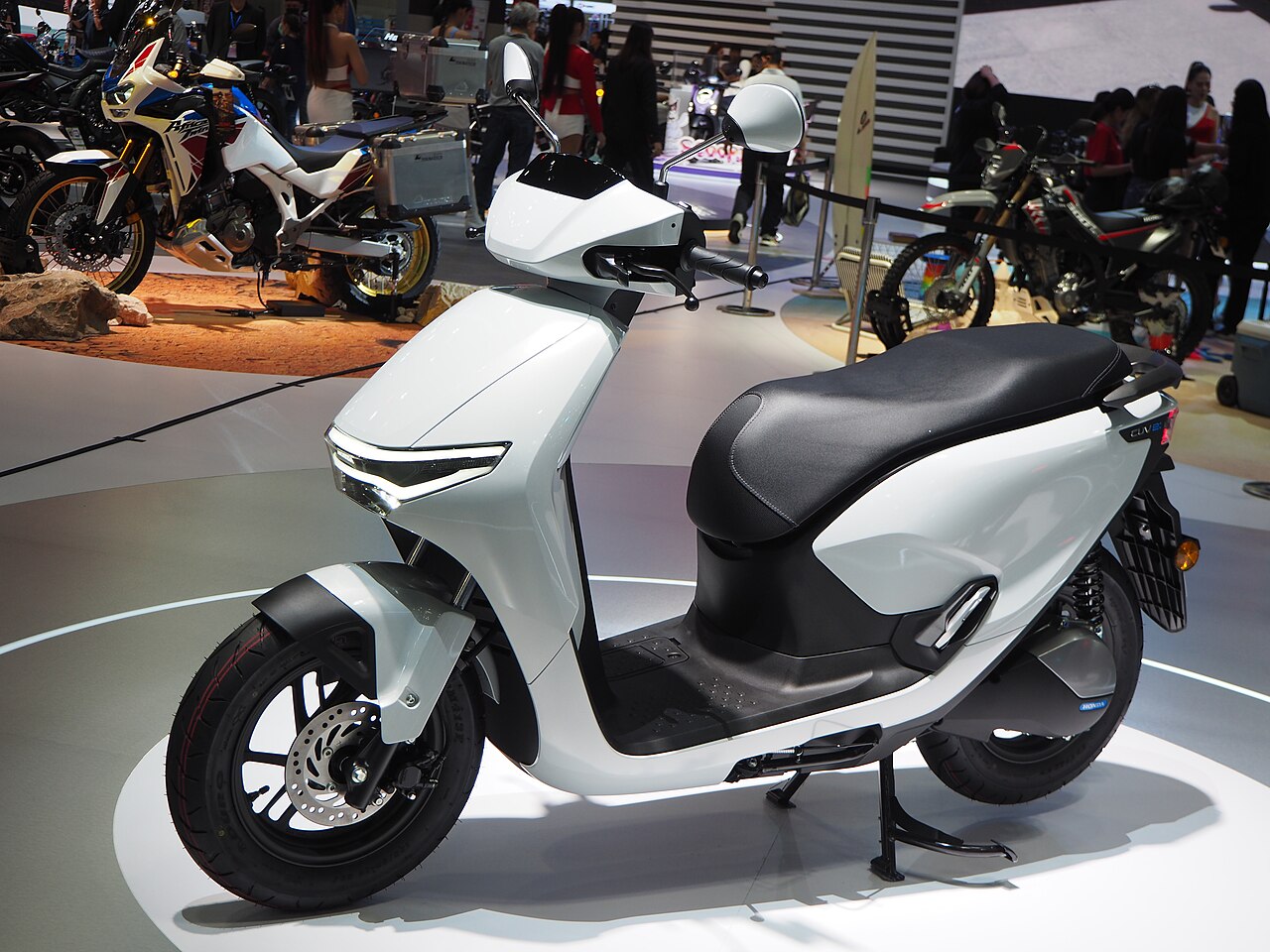
  • PEVS 2026: Honda, Polytron and United cut electric motorbike prices

    PEVS 2026: Honda, Polytron and United cut electric motorbike prices

    Top image: Photo: Chanokchon, CC BY-SA 4.0, via Wikimedia Commons (Honda CUV e:, pictured at a show in Thailand)

    Electric motorbike shoppers at the Periklindo Electric Vehicle Show (PEVS) 2026 in Jakarta are being offered some of the deepest price cuts seen on Indonesia’s two-wheeler market this year. Honda’s CUV e: scooter and United’s TX1800 are both being quoted at close to half their normal price, while Polytron, Alva and Indomobil eMotor are also running show-only discounts. The exhibition, which opened on Thursday 29 October at JIExpo Kemayoran, closes on Sunday 1 November.

    Honda: CUV e: from about Rp 29 million

    According to kumparanOTO, sales staff from Wahana Honda, the Jakarta dealer for Astra Honda Motor, said the cheapest version of the Honda CUV e: works out at around Rp 29 million once all show offers are combined, down from a normal Rp 54.5 million. The top CUV e: RoadSync Duo, which is sold with two Honda Power Pack e: batteries and a charging point, was quoted at about Rp 34 million instead of Rp 59.6 million. The smaller ICON e: was cut from about Rp 28 million to roughly Rp 23 million on the road in Jakarta. Kumparan did not say whether the CUV e: figures were on-the-road prices.

    Otodream, which listed the official promotions at the show, put Honda’s discounts at Rp 25 million on the CUV e: and Rp 4.9 million on the ICON e:. It added that credit buyers can have three instalments taken off a 35-instalment plan.

    United and Polytron

    United E-Motor is offering the TX1800 for Rp 18.1 million on the road in Jakarta, down from Rp 34.9 million, kumparan reported. That is a saving of Rp 16.8 million, or roughly 48% (our calculation).

    Polytron is selling its Fox 350 in two ways. With a battery-rental scheme, the price falls from Rp 22.5 million to Rp 17 million (on the road in Greater Jakarta). Bought outright with the battery, it drops from Rp 34.5 million to Rp 29 million. Both cuts work out at Rp 5.5 million (our calculation). Otodream, however, described Polytron’s offer as a direct subsidy of up to Rp 6 million on the Fox electric range. The gap may reflect different variants or extra stand offers, so buyers should confirm the final figure before paying. Kumparan did not report the monthly battery-rental fee.

    Alva and Indomobil eMotor

    Otodream reported that Alva is offering discounts of up to Rp 6 million on its electric motorbikes during the show. Indomobil eMotor has up to Rp 2.5 million off selected models, subject to its terms and conditions, Medcom reported. It is showing six bikes: the QT, QT Pro, Adora, Sprinto, Tyranno and Tyranno X. Visitors can test-ride them at the stand.

    “We want people to get to know electric motorbikes not only through specification information.”

    — Pius Wirawan, CEO of PT Indomobil Emotor Internasional, to Medcom (translated from Indonesian)

    Organiser cashback and who is there

    On top of the brand deals, organiser Dyandra Promosindo is running a spin-the-wheel cashback game worth up to Rp 2.5 million per win. Its total pool is up to Rp 200 million across car and motorbike purchases made at the show. According to Liputan6, the two-wheeler exhibitors are Alva, Astra Honda Motor, Indomobil E-Motor, Polytron, Selis, United and VinFast. Entry is free with online registration. The show is open from 10:00 to 19:00 WIB on Saturday and from 10:00 to 18:00 WIB on Sunday.

    What it means for buyers

    • The deadline is Sunday. All the offers reported here are tied to purchases made at PEVS, which ends on 1 November.
    • Check what the “normal” price means. Show discounts are measured against list prices quoted by sales staff. Dealer prices outside the show can already be lower. Our directory entry for United, for example, lists October promotional prices well below Rp 34.9 million for some models. Ask for a written, on-the-road quote for your region.
    • Battery rental versus ownership. Polytron’s rental scheme lowers the upfront cost but adds a recurring fee. Compare the total over the years you expect to keep the bike.
    • Ask about batteries and service. Check the battery warranty, where swaps or charging are available near you, and how close the nearest service point is. Our running-costs guide explains how charging costs compare with petrol.

    For context on demand, see our report on September motorbike sales and the e-motorbike incentive, and on the Pertamina, PLN and Len charging deal for the national Molinas e-motorbike programme.

    Follow-up: PEVS 2026 closed on 1 November with 35,257 visitors; read our wrap-up, including the Just EV coalition’s report card for carmakers.

    Sources: kumparanOTO; Otodream; Medcom.id; Liputan6

  • PEVS 2026 EV show opens 29 October at JIExpo, targeting Rp500bn in deals

    PEVS 2026 EV show opens 29 October at JIExpo, targeting Rp500bn in deals

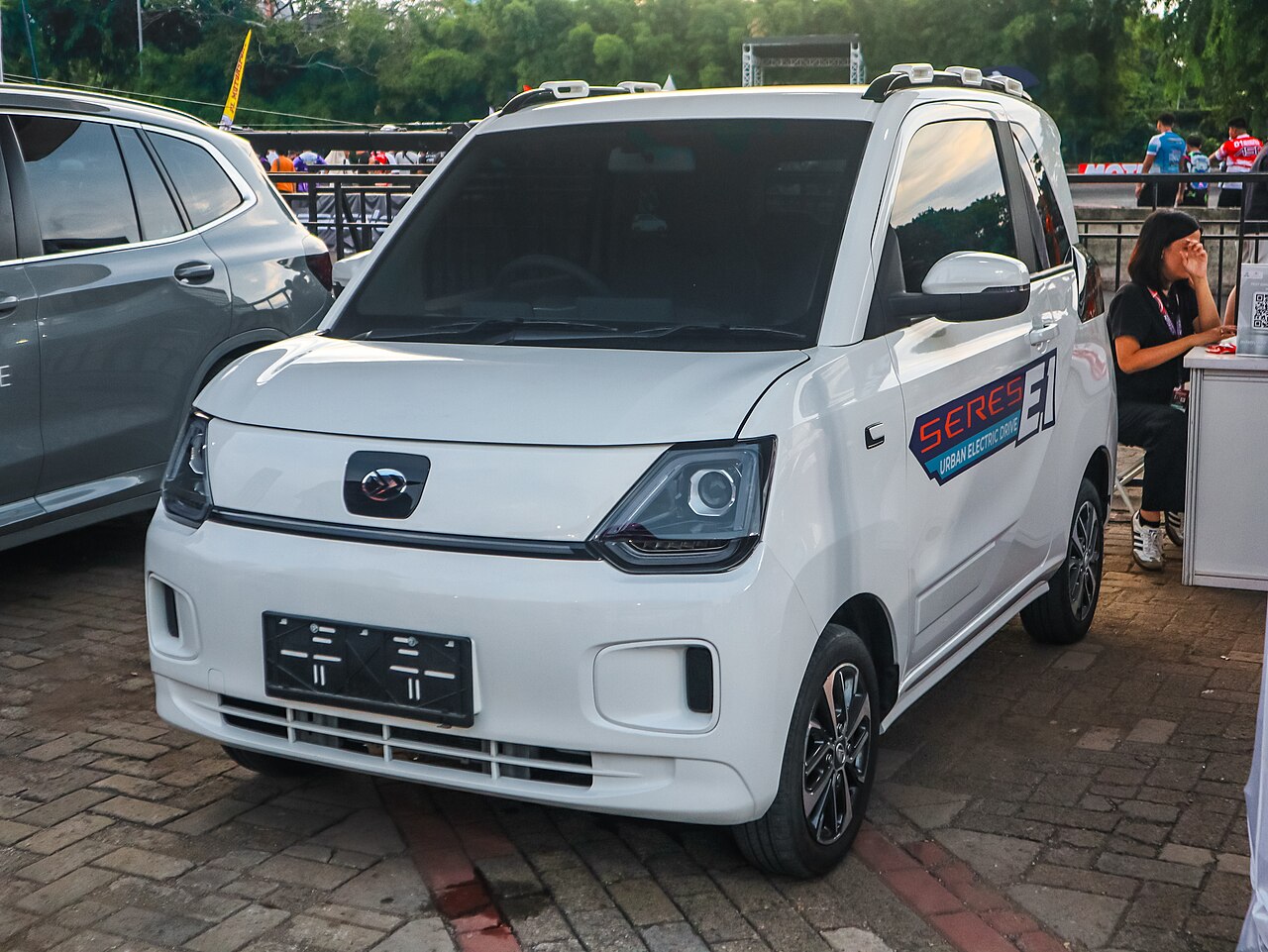
    Top image: Photo: Sulthan Naufal, CC BY-SA 4.0, via Wikimedia Commons. Pictured: the Seres E1 on display at IIMS 2025 in Indonesia.

    Update, 30 October 2026: PEVS 2026 has now opened. Read our report on the opening, including new industry ministry figures on battery EVs’ market share and the full exhibitor list: PEVS 2026 opens as battery EVs reach 16.88% of Indonesia’s car market.

    Indonesia’s dedicated electric-vehicle show, the Periklindo Electric Vehicle Show (PEVS) 2026, opens at JIExpo Kemayoran in Central Jakarta on 29 October and runs until 1 November. Organisers are hoping it will generate Rp500 billion in transactions over its four days.

    Key details

    • Dates: Thursday 29 October to Sunday 1 November 2026.
    • Venue: JIExpo Kemayoran, Jakarta, halls B3–C3, according to Medcom.
    • Entry: free for the public, with online registration required (Medcom; Antara).
    • Organisers: the Indonesian Electric Vehicle Industry Association (Periklindo) with event company Dyandra Promosindo (MarkLines; Medcom).
    • Theme: “The Future of A Clean and Efficient Mobility”.

    What is on show

    According to Medcom, the show will cover battery-electric, hybrid, plug-in hybrid, range-extended and hydrogen fuel-cell vehicles. PEVS 2026 project manager Rudi MF said the programme will also go beyond road vehicles, with battery-powered transport for water, air and rail, alongside wider use of solar panels.

    The programme is split into business-to-business, business-to-consumer and business-to-government strands, covering industry deals, hands-on experiences and education for the public, and links with investors and government, Antara reported. The sources we reviewed did not publish a full exhibitor list; last year’s show attracted 143 exhibitors and more than 40,000 visitors.

    Rp500 billion target

    Periklindo chairman Moeldoko set the Rp500 billion transaction target when the show was announced in May, presenting EVs as a response to geopolitical pressure on oil prices. “Our choice is to stand still or create a breakthrough,” he said (translated from Indonesian, via Antara).

    The market backdrop has improved since then. EV sales in the first nine months of 2026 have already passed the full-year 2025 total, as we reported in our January–September sales round-up.

    Conference the day before

    Periklindo is also holding its third Periklindo Electric Vehicle Conference (PEVC) on 28 October at the Mövenpick Hotel Jakarta, after two editions in Bali, detikOto reported. Four plenary sessions are planned: Indonesia’s 2027 economic and geopolitical outlook, next-generation EVs and autonomous driving, electric commercial fleets for logistics, and electrification of urban delivery, maritime and industrial uses.

    What it means for buyers

    Motor shows are often where brands announce launch prices and offer show-only packages, so PEVS may be a useful place to compare cars and electric motorbikes side by side, especially as the 60% local-content rule for 2027 starts to shape which models keep their tax incentives. As always, check what is included in any deal (home charger, battery warranty, free servicing) and whether prices are on-the-road for your city. The show also falls shortly before November’s Gaikindo auto week, where several new EVs are due to debut, so buyers who are not in a hurry may want to see both. Our EV directory lists the car and motorbike brands currently on sale in Indonesia.

    Sources: Antara (22 May 2026); Medcom (21 May 2026); detikOto (5 Aug 2026); MarkLines (28 May 2026).

  • Converting a petrol motorbike to electric in Indonesia: costs and rules

    Converting a petrol motorbike to electric in Indonesia: costs and rules

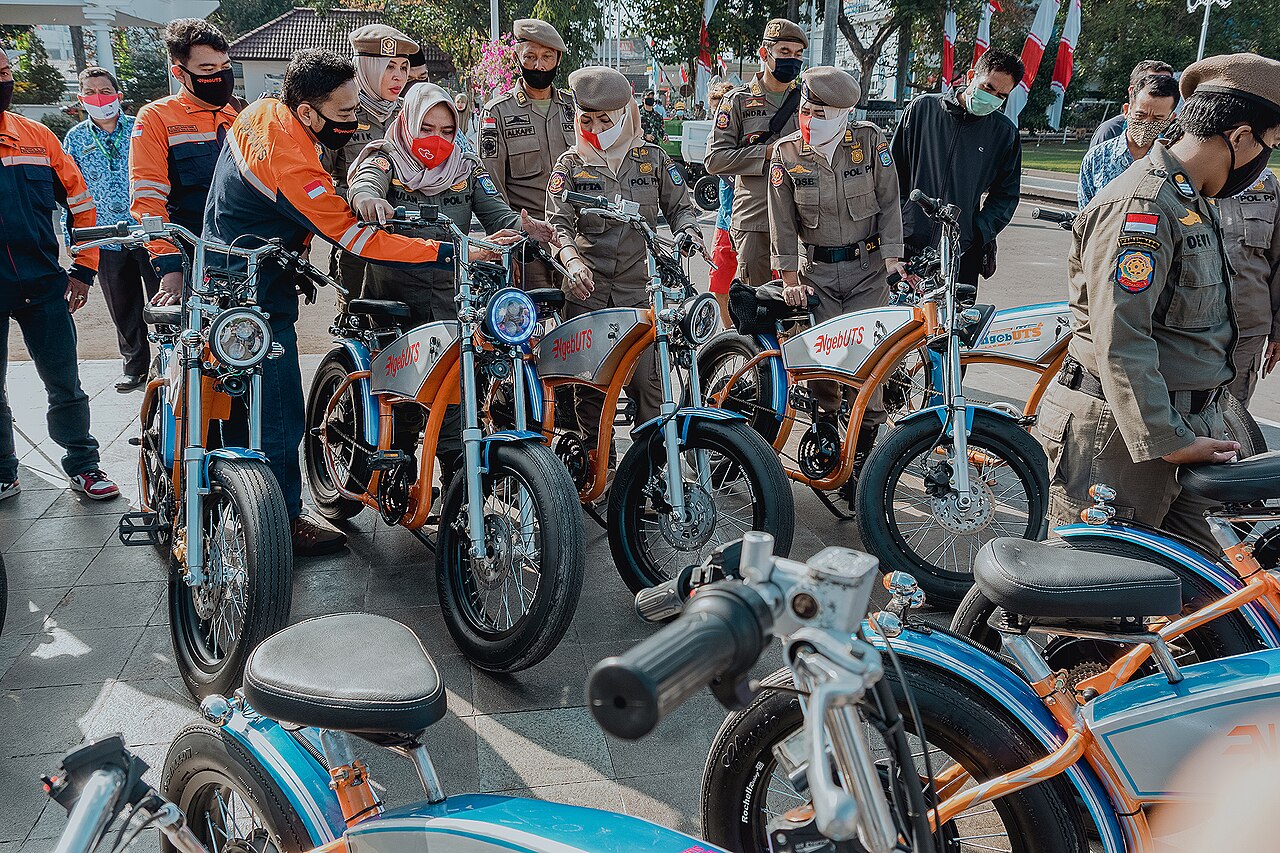
    Top image: Photo: Tri Mega Widyawan, CC BY-SA 4.0, via Wikimedia Commons

    Indonesia’s energy minister has talked about speeding up the conversion of as many as 120 million petrol motorbikes to electric power, CNN Indonesia reported. One route is to buy a new electric motorbike. The other is to keep the bike you already own and have a workshop swap its engine for an electric motor and battery pack. This guide explains how conversion works in Indonesia, what the rules require, what it typically costs, and where the government’s conversion grant stands in late 2026.

    What conversion involves

    In a conversion, a workshop removes the petrol engine and its related parts, such as the fuel tank and exhaust, and fits an electric motor (typically a brushless BLDC unit), a lithium battery pack, a controller and new wiring for the lights and instruments. Consumer guides say automatic scooters are the most common candidates, because the battery can sit in the space under the seat. A 2026 guide from Mobil123 describes typical kits with a motor of about 2–3 kW and a 60V or 72V battery, giving roughly 50–70 km per charge. Those are the publication’s estimates rather than official figures, and real range depends on battery size and riding style.

    The legal rules: certified workshops and a new type test

    Conversion is legal, but you cannot do it yourself and ride on public roads. The basis is Transport Ministry regulation PM 65 of 2020 on converting combustion-engine motorbikes into battery-electric ones. When the rule came in, a Transport Ministry official told detikOto that only workshops holding a ministry permit may carry out conversions, and that each converted bike must be tested again to receive a new type-test certificate (SUT).

    The regulation also sets out what a conversion workshop needs. As summarised by Tirto, this includes at least one installation technician and one maintenance technician, special tools for fitting the electric drive, and equipment to test insulation resistance and protection against electric shock. In practice, this means that a cheap kit fitted by a general mechanic will leave you with a bike that does not match its registration papers.

    After conversion and testing, the vehicle’s registration documents (STNK and BPKB) have to be updated at Samsat to reflect the new electric motor. Mobil123 also notes that the bike must have complete, valid papers and no unpaid vehicle tax before work starts.

    How much it costs

    Estimates vary, and none is an official price list:

    • The energy ministry (ESDM) has put the typical cost of a conversion at around Rp15 million, according to Bisnis.com. The think tank INDEF puts it at Rp12–16 million.
    • The original 2023 programme rules capped the workshop fee at Rp17 million, CNN Indonesia reported.
    • Mobil123’s 2026 breakdown is higher, at Rp17.5–22.5 million before any grant. It covers the motor and controller (Rp8–10 million), the battery (Rp7–9 million), labour (Rp1.5–2 million) and testing and paperwork (Rp1–1.5 million).

    Energy minister Bahlil Lahadalia has suggested that cheaper technology could bring the cost down to about Rp5–6 million per bike, CNN Indonesia reported in July. That is a target, not a price you can get today.

    The government grant: lapsed for now, relaunch proposed for 2027

    The ministry’s conversion programme began with pilots in 2022. Under ESDM regulation 13 of 2023, the grant rose from Rp7 million to Rp10 million per bike. Eligible bikes had petrol engines of 100–150cc, according to CNN Indonesia, while Mobil123 gives the range as 110–150cc. Take-up fell far short of the targets. The rules aimed for up to 50,000 conversions in 2023 and 150,000 in 2024. Bisnis.com reports that only hundreds were done in 2023 and about 1,500 in 2024. In February 2026, Eniya Listiani Dewi, director general of renewable energy at ESDM, put the running total at 2,250 bikes.

    Under the previous scheme, the Rp10 million grant was topped up with company CSR funds so that owners paid nothing. Eniya described the arrangement to Bisnis.com:

    “At the time I mobilised CSR funds to cover the Rp5 million, so it was free for the public.” (translated from Indonesian)

    The regulation behind the grant ran only until 2024, and in July officials said its replacement was still in draft, with the ministry still studying whether to keep the old design. On 31 August, Bahlil told parliament’s Commission XII that the ministry was proposing Rp635.24 billion to convert 63,000 motorbikes in the 2027 budget. By our calculation, that works out to just over Rp10 million per bike. The figure was a proposal and could change during budget talks.

    Some consumer articles published this year still describe a Rp10 million grant as available now. Before you commit, check the ministry’s official conversion portal or ask a certified workshop whether any quota is actually open.

    Why take-up has been low

    Analysts quoted by Bisnis.com point to several problems:

    • Many older bikes lack complete papers, so they cannot qualify for the grant.
    • Owners worry about resale value and the safety of converted bikes.
    • Even after a grant, the cost is high relative to what an older scooter is worth.
    • Certified workshops are few and mostly in Greater Jakarta. CNN Indonesia counted 25 registered on the programme’s website.

    INDEF’s Andry Satrio Nugroho has argued for a scrap-and-replace scheme instead, in which old bikes are retired in exchange for new locally made electric ones. He has also suggested that ride-hailing and delivery fleets should come first.

    Convert or buy new? What it means for buyers

    For most private riders, conversion only makes sense when a grant is available. Without one, a conversion costing Rp15 million or more has to be weighed against the price of a new electric scooter, which comes with a factory warranty and dealer support. Our electric motorbike buyer’s guide covers the models and price bands. The purchase incentive for new e-motorbikes is also on hold, though, and buyers have been waiting for a decision for months.

    If you do go ahead:

    • Use only a workshop with Transport Ministry certification for conversions.
    • Make sure the price includes the type test and the update to your STNK and BPKB.
    • Ask what the battery chemistry and battery management system are, and what the warranty covers. Mobil123 suggests looking for at least three years on the battery.
    • Plan your charging. A converted bike charges like any e-motorbike, and our charging guide explains home charging and battery swapping.

    If the 2027 budget line survives, a new round of grants could make conversion cheap or free again for eligible owners. Until the rules are published, it is safest to treat any offer of a subsidised conversion with caution.

    FAQ

    Can I convert my own motorbike at home?

    No, not if you want to ride it legally on the road. Under PM 65/2020, a permitted workshop must do the conversion, and the bike must pass a new type test.

    Is there a conversion subsidy right now?

    The grant regulation ran only until 2024. As of July, officials said the replacement rules were still in draft, and the energy ministry has proposed funding for 63,000 conversions in 2027. Check the ministry’s official portal for current quotas.

    Which bikes can be converted?

    Under the past grant scheme, petrol bikes in roughly the 100–150cc range qualified, and sources differ on the exact lower limit. Automatic scooters are the most common choice. The bike also needs valid registration papers.

    Update, 25 October 2026: Bali’s governor has asked South Korea for partners to convert petrol vehicles to electric at no cost to owners; no scheme exists yet. Read our report.

    Sources: Bisnis.com; CNN Indonesia (Feb 2026); CNN Indonesia (Jul 2026); Periskop; Mobil123; detikOto; Tirto.

  • Motorbike sales jump 15% in September as e-motorbikes wait on incentive

    Motorbike sales jump 15% in September as e-motorbikes wait on incentive

    Top image: Photo: Focusfeel, CC BY-SA 4.0, via Wikimedia Commons

    Indonesians bought 654,343 new motorbikes in September 2026, according to Indonesian Motorcycle Industry Association (AISI) data reported by Kontan on 8 October. That was 15.37% more than in September 2025 (567,173 units) and 9.7% up on August’s 596,461 units.

    The rebound is welcome news for the conventional two-wheeler makers that dominate AISI. It also highlights how far behind the electric segment has fallen, as e-motorbike buyers continue to wait for a government purchase incentive that has been promised repeatedly but not yet paid.

    The wider market

    Domestic sales for January to September reached 5.02 million units, 3.71% ahead of the 4.84 million sold in the same period of 2025. AISI is targeting 6.4 million to 6.7 million units for the full year, and Kontan calculates that the industry has already reached about 78.4% of the lower end of that range.

    Exports also grew. AISI members shipped 55,098 fully built (CBU) motorbikes abroad in September, up 9.64% on August, plus 688,319 knocked-down (CKD) kits, almost unchanged month on month. CBU exports for the first nine months totalled 487,940 units.

    Electric motorbikes: still a sliver of the market

    AISI’s monthly figures, as reported, do not break out electric models. The most recent number comes from the Indonesian Electric Motorcycle Industry Association (Aismoli), whose chairman Budi Setiyadi told a parliamentary hearing on 21 September that members sold roughly 18,900 e-motorbikes in January to August 2026, CNN Indonesia reported. That compares with about 77,000 in 2024, when a Rp 7 million per-unit subsidy was available, and about 70,000 in 2025.

    By our own rough calculation, 18,900 units is well under 1% (about 0.4%) of the roughly 4.37 million motorbikes AISI recorded over the same eight months (5.02 million minus September’s 654,343). The two associations represent different companies, so the comparison is indicative only. At the January–August pace of about 2,400 a month, the electric segment would end 2026 at around 28,000 units; that is also our own extrapolation, not an industry forecast.

    Budi blamed buyers’ hesitation on policy uncertainty, describing it as a matter of “government policy, which is sometimes there and sometimes not” (translated from Indonesian).

    Incentive “this year”, says Airlangga

    The latest official signal came on 4 October, when Coordinating Minister for Economic Affairs Airlangga Hartarto said the electric vehicle incentive would take effect in 2026, detikOto reported. He said the technical work sat with the Industry and Finance ministries, while the programme’s budget allocation (DIPA) is held by the Ministry of Energy and Mineral Resources. He gave no amount or start date.

    That keeps alive a promise first made for June. As we reported on 5 October, the file has passed to new Industry Minister Muhammad Sarmuji after the latest cabinet reshuffle. Periklindo chairman Moeldoko has told lawmakers that dealers and manufacturers are “stuck” and that many dealers risk closing, according to detikOto. A figure of around Rp 3 million per unit was reportedly mentioned earlier by former finance minister Purbaya Yudhi Sadewa, but no scheme has yet been finalised. For background, see our earlier report on the e-motorbike sales slump.

    What it means for buyers

    There is currently no government discount on new e-motorbikes, and with less than three months of 2026 left, buyers holding out for one are betting on a scheme with no published amount or start date. Anyone who needs a bike now should compare total running costs rather than sticker price alone. Our electric motorbike buyer’s guide covers charging, battery swapping and the main models, and the IndoEVs directory lists the e-motorbike brands selling in Indonesia.

    Related: Car sales dip 2.7% in September as BYD and Jaecoo hold top-10 places.

    Sources: Kontan (8 Oct 2026); CNN Indonesia (22 Sep 2026); detikOto (4 Oct 2026)

  • Ministry floats dedicated EV ships as ferry operators set charging rules

    Ministry floats dedicated EV ships as ferry operators set charging rules

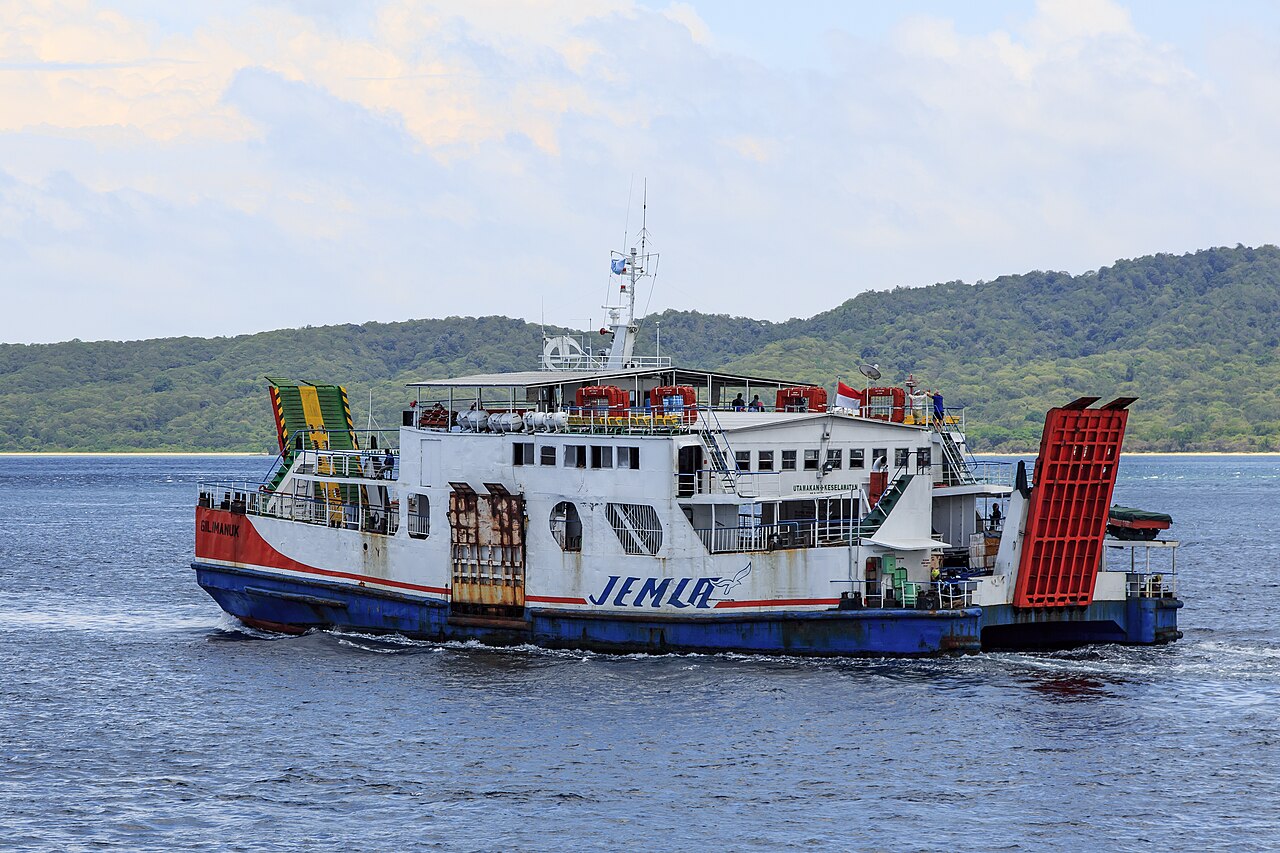
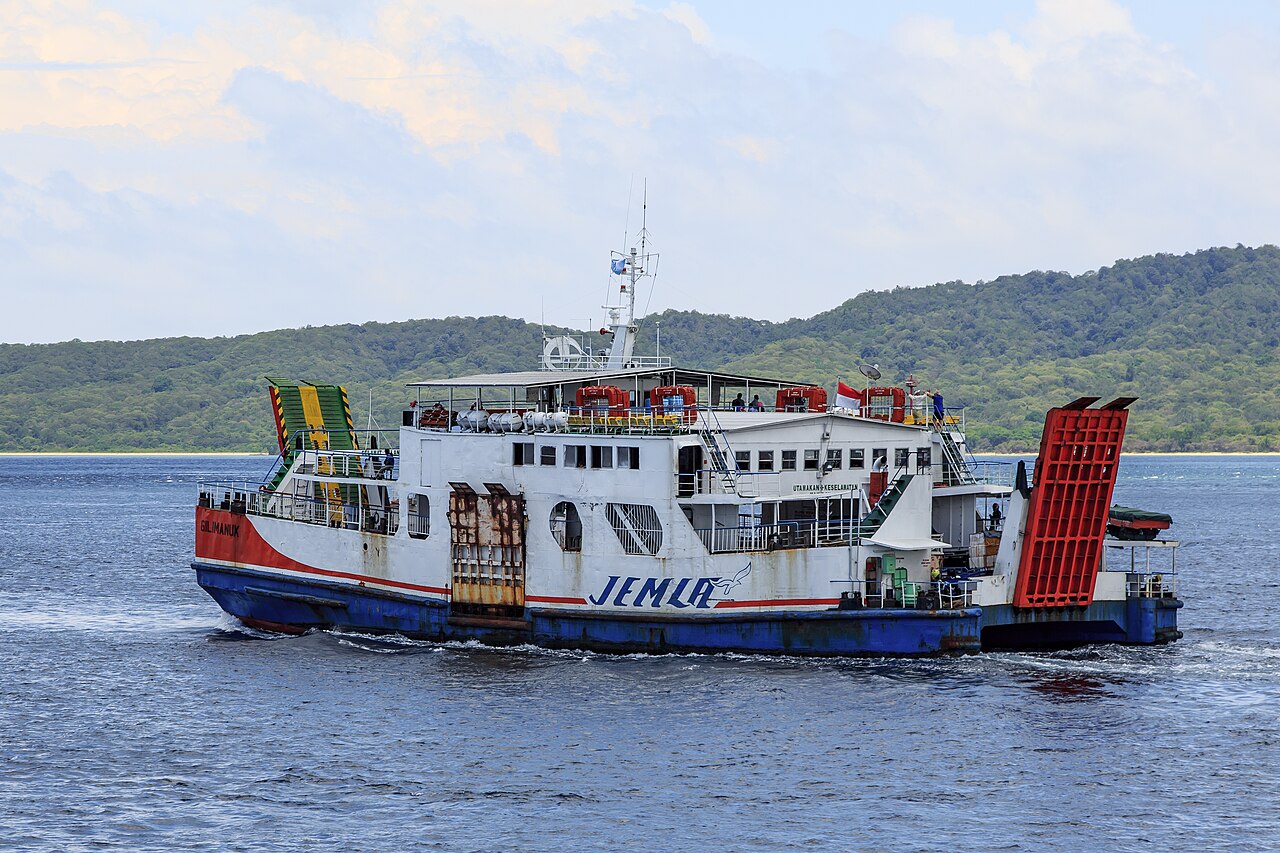
    Top image: Photo: CEphoto, Uwe Aranas, CC BY-SA 3.0, via Wikimedia Commons

    Indonesia’s Ministry of Transportation (Kemenhub) has opened the door to ships built or set aside specifically for carrying electric vehicles, a week after the EV industry complained that owners and manufacturers were being turned away from ferries. At the same time, the national ferry operators’ association has spelled out the conditions its members now apply when an EV rolls up to the ramp.

    The comments were made on Friday 2 October at a press workshop in Bandung, West Java, and reported by CNBC Indonesia and CNN Indonesia. They follow the dispute we covered last week, when EV owners reported ferry refusals and the ministry restated its battery safety rules.

    Ministry: EVs are allowed, and dedicated ships may follow

    Lollan Andi Sutomo Panjaitan, acting director general of sea transportation at Kemenhub, repeated that electric vehicles may travel by sea as long as the safety conditions are met. On board, he said, they will be placed in designated areas that are watched more closely than the rest of the vehicle deck.

    Looking further ahead, he floated the idea of separate tonnage for EVs. “Ideally, in time there could also be dedicated ships specifically for electric cars,” he said, according to CNBC Indonesia (translated from Indonesian). No timetable, budget or operator was attached to the idea, so for now it is an option rather than a plan.

    What ferry operators now ask of EV owners

    Khoiri Soetomo, chairman of Gapasdap, the association of river, lake and ferry operators, set out the procedures its members are using, as reported by both outlets:

    • Arrive early. EV drivers are asked to check in ahead of other traffic so the crew can choose where to park the vehicle.
    • Ventilated placement. EVs go in areas with good air circulation and blowers, where they can be monitored during the crossing.
    • Do not board fully charged. Soetomo said batteries should not be at 100%.
    • A last-resort fire plan. Vehicles are positioned so that, if a battery fire cannot be brought under control, the car can be pushed into the sea.

    CNBC Indonesia also reported that Gapasdap and the state classification society, Biro Klasifikasi Indonesia (BKI), are drawing up certification standards for vessels that carry EVs, reflecting the fact that lithium-ion battery fires behave differently from petrol fires and need different equipment.

    Which battery limit applies?

    There is a gap between the operators’ wording and the ministry’s written rule. The governing document is still Kemenhub circular SE-DJPL 12 of 2024, issued on 4 April 2024, which CNN Indonesia said covers hybrids, plug-in hybrids, battery EVs and hydrogen fuel-cell vehicles. In September, CNBC Indonesia reported that the ministry’s guidance caps the charge at 50% and requires EVs to be parked on an open deck. “Not 100%”, as quoted from Gapasdap this week, is a looser description. Until the two are aligned, owners are safest working to the stricter 50% figure.

    Why the industry pushed

    The issue was escalated by Moeldoko, chairman of the EV industry association Periklindo, who told parliament’s Commission VII on 21 September that refusals were holding back distribution of electric motorbikes, cars and trucks between islands, CNBC Indonesia reported. Large brands such as BYD can operate their own car carriers, he noted, but smaller assemblers and dealers depend on scheduled ferries and cargo services. Separate EV vessels would ease that bottleneck, but would also add a new layer of cost and scheduling that the sector has not yet had to price in.

    What it means for buyers

    If you plan to take an electric car or motorbike between Java, Sumatra, Bali or other islands, expect extra checks rather than a ban. Charge to no more than 50% before you leave, allow time to arrive early, and be ready to be directed to an open or specially ventilated part of the deck. Plan a charging stop near the arrival port: our guide to SPKLU and home charging explains how to find one. Buyers outside Java may also see longer delivery times from smaller brands while shipping arrangements settle down, so check with the dealer before paying a deposit. You can compare which brands sell in Indonesia in our EV directory.

    Related: Revised traffic law to classify vehicles by power source and cover self-driving

    Sources: CNBC Indonesia, 2 Oct 2026; CNN Indonesia, 3 Oct 2026; CNBC Indonesia, 11 Sept 2026; CNBC Indonesia, 21 Sept 2026.

  • ALVA tells lawmakers local suppliers are the hurdle as TKDN bar rises

    ALVA tells lawmakers local suppliers are the hurdle as TKDN bar rises

    Top image: Photo: AntaraTV, CC BY 3.0, via Wikimedia Commons

    Indonesian electric-motorbike maker ALVA has told members of parliament that building a local supply chain, not factory capacity, is the main obstacle to raising the share of domestic parts in its scooters. The message comes as the government’s local-content (TKDN) requirements for EVs are set to climb in stages towards 80%.

    Parliamentary visit to Bekasi

    A working committee (Panja) of the House of Representatives’ Commission VII, which is preparing a bill on industrial estates, visited the plant of PT Ilectra Motor Group, ALVA’s maker, in the Lippo industrial zone in Bekasi on 25 September, Suara reported. Chief executive Purbaja Pantja told the delegation that developing the EV industry is about building a supporting ecosystem as much as production capacity.

    The company presented these figures, according to the report:

    • annual production capacity of 100,000 units;
    • local content above 40% across all its products, with frames, body panels and braking systems sourced locally, plus battery boxes and brackets from two state-backed small and medium-sized suppliers;
    • more than 590 “Boost Charge” fast-charging connectors nationwide, up from about 150 previously; and
    • 19 sales points, 10 experience centres and over 130 after-sales service locations.

    Four problems with going more local

    ALVA listed the obstacles to pushing localisation further: a small market, local suppliers that are not yet ready, the cost of investing in tooling, and the need for policy certainty. The first and last are linked. Electric-motorbike sales have slumped this year as buyers wait for a promised purchase incentive, as we reported earlier this week, and lower volumes make it harder to justify investing in local parts.

    The TKDN staircase

    According to a Jawa Pos report published the same day, the roadmap for EV local content sets a minimum of 40% in 2026, rising to 60% in 2027–2028 and 80% by 2030. Components maker Dharma Polimetal (DRMA) said it is ready to supply more locally made parts if the thresholds rise. “TKDN is very important, because it will help local industry grow and absorb workers,” director Darmawan Widjaja said (translated from Indonesian). He added that localisation pays off once volumes are large enough.

    That last point echoes ALVA’s case to lawmakers: suppliers will commit to local production when they can see steady demand, and demand depends partly on incentives that themselves are usually tied to TKDN levels.

    What it means for buyers

    Local-content rules matter to buyers because government incentives for EVs are generally linked to them, so a brand that meets the threshold is better placed to offer a subsidised price when a scheme is running. More local parts should, over time, also mean easier access to spares and repairs. For now, ALVA’s figures suggest its range already clears the 40% bar. If you are comparing electric scooters, our electric motorbike buyer’s guide and the motorbike section of our EV directory list the main brands and prices.

    Related: Parts makers say EV local-content rules leave little room for suppliers

    Sources: Suara: ALVA outlines e-motorbike and TKDN challenges to DPR (25 Sep 2026); Jawa Pos: EV TKDN to rise in stages to 80%, DRMA ready (25 Sep 2026)

  • EV owners face ferry refusals as Indonesia restates battery safety rules

    EV owners face ferry refusals as Indonesia restates battery safety rules

    Top image: Photo: CEphoto, Uwe Aranas, CC BY-SA 3.0, via Wikimedia Commons

    Update, 4 October 2026: Kemenhub has since floated the idea of dedicated ships for EVs, and ferry operators have set out their boarding conditions. Read our follow-up.

    Electric vehicles are not banned from Indonesia’s ferries, but a growing number of owners and manufacturers are finding them turned away at the ramp. This week the dispute reached the national stage, with the EV industry complaining about refusals, ferry operators defending their caution and the Ministry of Transportation (Kemenhub) restating the safety rules that already allow EVs on board.

    Industry complains of refusals

    The issue was pushed into the spotlight by Moeldoko, chairman of the EV industry association Periklindo, who said industry players had been rejected by ship operators when trying to move electric motorbikes, trucks and passenger cars by sea, OtoDream reported. He called for standard safety procedures, pointing out that lithium-ion battery fires cannot be tackled with conventional firefighting methods. The report noted that large makers such as BYD can use their own car-carrier ships, while smaller brands depend on scheduled ferries and cargo services.

    What the ministry says

    Kemenhub’s position is that there is no prohibition. Samsuddin, the ministry’s director of shipping and maritime affairs, acknowledged that some operators were still reluctant to carry EVs, but said this was because certain safety conditions were not being met, according to OtoDream. The rules sit in circular SE-DJPL 12/2024, issued on 4 April 2024, which the ministry has now reissued to clear up misunderstandings between operators and passengers.

    Under the circular, as summarised in that report:

    • the battery should be charged to no more than 50%;
    • EVs should be parked on an open deck, not on enclosed lower car decks;
    • the ship needs open space to deal with an emergency; and
    • operators must carry fire-fighting equipment suited to EV battery fires.

    Operators: safety first, and deck space costs money

    Ferry operators’ association GAPASDAP says it wants to carry EVs but will not compromise on safety. Its chairman, Khoiri Soetomo, cited the risk of thermal runaway, in which a battery overheats, resists extinguishing and can reignite, and said many ro-ro ferries lack fire blankets, trained crews and suitable space in their closed car decks, detikJatim reported. GAPASDAP wants Kemenhub and the classification society BKI to set technical standards for where EVs go on board, early-detection procedures, battery manifests and a clear split of responsibility between carmakers, ports and shipping firms.

    On the busy Ketapang–Gilimanuk crossing between Java and Bali, state ferry company ASDP said it cannot refuse EVs without a legal basis. “We follow the policy from the centre,” said Media Syahrianto Heriawan, general manager of ASDP’s Ketapang branch (translated from Indonesian), in a separate detikJatim report. That report described the conditions as a 30–50% battery charge and parking on an open weather deck or a well-ventilated area near the ramp doors, covering battery-electric cars, hybrids, plug-in hybrids and fuel-cell vehicles. It also cited a second circular, SE-DRJD 7/2024. The ministry’s own summary gives only a 50% ceiling, so drivers should check the exact requirement with their operator.

    The harbour authority for Tanjung Wangi, headed by Capt. Purgana, flagged a practical snag: reserving open-deck space for EVs that may or may not turn up leaves lanes empty, which costs operators revenue.

    What it means for buyers

    For anyone planning to drive an EV between islands, such as Java to Bali, Sumatra or Lombok, the rules make the trip possible but not guaranteed. Our reading of the reports suggests sensible steps: check with the operator before travelling, arrive with the battery at or below half charge (which may mean planning a charging stop after the crossing, see our charging guide), and expect to be directed to the open deck or asked to wait for a ship that has space. Plug-in hybrid and hybrid owners should note that the rules reportedly cover them too.

    The bigger question is for the industry. If smaller brands struggle to ship vehicles and parts off Java, buyers in other regions could see slower deliveries and thinner after-sales support. A clearer national standard, as both Periklindo and GAPASDAP are requesting, would help. Browse which brands sell where in our EV directory.

    Sources: OtoDream: Moeldoko on ferry refusals (23 Sep 2026); detikJatim: GAPASDAP explanation (24 Sep 2026); OtoDream: Kemenhub responds (25 Sep 2026); detikJatim: ASDP and KSOP Banyuwangi (25 Sep 2026)

  • Electric Motorbikes in Indonesia: A Buyer’s Guide

    Electric Motorbikes in Indonesia: A Buyer’s Guide

    Top image: Photo: オーバードライブ83, CC BY-SA 4.0, via Wikimedia Commons

    Indonesia is one of the world’s biggest motorcycle markets, with annual sales of around 6 million to 7 million units. Electric models have still only managed roughly 60,000 to 70,000 sales a year, about 1% of the total, according to Antara. That leaves a lot of room to grow, and the government wants to fill it. This guide covers the brands and price bands in 2026, where purchase incentives stand, what local content (TKDN) means for you, how charging and battery swapping work, and the programme for converting petrol bikes to electric.

    The market in 2026: a pause while buyers wait

    E-motorbike sales have been hit by uncertainty over incentives. The electric motorcycle industry association Aismoli said sales were about 77,000 units in 2024, when a subsidy was in place, and around 70,000 in 2025 without one. From January to August 2026 they fell to about 18,900, as reported by detikFinance. Aismoli puts the drop down to shoppers holding off until a promised subsidy starts. By April 2026 there were about 242,909 electric motorbikes on Indonesian roads, according to industry ministry data cited by Otodream.

    Brands and price bands

    VIVA’s September 2026 OTR Jakarta price list shows how wide the market is:

    Budget: under Rp20 million

    • Polytron Fox-200: Rp12.1 million with battery rental, or Rp21.1 million with the battery included.
    • Selis (Neo Scootic Rp13.5 million, E-Max Rp15.5 million), Avand SC121 (Rp13.5 million) and Yadea GT20 (Rp15.5 million).
    • United T1800, MX-1200 and MT1500 at around Rp16–17 million.
    • Volta eX, 401, Eagle and Virgo at around Rp17.9–19.1 million.

    Mid-range: roughly Rp20 million to Rp60 million

    • ALVA: N3 from Rp16.5 million with battery rental. The N3 Next Gen and ONE XP cost around Rp31.5 million.
    • Honda: ICON e: Rp28 million, EM1 e: about Rp40 million, CUV e: Rp54.45 million.
    • MAKA Cavalry: around Rp39.5 million. Omoway: Rp46.9 million to Rp76.9 million.

    Premium

    Kawasaki’s Z e-1 and Ninja e-1 cost about Rp148–151 million. The Vespa Elettrica is listed at Rp198 million.

    Subsidy and incentive status

    In 2024 buyers of qualifying e-motorbikes got a Rp7 million discount, provided the bike had at least 40% local content, Kompas notes. There was no subsidy in 2025. In May 2026 the finance ministry announced Rp5 million per unit for 100,000 bikes. In August that was revised to Rp3 million per unit, with a budget of Rp3 trillion aimed at up to one million domestically made bikes. Officials expected only about 100,000 to be taken up by the end of 2026 because factory capacity is limited.

    At the time of writing the incentive still was not in force. After a change of finance minister, the industry minister said on 23 September that the technical rules were ready and only the finance ministry regulation (PMK) was needed (detikFinance). The deputy industry minister said the government still aimed to deliver it this year. If you are ready to buy, ask dealers whether they will honour the subsidy for bikes delivered before it officially starts. Most will not.

    Molinas, the national e-motorbike programme

    On 13 August 2026 President Prabowo launched the Motor Listrik Nasional (Molinas) programme at ALVA’s factory in Cikarang. He promised lower loan interest, work towards zero-down-payment financing and a trade-in scheme for petrol bikes, Kompas reported. Industry ministry figures quoted by Antara show 69 two- and three-wheel EV makers with a combined capacity of about 2.5 million units a year.

    What TKDN means for buyers

    TKDN, or Tingkat Komponen Dalam Negeri, measures how much of a vehicle is made in Indonesia. It matters because incentives usually go only to models above a threshold. The current minimum is 40%, rising to 60% in 2027–2029 and 80% in 2030, according to the industry minister (Antara). A high-TKDN bike is more likely to qualify for future subsidies. Local assembly can also make spare parts easier to find.

    Charging at home or swapping batteries?

    Home charging

    Most budget and mid-range scooters use a removable battery that you charge from a standard wall socket. The main drawback is time. Even with a fast charger, a full charge usually takes 2–3 hours. If you park at home or at work every day, this is the simplest and cheapest way to charge.

    Battery swapping (SPBKLU)

    At a swap station you exchange a flat battery for a charged one in about a minute. This suits ride-hailing drivers and couriers. Aismoli counted 1,907 SPBKLU nationwide by March 2026, with 1,480 of them on Java, and just 20 in Kalimantan and one in Nusa Tenggara (Otodream). PLN Mobile also listed 1,118 PLN-run swap cabinets and 603 two-wheeler SPKLU. The catch is that swap networks usually only work with particular brands, so check that your bike is compatible and that there are stations on your usual routes.

    Converting a petrol bike

    The energy ministry runs a programme to convert petrol motorbikes to electric at certified workshops. In late 2023 it raised the grant to Rp10 million per bike under Energy Minister Regulation 13/2023. Take-up was low, partly because a typical conversion cost about Rp15 million, leaving owners to pay the difference. The ministry is now redesigning the scheme for 2027 and has proposed a budget of Rp635.24 billion. Check the current terms with the ministry before you book a conversion.

    Prices, tariffs and incentive rules in Indonesia change often, sometimes month to month. Figures here were correct according to the sources linked at the time of writing; always confirm current prices, promotions and eligibility with an authorised dealer or the relevant provider before you commit.

    For the rules, typical costs and the outlook for the grant in more detail, see our guide to converting a petrol motorbike to electric.

    FAQ

    Is there an electric motorbike subsidy right now?

    Not yet. A Rp3 million per unit subsidy has been approved in principle, but in late September 2026 it was still waiting for its finance ministry regulation.

    What is the cheapest electric motorbike in Indonesia?

    Prices start at around Rp12 million on battery-rental plans. VIVA listed the Polytron Fox-200 at Rp12.1 million.

    Can I charge an electric scooter at home?

    Yes. Most models with removable batteries charge from a normal household socket, usually in a few hours.

    Is battery swapping available everywhere?

    No. Stations are concentrated in Java and are usually tied to particular brands.

    Sources: VIVA – Daftar Harga Motor Listrik September 2026; detikFinance – Insentif Motor Listrik Tunggu Keputusan Menteri Keuangan; Matamata – Pemerintah Targetkan Insentif Motor Listrik Cair Tahun Ini; CNBC Indonesia – Insentif Motor Listrik Turun Jadi Rp 3 Juta/Unit; Kompas – Menkeu Targetkan Insentif Mobil dan Motor Listrik Mulai Juni 2026; Kompas – Banyak Motor Listrik RI Sudah Capai TKDN 40 Persen; Antara – Pemerintah kaji insentif kendaraan listrik berbasis TKDN; Kompas – Prabowo Resmikan Motor Listrik Nasional; Antara (English) – Molinas marks new chapter in Indonesia’s EV industrialization; Otodream – Infrastruktur SPLU dan Penukaran Baterai Dinilai Belum Sebanding; Kementerian ESDM – Bantuan Konversi Sepeda Motor Listrik Jadi Rp10 Juta; KilasJatim – Program Konversi Motor Listrik 2027