
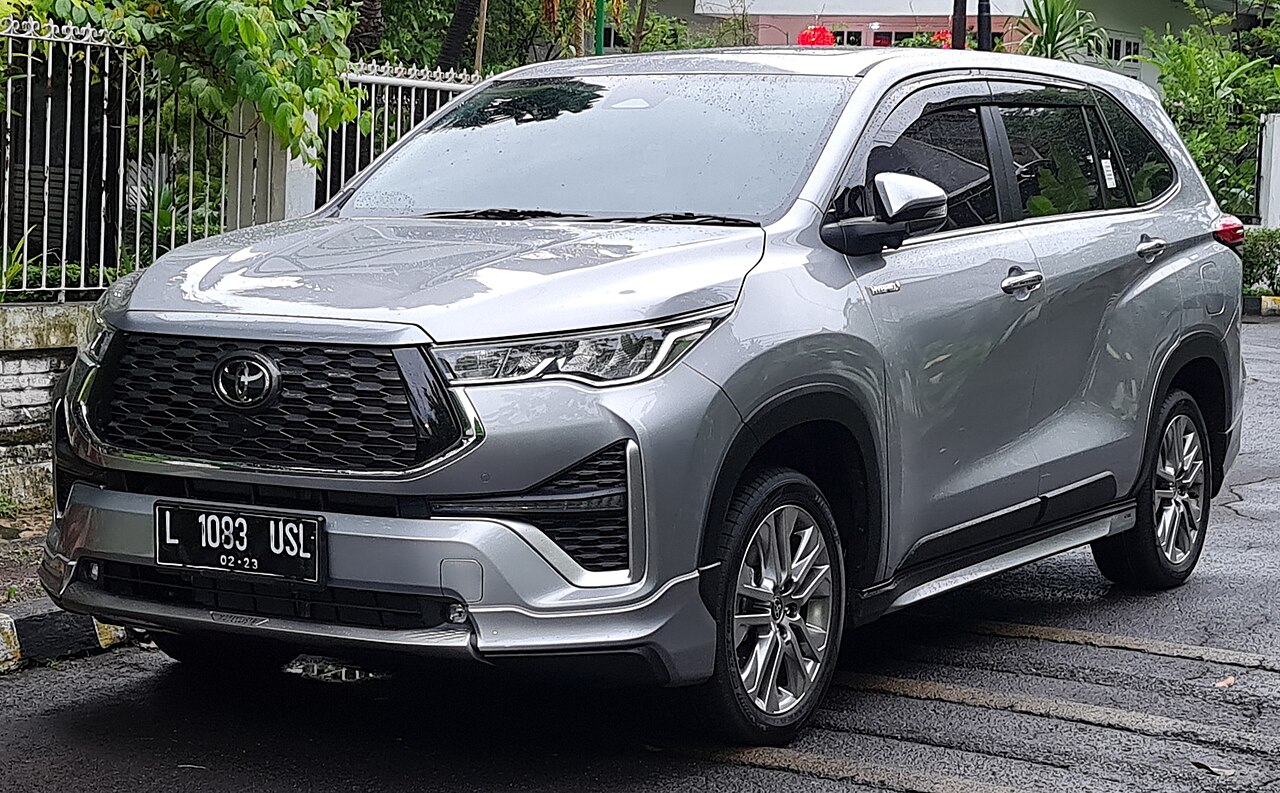
Top image: Photo: Alex Neman, CC BY-SA 4.0, via Wikimedia Commons

Indonesia’s Industry Minister, Muhammad Sarmuji, says his ministry will push for a package of incentives for hybrid, plug-in hybrid (PHEV) and range-extended electric vehicles (REEV). The proposed perks include exemption from city odd-even traffic rules and dedicated parking. Until now those benefits have been closely tied to battery electric vehicles (BEVs). Not everyone is convinced: a think-tank warns that the money and perks should stay focused on cars that burn no fuel at all.
What the minister proposed
Sarmuji spoke on Wednesday 21 October after meeting the car industry association Gaikindo at the ministry in Jakarta, CNBC Indonesia and detikFinance reported. He gave two reasons: cutting fuel consumption and emissions as fuel prices rise, and giving the domestic car industry a boost.
According to the two reports, the ideas fall into two groups:
- Non-fiscal incentives: easier administration, exemption from odd-even (ganjil genap) restrictions in cities, dedicated parking spaces and possibly charging facilities.
- Fiscal incentives: some form of tax relief, which the government will study. Sarmuji said this would not necessarily match what BEVs receive.
“The tax relief doesn’t have to be the same. What matters is that there is an incentive so the industry grows too,” he said, as quoted by detikFinance (translated from Indonesian).
The minister acknowledged that no specific scheme exists yet for hybrids, PHEVs or REEVs. He argued that these vehicles suit local factories because they pair a battery with a combustion engine, so carmakers would not need to overhaul their existing component base. He said he would raise the plan with the Finance Ministry and other stakeholders and hoped to hold a meeting before the end of October. He is aiming to finish it this year, with early next year as a fallback, CNBC Indonesia reported. Because traffic and parking rules belong to other agencies and local governments, the ministry would also need to coordinate with them.
Gaikindo chairman Putu Juli Ardika backed the move. He told reporters that the association’s survey, which it shared with the ministry, found that most vehicles produced in Indonesia can meet the 60% local-content (TKDN) requirement, detikFinance reported. The report did not say how a TKDN threshold would apply to hybrids specifically.
Think-tank: keep the focus on battery EVs
The proposal drew criticism from the INDEF Green Transition Initiative (INDEF GTI). According to KatadataOTO, the group urged President Prabowo Subianto’s government to channel incentive funding into battery-powered cars instead. It argues that BEVs give the biggest fuel saving for each rupiah of incentive, and that this would ease pressure on the state budget.
Andry Satrio Nugroho, who heads industrial and transport decarbonisation at INDEF GTI, put it plainly: “Hybrid cars still fill up at the petrol station; electric cars don’t” (translated from Indonesian).
INDEF GTI also pointed to fuel shortages in some regions. According to the figures KatadataOTO reported, consumption of subsidised fuel reached about 13.4 million kilolitres by September, up 9.1% on a year earlier. Energy subsidies and compensation payments have reached Rp 376.8 trillion, or 84.3% of the 2026 budget ceiling.
Why the odd-even question matters
The timing is sensitive. Jakarta is already reviewing its odd-even scheme, including whether BEVs should keep their exemption, and Leapmotor has already warned about what losing it could mean for EV demand. If the exemption were also given to hybrids, PHEVs and REEVs, it would cover far more cars and become less valuable to each one, especially on congested corridors where the rule is meant to cut traffic.
Hybrids have had tax help before. Under the 2025 rules covered in our guide to EV taxes and incentives, battery EVs with at least 40% local content had 10 percentage points of VAT covered by the state, while hybrids got a smaller luxury-tax discount. The ministry is also still waiting on the Finance Ministry over a separate, long-delayed electric motorbike incentive.
What it means for buyers
For now, nothing has changed. No hybrid incentive has been drafted, and any tax relief needs Finance Ministry approval. Any traffic perk also depends on decisions by Jakarta and other cities. If you are choosing between a hybrid and a battery EV mainly for the odd-even exemption, that advantage could narrow, either because hybrids gain the exemption or because Jakarta changes the BEV rule. It is worth keeping an eye on the Finance Ministry meeting Sarmuji hopes to hold before the end of the month.
Sources: CNBC Indonesia; detikFinance; KatadataOTO.