Tag: Investment

  • Indonesia weighs halt to new semi-finished nickel smelters amid glut

    Indonesia weighs halt to new semi-finished nickel smelters amid glut

    Top image: Photo: Famhar1968, CC BY-SA 4.0, via Wikimedia Commons

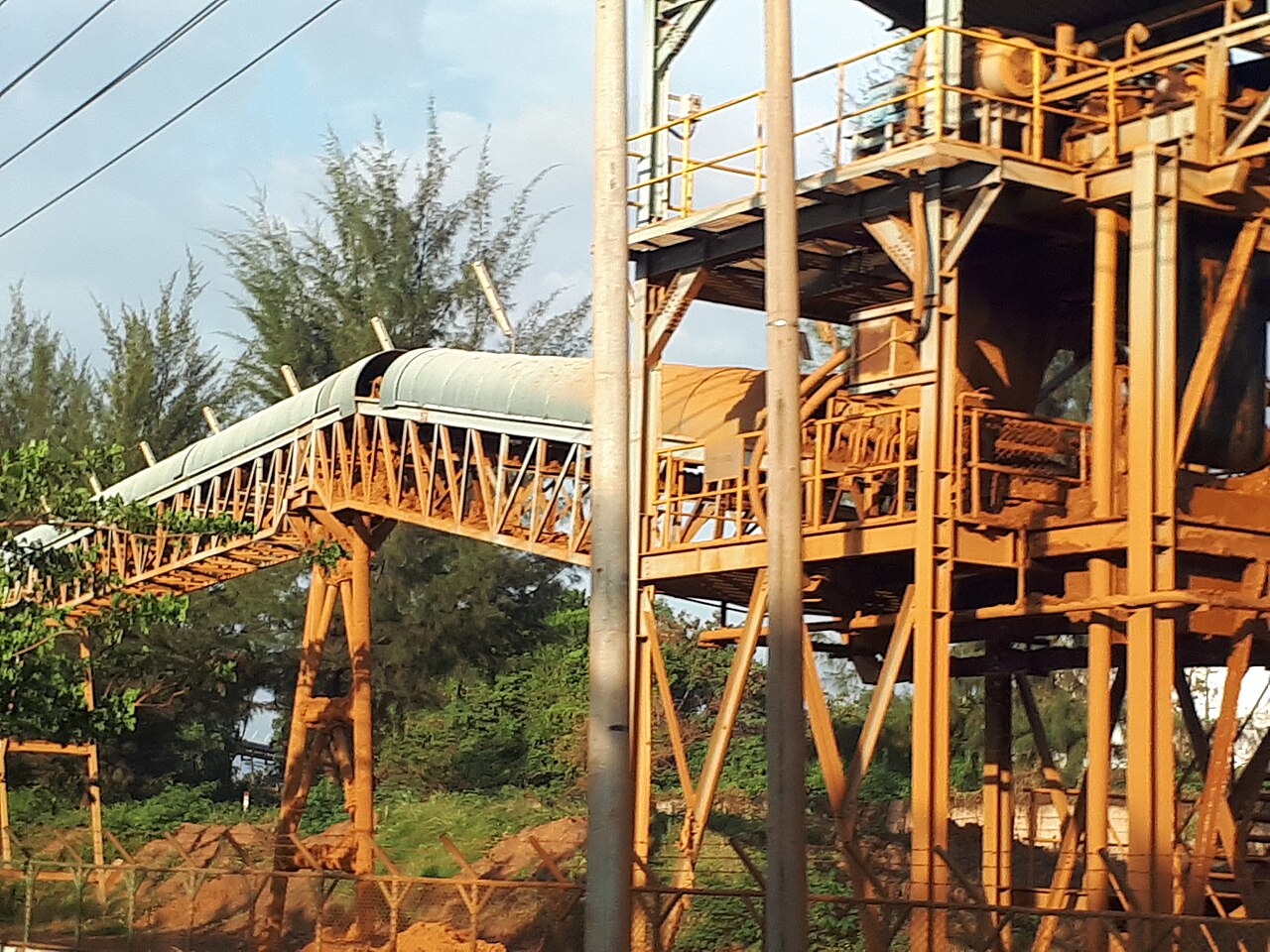
    Indonesia is considering a halt to the construction of new nickel smelters that make semi-finished products, as a global surplus drags down prices of the metal at the heart of many electric vehicle batteries. The idea was raised by Bahlil Lahadalia, Coordinating Minister for Downstreaming and Energy Transition and Minister of Energy and Mineral Resources, and it has not yet become policy.

    What the minister said

    Speaking to reporters on the sidelines of the Investor Daily Summit in Jakarta on 7 October, Bahlil said that roughly 50–60% of the smelters now operating turn out semi-finished nickel, and that the government was weighing a moratorium on new plants of this kind while it pushes industries that make finished downstream products instead, according to Koran Jakarta, citing Antara. He said the option would be reported to President Prabowo Subianto.

    “This is oversupply, which is why prices are falling.”
    — Bahlil Lahadalia, reported by Koran Jakarta and CNBC Indonesia (translated from Indonesian)

    Bahlil tied the move to a surplus of about 2.5 million tonnes, CNBC Indonesia reported. detikFinance noted that the unit behind that figure was not spelled out in his remarks, so it should be treated with some caution.

    Which products could be affected

    Reports differ on the scope. The Antara-based report in Koran Jakarta lists ferronickel, nickel pig iron (NPI), nickel matte and mixed hydroxide precipitate (MHP) as Indonesia’s main semi-finished products. The South China Morning Post mentions NPI and nickel matte specifically. That distinction matters for the EV supply chain: NPI goes mostly into stainless steel, while matte and MHP are intermediate feedstocks for battery materials. Until the government publishes a rule, it is not clear whether battery-grade intermediates would be caught.

    The Oregon Group, a resources news site, reported that nickel fell to a 2026 low of US$15,510 a tonne on 2 October. It said Indonesia’s smelters would need about 415 million tonnes of ore a year at full capacity, against expected 2026 ore output of roughly 290 million tonnes. Citing Indonesian Nickel Miners Association (APNI) data via the OECD, it counted 55 RKEF smelters, 10 HPAL plants and 8 nickel-matte plants in the country.

    Industry and investor reaction

    The Indonesian Nickel Industry Forum (FINI) responded this week. Its chairman, Arif Perdana Kusumah, told CNBC Indonesia that the supply-demand balance has shifted sharply since late 2025 and that tighter government supply policy has, in theory, already rebalanced the market. FINI’s figures put Indonesia at about 60% of world nickel supply, with 2.5 million tonnes produced in 2025: 2.05 million tonnes of NPI, ferronickel and matte, and 450,000 tonnes of MHP and nickel sulphate. The forum expects Indonesian processed nickel output to fall by 3.5–4% in 2026, while MHP capacity, driven by HPAL projects, is set to more than double to over 900,000 tonnes by the end of 2027.

    Any freeze would land mostly on Chinese investors. detikFinance, summarising the SCMP report, cited an estimate from the US-based Center for Advanced Defense Studies that Chinese money accounts for about 75% of Indonesia’s nickel refining industry. Nukila Evanty of the Asia Centre said Chinese investors were likely to be significantly affected.

    What it means for EV buyers

    Nothing changes at the showroom for now. The proposal targets new semi-finished smelters, not existing plants, and it is still at the discussion stage. Over the longer term, the government’s stated aim is to move nickel further along the chain towards products such as battery cells, which ties in with the first EV battery export from Weda Bay earlier this month and with the ministry’s plan to let locally made batteries count towards the 60% local-content rule. If battery-grade intermediates are spared and cell-making grows, local supply for Indonesian-assembled EVs could improve. If they are not, battery-material projects could slow. The environmental footprint of the smelter parks, covered in our report on their largely coal-fired power base, is a separate question the proposal does not address.

    Update, 23 October: Chinese producers at the Morowali industrial park are now discussing coordinated output cuts, possibly including battery-grade MHP. Read our follow-up.

    Follow-up (4 November 2026): At Minerba Convex on 2 November, Bahlil said the government is now reviewing permits for new smelters that make only semi-finished products. Read more.

    Sources: Koran Jakarta (Antara), 7 Oct 2026; CNBC Indonesia, 14 Oct 2026; detikFinance, 10 Oct 2026; South China Morning Post, 10 Oct 2026; The Oregon Group, 9 Oct 2026
  • Nickel parks’ 15.9 GW power base, mostly coal, raises EV battery questions

    Nickel parks’ 15.9 GW power base, mostly coal, raises EV battery questions

    Top image: Photo: Ministry of Public Works of Indonesia (Kementerian PUPR), Public domain, via Wikimedia Commons

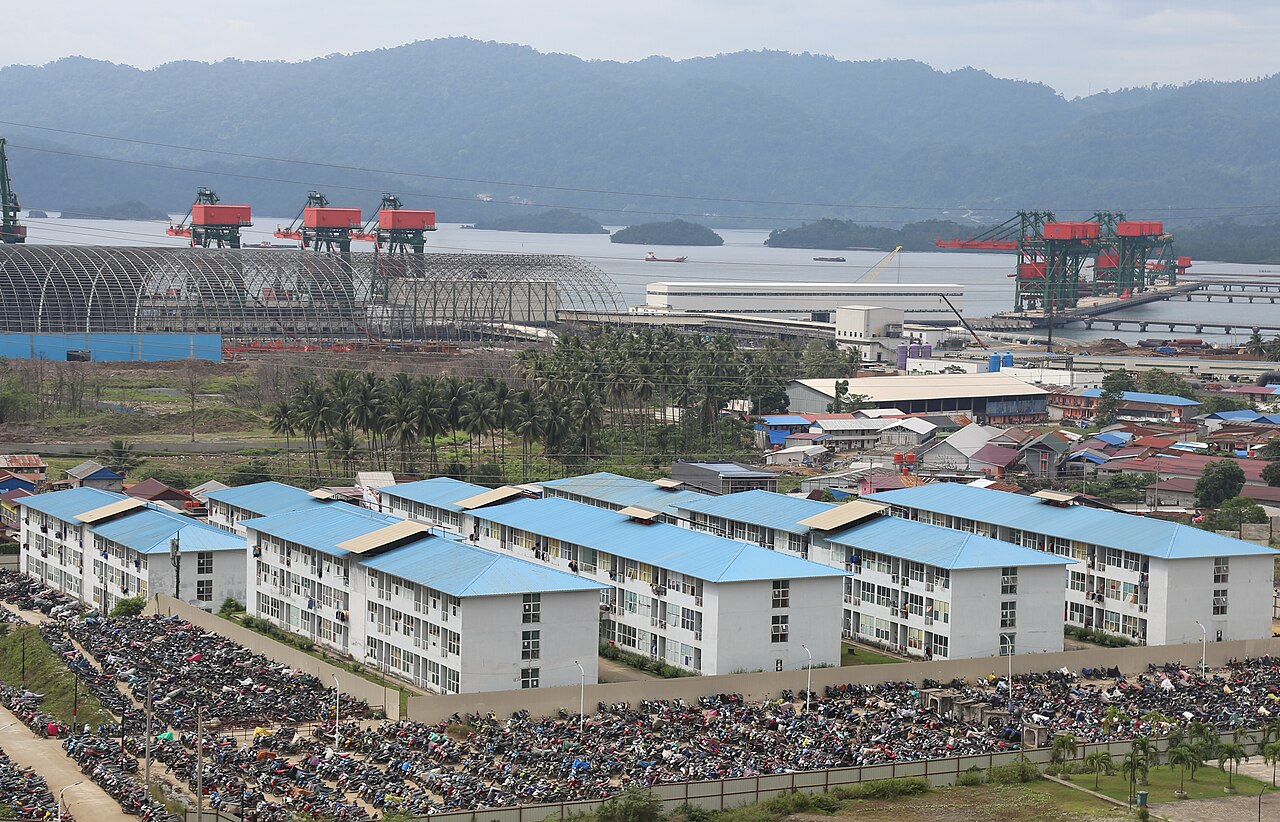
    Indonesia’s two biggest nickel processing hubs now have around 15.9 gigawatts (GW) of power capacity, most of it from coal plants the parks build and run for themselves. Energy experts quoted by Kontan on Sunday 11 October warned that this reliance on so-called captive coal power could weaken the appeal of the country’s nickel and EV battery materials in export markets that increasingly check carbon footprints.

    The debate follows last week’s ceremony at the Indonesia Weda Bay Industrial Park (IWIP) in North Maluku, where President Prabowo Subianto marked Indonesia’s first EV battery exports and the start of 11 industrial projects.

    Where the 15.9 GW figure comes from

    At the IWIP groundbreaking on Thursday 8 October, Investment and Downstreaming Minister and Danantara CEO Rosan Roeslani said installed and under-construction power capacity at IWIP exceeds 7.1 GW, while the Indonesia Morowali Industrial Park (IMIP) in Central Sulawesi has about 8.8 GW. He put the combined total at roughly 15.9 GW and compared it with Singapore’s total electricity use of 13.1 GW, according to Antara and Kontan.

    Antara’s report of the event put the 11 projects at US$10.2 billion. They include nickel-based battery materials, battery separators and electrolytes, aluminium smelting, electric mining trucks and solar glass. Antara did not describe the parks’ power mix. Kontan’s reporting says the capacity is dominated by captive coal-fired plants (PLTU captive), which operate outside the state utility PLN’s grid.

    Why smelters build their own coal plants

    Muhammad Kholid Syeirazi, a member of the National Energy Council (DEN), told Kontan that investors choose captive coal because it is seen as cheap, reliable and can be built anywhere, including areas PLN’s grid does not reach. Smelters need gigawatt-scale power that runs around the clock, and he said PLN’s systems in some industrial regions cannot yet supply that.

    “If industrial expansion continues to be powered by captive coal plants, the Net Zero Emission 2060 target could be missed.”
    — Muhammad Kholid Syeirazi, DEN, to Kontan (translated from Indonesian)

    He called for all new captive capacity to be written into the national energy and electricity plans (RUEN, RUKN and PLN’s RUPTL) so it can be tracked against transition goals. He also noted that global buyers increasingly look at the carbon footprint of nickel, steel, aluminium and EV battery materials, and that high-emission products could face trade barriers and higher compliance costs.

    Saleh Abdurrahman of the Indonesian Renewable Energy Society (METI) told Kontan that large industrial users usually build their own plants when PLN cannot guarantee the capacity and reliability they need. He said the government’s planned 100 GW solar programme would make net-zero commitments more credible if it is delivered, but that it still needs clear buyers for the power.

    Stranded-asset and revenue concerns

    Yusuf Rendy Manilet, a researcher at the Center of Reform on Economics (CORE), told Kontan that state revenue from the parks does not rise in step with export values, because of fiscal incentives, imported capital goods and profits sent abroad. He said the net benefit shrinks further once health, pollution and carbon costs are counted. He also pointed out that current rules still exempt captive coal plants linked to national strategic projects.

    He warned that high-carbon nickel could lose access to premium markets or face price penalties. He also said the coal plants being built now “have operating lives of decades, so they risk becoming stranded assets” (translated from Indonesian). His suggestions included requiring new smelters to use renewable or hybrid power, and opening “power wheeling” so parks can buy green electricity through PLN’s network.

    What it means for buyers

    For Indonesian EV buyers, nothing changes at the showroom today. Only a handful of EVs on sale locally use nickel-based batteries, as Suara noted earlier this year, so the parks’ power mix has little direct bearing on what most local buyers drive. The issue matters more for the bigger picture: whether Indonesia’s nickel-to-battery strategy, outlined in our battery industry guide, can produce materials that carmakers and overseas regulators regard as low-carbon. That will shape how much battery investment and value-added work stays in Indonesia, alongside the 60% local-content rule due from 2027.

    Update, 14 October 2026: the government is now weighing a moratorium on new smelters that make semi-finished nickel. Read more: Indonesia weighs halt to new semi-finished nickel smelters amid glut.

    Sources: Kontan – DEN on captive power (11 Oct 2026); Kontan – METI on industrial power demand (11 Oct 2026); Kontan – CORE on nickel exports (11 Oct 2026); Antara – 11 industrial projects worth US$10.2 billion (8 Oct 2026)

  • Indonesia ships first EV batteries from Weda Bay nickel hub

    Indonesia ships first EV batteries from Weda Bay nickel hub

    Top image: Photo: Muhammad ECTOR Prasetyo from Pamiers, Toulouse, France, CC BY 2.0, via Wikimedia Commons

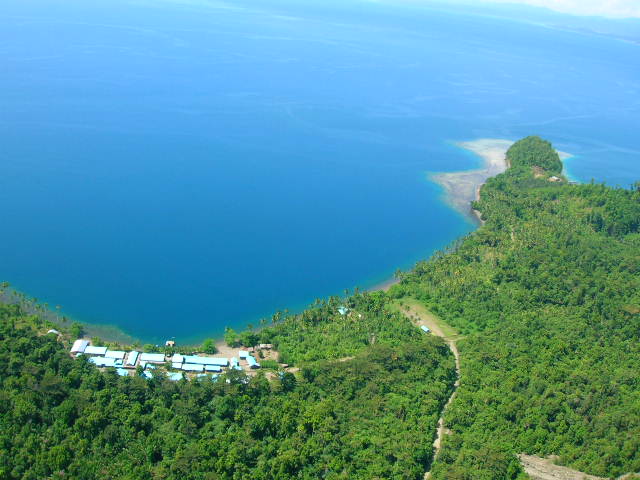
    President Prabowo Subianto on Thursday, 8 October, launched what the government called Indonesia’s first export of electric vehicle batteries. The shipment came from the Indonesia Weda Bay Industrial Park (IWIP) in Central Halmahera, North Maluku, a nickel processing hub. He launched it at a virtual ceremony, together with a package of industrial projects that officials valued at about Rp180 trillion (US$10.2 billion), Antara reported.

    “This is concrete proof that our downstreaming policy is on the right track,” Prabowo said, as quoted by Antara.

    Four projects go commercial, seven break ground

    Four projects at the park entered commercial operation. According to Bisnis.com, they are:

    • PT REPT Battero Indonesia, the battery exporter, which makes nickel manganese cobalt (NMC) and lithium iron phosphate (LFP) batteries;
    • PT Blue Sparking Energy, which exports mixed hydroxide precipitate (MHP), an intermediate nickel product used in battery supply chains;
    • PT Pioneer Aluminium Industries, which makes aluminium products;
    • PT XCMG Indonesia Manufacturing, which makes heavy equipment.

    Construction began on seven more projects, including nickel-cobalt, battery materials, aluminium and solar glass plants, and a vehicle plant listed as Guangqing Motor Indonesia. OtoDream reported that the four commercial projects represent about US$3.4 billion of investment and the seven new ones about US$6.8 billion. The government expects them to create more than 10,000 jobs. Investment minister Rosan Roeslani, who also heads the Danantara sovereign fund, said the projects cover battery materials, battery separators and electrolytes, aluminium, electric mining and industrial trucks, and photovoltaic glass.

    What was actually shipped is not yet clear

    None of the reports we reviewed gave the destination, volume or value of the first battery shipment. Accounts also differ on what was exported. Bisnis.com describes REPT Battero’s product as NMC and LFP batteries. detikFinance calls them battery raw materials, which could mean components rather than finished cells. The two outlets also describe Pioneer Aluminium’s product differently, as electrolytic aluminium (Bisnis.com) or aluminium electrolytic capacitors (detikFinance).

    REPT Battero is a Chinese battery maker. In January 2025 it announced plans for an 8 GWh cell factory in Indonesia aimed mainly at stationary energy storage. In May this year it said it expected Indonesian local-content (TKDN) and national standard (SNI) certification and had signed deals with makers of passenger and commercial EVs, ESS News reported. So it is possible that some of the first exports were energy-storage batteries rather than packs for cars or motorbikes.

    Why it matters

    The government’s downstreaming policy aims to process nickel at home into higher-value products rather than shipping raw ore, and battery exports are the step it has long promised. The Weda Bay launch follows phased operations at the CATL–IBC battery plant in Karawang. Our guide to Indonesia’s battery industry explains how the pieces fit together.

    What it means for buyers: do not expect any immediate effect on showroom prices. In the longer term, more cells and battery materials made in Indonesia would make it easier for carmakers to meet the 60% local-content requirement from 2027, which decides whether EVs qualify for tax incentives. Whether batteries made at Weda Bay end up in cars sold in Indonesia, or mainly go abroad, is a question to watch.

    Follow-up: Experts have since raised questions about the coal-heavy power supply behind the Weda Bay and Morowali parks. Read Nickel parks’ 15.9 GW power base, mostly coal, raises EV battery questions.

    Related: Imported EVs could hit 60% local content with local batteries, ministry says

    Update, 14 October 2026: the government is now weighing a moratorium on new smelters that make semi-finished nickel. Read more: Indonesia weighs halt to new semi-finished nickel smelters amid glut.

    Sources: Antara; Bisnis.com; detikFinance; OtoDream; Energy-Storage.news; ESS News.

  • BYD opens 150,000-unit Subang factory, eyes 60% local content by 2027

    BYD opens 150,000-unit Subang factory, eyes 60% local content by 2027

    Top image: Photo: Exynoss78739, CC BY 4.0, via Wikimedia Commons

    BYD has formally opened its first Indonesian car factory, a 126-hectare site in the Subang Smartpolitan industrial estate in West Java, marking the Chinese brand’s shift from importing cars to building them locally. The plant was inaugurated on Thursday 3 September 2026 and has an annual production capacity of 150,000 vehicles.

    Investment, jobs and first models

    CNN Indonesia reported the investment at Rp11.6 trillion. The facility covers the core stages of car manufacturing – stamping, welding, painting and final assembly – and currently employs around 5,000 local workers, a figure that could rise to more than 20,000 once the plant runs at full capacity. The first model off the line was the BYD M6 DM plug-in hybrid MPV, which CNN Indonesia said carries local content of more than 40%.

    According to Antara, the plant’s line-up also includes the Atto 1, the battery-electric M6 and models from BYD’s premium Denza brand (since renamed Danza in Indonesia). detikOto reported that the factory is already producing around 10,000 units a month.

    Local-content targets and batteries next

    The opening comes as Indonesia tightens its local-content rules for electric vehicles. As The Jakarta Post noted, the domestic component threshold (known as TKDN) stands at 40% this year, rises to 60% from January 2027 and is set to reach 80% by 2030. BYD Indonesia president director Eagle Zhao told Antara that the company would be ready for the higher bar:

    “In 2027, we will certainly be the first to stand in support of the TKDN requirement, which will become 60 per cent.” – Eagle Zhao, BYD Motor Indonesia, to Antara (translated from Indonesian)

    Mr Zhao said battery assembly would form the next phase of BYD’s Indonesian investment, arguing that a product cannot truly be called Indonesian-made without a comprehensive local production process. BYD has also sent hundreds of Indonesian technicians and engineers to its research and development centre in China, according to Antara. The Jakarta Post reported that Mr Zhao sees Subang as a potential regional export base as well as a supplier to the home market.

    Government message

    President Prabowo Subianto did not attend the ceremony. Industry Minister Agus Gumiwang Kartasasmita delivered a message on his behalf, telling the audience that the transition of the market towards green mobility and electric vehicles needed to move faster, detikOto reported. CNN Indonesia said the minister described the plant as a milestone in moving from simply dominating sales to strengthening domestic components within the EV ecosystem.

    BYD Co. vice-president Liu Xueliang called the opening important not only for the company but for the Indonesian government. detikOto noted that Indonesian EV sales reached 83,758 units in January–July 2026, up 88.6% year on year – a market in which BYD has become the leading brand.

    What it means for buyers

    Local assembly matters for Indonesian buyers in several ways. The tax exemptions that allowed brands to import fully built EVs ended in 2025, so producing locally is now the main route for manufacturers to keep prices competitive. A domestic plant should also mean shorter waiting times, easier access to parts and, eventually, locally assembled batteries. Buyers comparing BYD models should check which variants are built in Subang and what local-content level they carry, as this can affect eligibility for government incentives.

    Several other brands, including VinFast, are pursuing local production in Indonesia, and the BYD opening raises the stakes for competitors ahead of the 60% local-content deadline in January 2027.

    Related on IndoEVs

    Related: Parts makers say EV local-content rules leave little room for suppliers

    Sources: CNN Indonesia – Pabrik BYD senilai Rp11 triliun di Subang akhirnya diresmikan; Antara – Usai resmikan pabrik Subang, BYD siapkan perakitan baterai di RI; detikOto – Pesan Presiden Prabowo buat BYD yang baru resmikan pabrik di Subang; The Jakarta Post – EV push gains traction as factories expand