Tag: Electric cars

  • South Sumatra’s EV fleet more than doubles as PLN opens Palembang charging hub

    South Sumatra’s EV fleet more than doubles as PLN opens Palembang charging hub

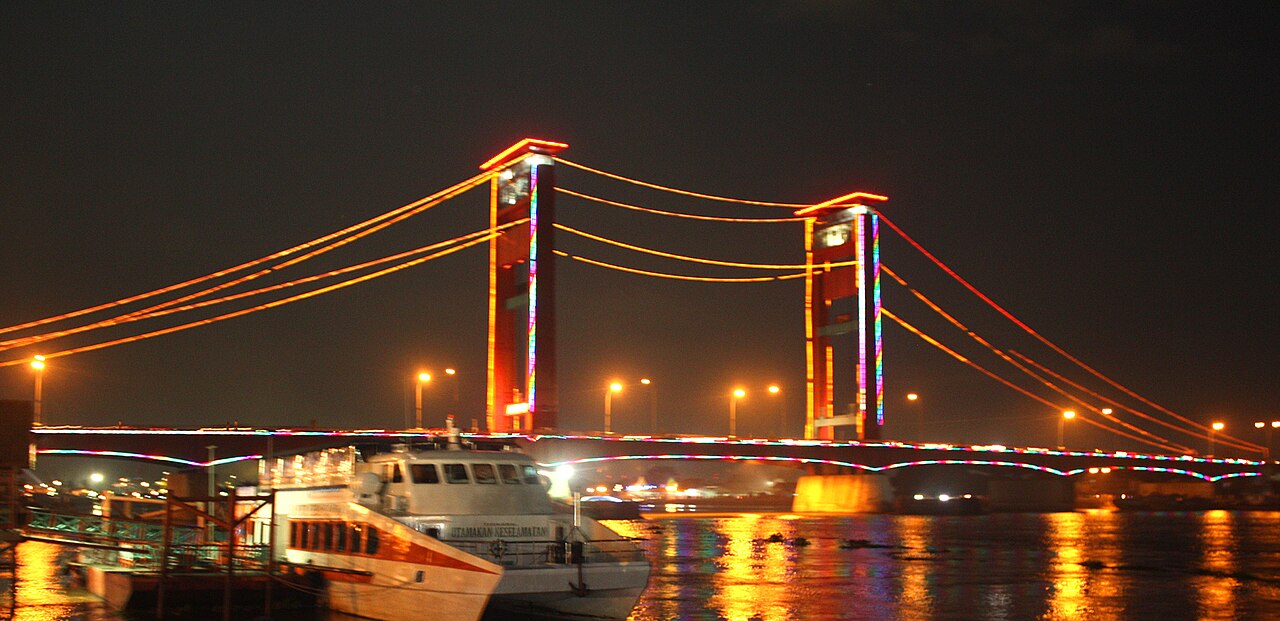
    Top image: Ampera Bridge, Palembang. Photo: Yogwi21, CC BY-SA 4.0, via Wikimedia Commons

    The number of electric cars in South Sumatra has more than doubled in seven months, according to state utility PLN, which on Friday 25 September opened the province’s first “SPKLU Center” – a cluster of public fast chargers – in the provincial capital, Palembang.

    Figures from PLN’s regional distribution unit for South Sumatra, Jambi and Bengkulu (UID S2JB), reported by Antara, put the number of electric cars in the province at 2,047 in July 2026, up from 849 in December 2025.

    What has opened in Palembang

    The new hub is at PLN’s Rivai customer service office on Jalan Demang Lebar Daun. It adds four new charging units with a combined eight CCS2 connectors rated at 120 kW, alongside two units already on site rated at 120 kW and 180 kW, Listrik Indonesia reported. South Sumatra Governor Herman Deru inaugurated the site.

    Across its three-province service area, PLN UID S2JB says it now runs 87 charging units at 69 public charging station (SPKLU) locations, one mobile charging unit and 40 charging points for electric motorbikes at 40 locations. Antara presents the 87-unit figure as a regional total without spelling out whether it covers South Sumatra alone; Listrik Indonesia attributes it to the whole South Sumatra–Jambi–Bengkulu service area.

    Charging demand is rising faster than the fleet

    Usage of PLN’s chargers in the area has grown even more quickly than car ownership. Charging sessions rose from 1,958 in 2024 to 11,726 in 2025, and had reached 28,176 in 2026 by the end of August. Energy delivered climbed from 44,917 kWh in 2024 to 309,243 kWh in 2025, and to 762,975 kWh by August this year, according to Antara and Listrik Indonesia.

    If the 2026 figures cover this year only, as Listrik Indonesia’s report indicates, eight months of 2026 have already produced roughly 2.4 times as many charging sessions and about 2.5 times as much energy as the whole of 2025 (IndoEVs’ own calculation from the reported figures).

    Diksi Erfani Umar, general manager of PLN UID S2JB, framed the new centre as a response to that demand:

    “The growth of electric vehicles must be matched by the readiness of its infrastructure.” – Diksi Erfani Umar, PLN UID S2JB, via Listrik Indonesia (translated from Indonesian)

    Governor wants a charger in every district

    Governor Deru used the opening to set a much wider goal: at least one charging point in each of South Sumatra’s 241 kecamatan (sub-districts), prioritising those with heavy vehicle traffic, Beritalima reported. No deadline was given. He said PLN is open to working with third parties to host chargers at government and private sites.

    “My hope is that this infrastructure doesn’t stop at the big cities, but reaches into the sub-districts.” – Herman Deru, Governor of South Sumatra, via Beritalima (translated from Indonesian)

    Antara also reported the governor pointing to provincial support for EV owners through vehicle-tax relief, though the report did not give details of the scheme.

    Part of a national pattern

    South Sumatra’s numbers are small next to Greater Jakarta, but they mirror what is happening nationally: EV sales hit a record in August (see our report on Gaikindo’s August figures), and PLN’s charging network has been recording sharp growth in energy use (see PLN’s first-half SPKLU figures). A dedicated fast-charging hub in a regional capital is a sign the network is starting to follow demand beyond Java.

    What it means for buyers

    • In Palembang: a site with several fast chargers lowers the risk of arriving to find the only charger occupied or out of order.
    • Charging speed depends on the car: a 120 kW or 180 kW charger only delivers that power if the car can accept it. Some models, particularly smaller city cars, accept much lower DC charging rates, so check your car’s maximum before planning a trip around a charging stop.
    • Outside the capital: the one-charger-per-district target has no timetable, so buyers in smaller towns should still plan around home charging for now. Our guide to charging an EV in Indonesia explains SPKLU, home charging and battery swapping, and the PLN SPKLU entry in our EV directory lists the network’s details.

    Related: PLN has since opened a similar SPKLU Center in Padang. Read West Sumatra EV charging use jumps 4.5-fold as PLN opens Padang hub.

    Sources: Antara – PLN sebut penggunaan mobil listrik di Sumsel tumbuh dua kali lipat (26 Sept 2026); Listrik Indonesia – Mobil listrik di Sumsel tembus 2.047 unit, PLN buka SPKLU Center; Beritalima – Gubernur Sumsel resmikan SPKLU Center PLN di Palembang (25 Sept 2026)
  • EV owners face ferry refusals as Indonesia restates battery safety rules

    EV owners face ferry refusals as Indonesia restates battery safety rules

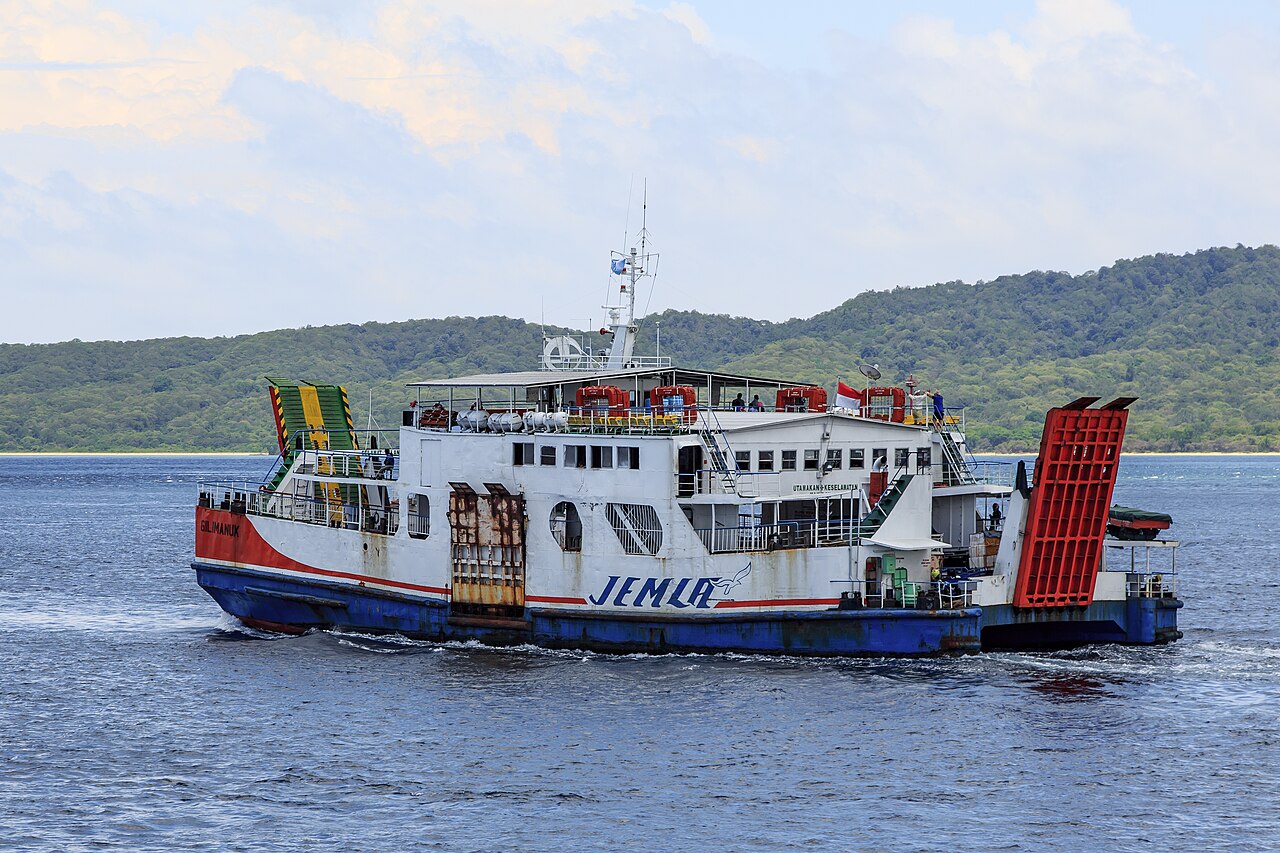
    Top image: Photo: CEphoto, Uwe Aranas, CC BY-SA 3.0, via Wikimedia Commons

    Update, 4 October 2026: Kemenhub has since floated the idea of dedicated ships for EVs, and ferry operators have set out their boarding conditions. Read our follow-up.

    Electric vehicles are not banned from Indonesia’s ferries, but a growing number of owners and manufacturers are finding them turned away at the ramp. This week the dispute reached the national stage, with the EV industry complaining about refusals, ferry operators defending their caution and the Ministry of Transportation (Kemenhub) restating the safety rules that already allow EVs on board.

    Industry complains of refusals

    The issue was pushed into the spotlight by Moeldoko, chairman of the EV industry association Periklindo, who said industry players had been rejected by ship operators when trying to move electric motorbikes, trucks and passenger cars by sea, OtoDream reported. He called for standard safety procedures, pointing out that lithium-ion battery fires cannot be tackled with conventional firefighting methods. The report noted that large makers such as BYD can use their own car-carrier ships, while smaller brands depend on scheduled ferries and cargo services.

    What the ministry says

    Kemenhub’s position is that there is no prohibition. Samsuddin, the ministry’s director of shipping and maritime affairs, acknowledged that some operators were still reluctant to carry EVs, but said this was because certain safety conditions were not being met, according to OtoDream. The rules sit in circular SE-DJPL 12/2024, issued on 4 April 2024, which the ministry has now reissued to clear up misunderstandings between operators and passengers.

    Under the circular, as summarised in that report:

    • the battery should be charged to no more than 50%;
    • EVs should be parked on an open deck, not on enclosed lower car decks;
    • the ship needs open space to deal with an emergency; and
    • operators must carry fire-fighting equipment suited to EV battery fires.

    Operators: safety first, and deck space costs money

    Ferry operators’ association GAPASDAP says it wants to carry EVs but will not compromise on safety. Its chairman, Khoiri Soetomo, cited the risk of thermal runaway, in which a battery overheats, resists extinguishing and can reignite, and said many ro-ro ferries lack fire blankets, trained crews and suitable space in their closed car decks, detikJatim reported. GAPASDAP wants Kemenhub and the classification society BKI to set technical standards for where EVs go on board, early-detection procedures, battery manifests and a clear split of responsibility between carmakers, ports and shipping firms.

    On the busy Ketapang–Gilimanuk crossing between Java and Bali, state ferry company ASDP said it cannot refuse EVs without a legal basis. “We follow the policy from the centre,” said Media Syahrianto Heriawan, general manager of ASDP’s Ketapang branch (translated from Indonesian), in a separate detikJatim report. That report described the conditions as a 30–50% battery charge and parking on an open weather deck or a well-ventilated area near the ramp doors, covering battery-electric cars, hybrids, plug-in hybrids and fuel-cell vehicles. It also cited a second circular, SE-DRJD 7/2024. The ministry’s own summary gives only a 50% ceiling, so drivers should check the exact requirement with their operator.

    The harbour authority for Tanjung Wangi, headed by Capt. Purgana, flagged a practical snag: reserving open-deck space for EVs that may or may not turn up leaves lanes empty, which costs operators revenue.

    What it means for buyers

    For anyone planning to drive an EV between islands, such as Java to Bali, Sumatra or Lombok, the rules make the trip possible but not guaranteed. Our reading of the reports suggests sensible steps: check with the operator before travelling, arrive with the battery at or below half charge (which may mean planning a charging stop after the crossing, see our charging guide), and expect to be directed to the open deck or asked to wait for a ship that has space. Plug-in hybrid and hybrid owners should note that the rules reportedly cover them too.

    The bigger question is for the industry. If smaller brands struggle to ship vehicles and parts off Java, buyers in other regions could see slower deliveries and thinner after-sales support. A clearer national standard, as both Periklindo and GAPASDAP are requesting, would help. Browse which brands sell where in our EV directory.

    Sources: OtoDream: Moeldoko on ferry refusals (23 Sep 2026); detikJatim: GAPASDAP explanation (24 Sep 2026); OtoDream: Kemenhub responds (25 Sep 2026); detikJatim: ASDP and KSOP Banyuwangi (25 Sep 2026)

  • Green SM launches six-seat VinFast electric taxi service in Jakarta

    Green SM launches six-seat VinFast electric taxi service in Jakarta

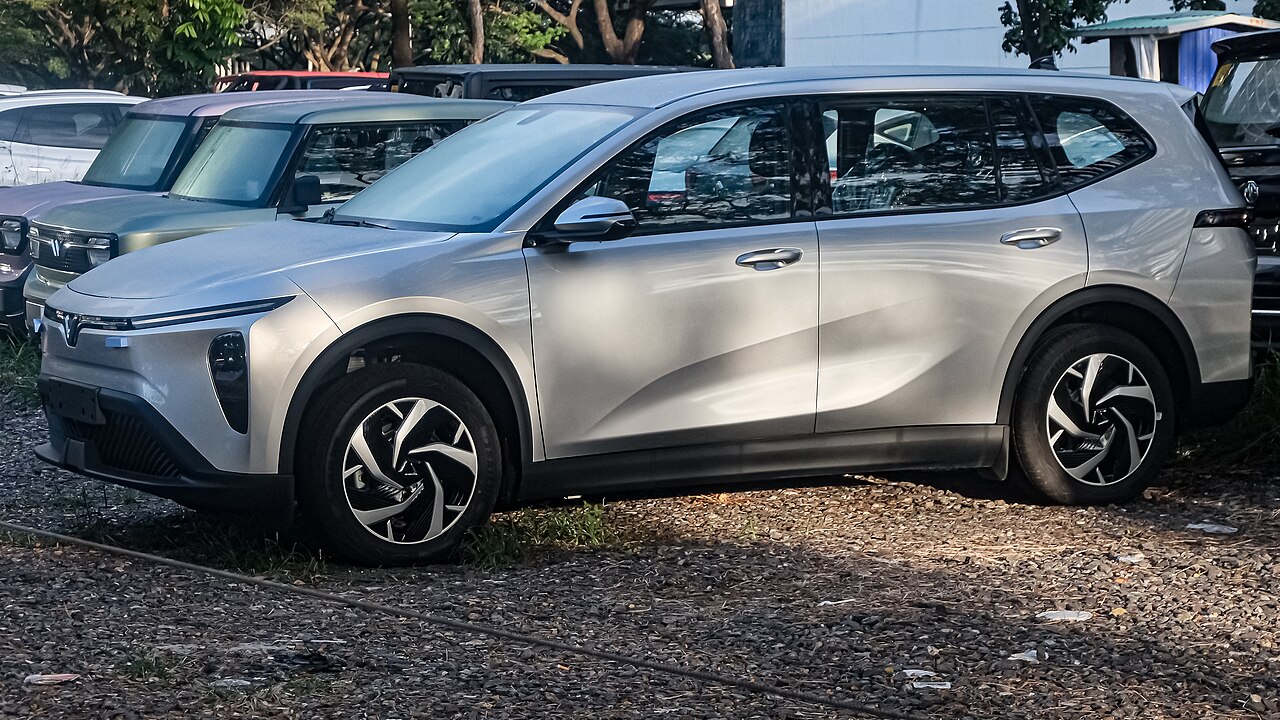
    Top image: Photo: Ethan Llamas, CC BY-SA 4.0, via Wikimedia Commons

    Green SM, an all-electric ride-hailing platform that runs VinFast cars, has launched a six-seat electric taxi service in Jakarta called Green Limo. The whole fleet uses the VinFast Limo Green, a three-row electric MPV, and the company is handing over its first 500 cars to drivers in the capital between 19 and 29 September 2026.

    Alongside the new service, Green SM has opened a vehicle rental scheme that lets would-be drivers lease a new VinFast and work on its platform. It is a clear attempt to grow its driver base quickly while putting more of VinFast’s locally sold models on Indonesian roads.

    A third car tier for families and groups

    According to the company’s launch announcement, Green Limo is the firm’s third four-wheel service in Indonesia, after Green Car and Green Premium. It is pitched at families, larger groups, business travellers and passengers with plenty of luggage.

    The cars are being delivered from Green SM’s depot in Kemayoran, Central Jakarta, where the handover event also includes test drives and sign-ups for prospective drivers. First-time Green Limo passengers get 20% off a trip, capped at Rp 50,000, from 19 September to 3 October, IDN Times reported.

    Green SM’s global chief executive, Pham Nhat Minh Hoang, said the service “offers a suitable option for journeys where space and comfort are priorities.”

    Renting a VinFast to drive

    The rental programme is the more significant part of the announcement for the wider market. Drivers can start with an initial payment from Rp 2 million, and daily rental fees start at Rp 254,000. The cars on offer are the Limo Green, the VF e34 (also listed as the Nerio Green), the VF 5 (Herio Green) and the VF 6.

    To attract drivers, Green SM says it will guarantee daily earnings of up to Rp 400,000 for the first two months, subject to conditions, and share up to 92% of fare revenue with drivers. It also lists monthly bonuses of Rp 1 million for signing up, Rp 676,000 as a “brand bonus” and up to Rp 1.34 million for operations, plus free charging at VinFast-linked V-Green charging stations. The company claims drivers can earn up to Rp 14 million a month.

    By our own calculation, the maximum guaranteed daily figure is Rp 146,000 more than the lowest daily rental fee, before any bonuses. However, the guarantee is described as “up to” and depends on conditions that the announcement does not spell out, so drivers should read the contract terms carefully.

    The Limo Green in Indonesia

    VinFast launched the Limo Green at the Indonesia International Motor Show in February. detikOto reported that it cost around Rp 380 million with the battery, or around Rp 319 million under VinFast’s battery-rental option. The first 2,000 buyers at the show received a Rp 20 million discount, bringing the on-the-road Jakarta price down to around Rp 299 million. The MPV measures 4,740 mm long, has a 2,840 mm wheelbase and has a claimed range of 450 km. At launch, VinFast said the model was aimed mainly at fleet and taxi operators.

    VinFast began operating its plant in Subang, West Java, in December 2025. It has an initial capacity of 50,000 vehicles a year, according to Gaikindo. VinFast’s Indonesian range now runs from the VF 3 micro-SUV to the VF 7. You can find the full line-up and prices in our VinFast directory entry.

    What it means for passengers and buyers

    • Passengers: Jakarta gains another large electric ride-hailing option. It is a quieter alternative to petrol MPVs for airport runs and group trips, and the introductory discount runs until 3 October.
    • Would-be drivers: the rental route removes the need to buy a car outright, but the headline earnings are maximums. Check what the guarantee conditions are, how long the contract lasts and what happens if you leave the scheme early.
    • Private buyers: big fleet deals like this one help build a service and charging network for VinFast models. That is worth considering if you are cross-shopping a VF 6 or VF 7 against Chinese rivals. Our electric car buying guide and charging explainer cover the basics.

    Related: Green SM has also launched Green SM Bike, an electric motorbike taxi service in Jakarta using VinFast scooters.

    Sources: Green SM via Media OutReach Newswire / The Manila Times; IDN Times; detikOto; Gaikindo; Kompas Otomotif

  • Electric Cars in Indonesia: Prices, Models and What to Know Before Buying (2026)

    Electric Cars in Indonesia: Prices, Models and What to Know Before Buying (2026)

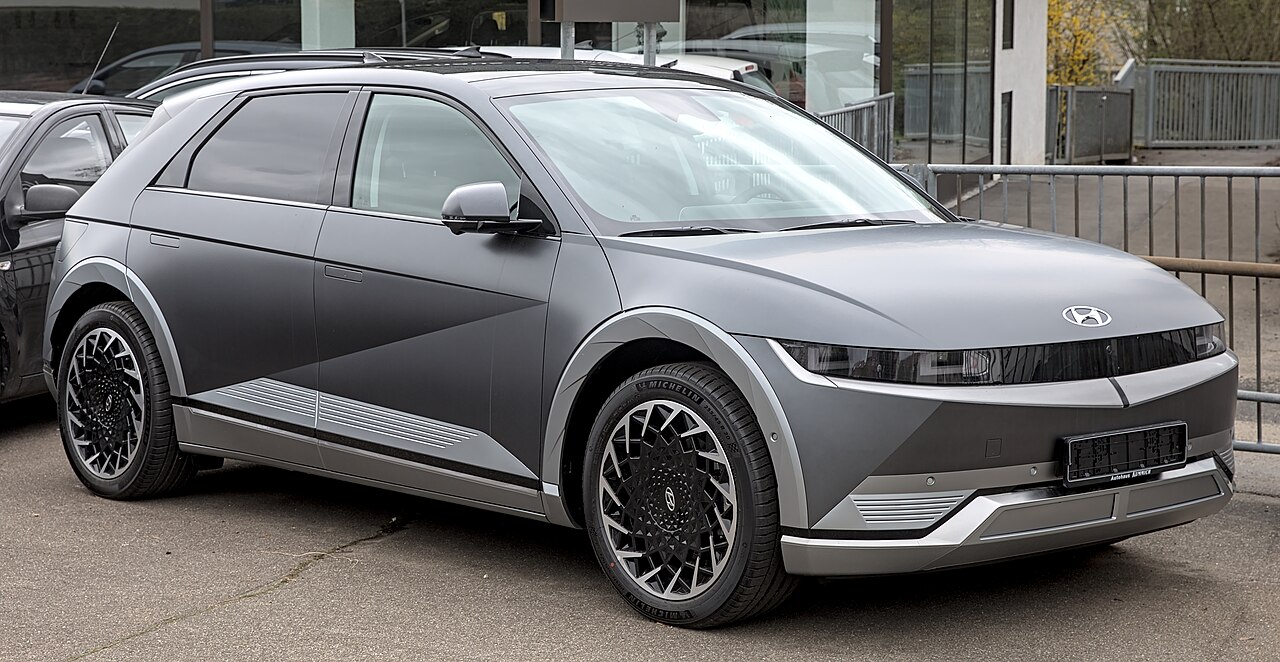
    Top image: Photo: Alexander-93, CC BY-SA 4.0, via Wikimedia Commons

    Electric cars have gone from niche to mainstream in Indonesia remarkably quickly. Battery electric vehicle (BEV) wholesales reached 101,171 units in the first eight months of 2026, almost double the same period of 2025, according to Gaikindo data reported by Kompas. There is now a model for almost every budget, from compact city cars under Rp200 million to luxury SUVs costing billions. This guide sets out what electric cars cost in Indonesia in 2026, which models people are buying, which incentives apply, and what it costs to run one compared with a petrol car.

    What electric cars cost in Indonesia: price bands

    The prices below are on-the-road (OTR) Jakarta figures unless stated, taken mainly from Kompas’s September 2026 price list. Prices elsewhere in the country are usually higher because of shipping and regional taxes.

    Entry level: under about Rp250 million

    • Wuling Aira EV: Rp155 million (Standard Range) to Rp175 million (Long Range).
    • VinFast VF 3: Rp152 million with a battery-rental plan, or around Rp215 million with the battery included, according to Moladin.
    • Wuling Air EV Lite: Rp214 million to Rp251 million.
    • BYD Atto 1: Rp205 million (Dynamic) and Rp245 million (Premium), per Kompas.
    • Geely EX2: Rp239.9 million (Pro) and Rp269.9 million (Max).
    • Chery Q: Rp249.9 million to Rp269.9 million at normal list price.

    Mid-range: roughly Rp250 million to Rp500 million

    This is where the family crossovers sit. The Jaecoo J5 EV costs Rp279.9 million to Rp324.9 million. The MG S5 EV runs from Rp355.9 million and the BYD M6 seven-seater from Rp423 million. Several newcomers launched at GIIAS 2026 with introductory prices, including the Changan Nevo Q05 from Rp309 million and the BAIC T1 at a retail price of Rp393 million.

    Upper and premium: Rp500 million and above

    Above the mid-range you will find the BYD Sealion 7 Performance (Rp719 million), the Hyundai Kona Electric (about Rp565 million to Rp690 million) and the Ioniq 5 (Rp809 million to around Rp926 million). Past the Rp1 billion mark are cars such as the Hyundai Ioniq 6 (Rp1.237 billion) and the Lexus ES 350e (Rp1.48 billion).

    The models Indonesians are actually buying

    Chinese brands have almost all of the market. Gaikindo’s January to August 2026 figures, compiled by Kompas, show that all of the ten best-selling BEVs are Chinese:

    1. Jaecoo J5: 23,359 units
    2. BYD Atto 1: 19,909
    3. Geely EX2: 9,769
    4. BYD M6: 6,694
    5. BYD Sealion 7: 4,251

    Most sales are compact, affordable models. For many buyers an EV is now priced like a mid-spec petrol hatchback or small SUV, not like a luxury car.

    Incentives: what applies in 2026

    National taxes: PPN DTP and PPnBM

    Until the end of 2025, locally built EVs with at least 40% local content (TKDN) had 10 percentage points of the 12% VAT paid by the government (PPN DTP), so buyers paid 2%. That scheme, set out in PMK 12/2025, expired in December 2025. The import-duty and luxury-tax exemptions for fully imported (CBU) EVs also ended on 31 December 2025. Qualifying BEVs have also been exempt from luxury-goods sales tax (PPnBM), according to Kompas.

    In May 2026 the government announced a new PPN DTP scheme of 40% to 100% for pure battery EVs only (no hybrids), with a quota of 100,000 cars. Kompas reported that nickel-based batteries would get the larger discount. The launch was pushed back more than once, first from June and then into August. In September the industry minister said the government was also studying incentives tied to local content, and the required TKDN is due to rise from 40% now to 60% in 2027–2029 and 80% in 2030. Ask the dealer in writing which tax treatment applies to the exact variant you are buying.

    Regional taxes and Jakarta’s odd-even exemption

    Annual vehicle tax (PKB) and the transfer-of-ownership fee (BBNKB) are set by each province. In May 2026 Jakarta confirmed that EVs remain exempt from both. Jakarta EVs are also still exempt from the odd-even number-plate restriction under Governor Regulation 88/2019. Outside Jakarta the rules vary, so check with your local Samsat office.

    Running costs: electricity versus petrol

    Here is a simple monthly comparison for 1,000 km of driving. We assume an EV covers about 6.6 km per kWh, a figure the energy ministry has used (Republika), and a petrol car does 12 km per litre. Both are illustrative. Your own car and driving style will change the numbers.

    • EV, home charging (about 152 kWh at Rp1,444.70/kWh for 1,300–2,200 VA households): around Rp219,000. PLN also offers a 30% discount for night charging between 22:00 and 05:00, which brings this down to roughly Rp153,000.
    • EV, public SPKLU (Rp2,467/kWh): around Rp374,000, plus a service fee of up to Rp25,000 per fast-charging session or Rp57,000 per ultra-fast session.
    • Petrol car on Pertalite (Rp10,000/litre): around Rp833,000.
    • Petrol car on Pertamax (Rp15,950/litre in Java and Bali from 1 September 2026): around Rp1.33 million.

    These figures leave out local electricity taxes and the car’s charging losses, but the gap is clear. Mostly charging at home costs a fraction of running a petrol car, and EVs also need less routine servicing because they have no oil changes.

    What to check before you buy

    • Battery ownership. Some brands sell cars with a battery-rental plan. The price looks lower, but you pay a monthly fee. Compare the total cost over the years you expect to own the car.
    • Warranty. Confirm how long the battery warranty lasts, what mileage it covers and what capacity it guarantees, and check whether it transfers to the next owner.
    • Home power supply. Many homes need a higher electricity connection before they can use a wallbox charger. Include that cost in your budget.
    • Service network. Several brands are new to Indonesia. Check where the nearest authorised workshop is, especially outside Java.
    • Resale value. Used EV prices are still settling, and battery health is the main thing buyers look at.

    Prices, tariffs and incentive rules in Indonesia change often, sometimes month to month. Figures here were correct according to the sources linked at the time of writing; always confirm current prices, promotions and eligibility with an authorised dealer or the relevant provider before you commit.

    FAQ

    What is the cheapest electric car in Indonesia?

    In September 2026 the cheapest listed options were the VinFast VF 3 at Rp152 million on a battery-rental plan and the Wuling Aira EV from Rp155 million with the battery included.

    Are EVs exempt from Jakarta’s odd-even rule?

    Yes. Battery electric vehicles remain exempt under Governor Regulation 88/2019, and Jakarta also still waives PKB and BBNKB for EVs.

    Is the 2026 PPN DTP discount in force?

    The scheme of 40% to 100% depending on battery type has been announced but delayed several times. Check its current status with the dealer before you sign.

    Do hybrids get the same incentives?

    No. The government has said the new PPN DTP scheme covers pure battery EVs only, not hybrids.

    Related: EV taxes and incentives in Indonesia in 2026: what buyers now pay

    Sources: Kompas – Update Daftar Harga Mobil Listrik September 2026; Kompas – Cicilan Mobil Listrik Rp 200 Jutaan: BYD Atto 1 dan Geely EX2; Kompas – Daftar Mobil Listrik Terlaris hingga Agustus 2026; Moladin – 15 Mobil Listrik Termurah September 2026; CNN Indonesia – Daftar Insentif Mobil Listrik yang Disetop; Kompas – Insentif Mobil Listrik Berakhir 2026; Kompas – Menkeu Targetkan Insentif Mobil dan Motor Listrik Mulai Juni 2026; CNBC Indonesia – Purbaya Tunda Insentif Mobil Listrik; DDTCNews – Subsidi dan PPN DTP untuk Kendaraan Listrik Akan Segera Diluncurkan; Antara – Pemerintah kaji insentif kendaraan listrik berbasis TKDN; Kompas – Mobil Listrik Tetap Bebas Ganjil Genap di Jakarta; Republika – Isi Daya Fast Charging di SPKLU Kena Tambahan Biaya; Nasional.news – Tarif Listrik PLN September 2026; GridOto – PLN Diskon 50 Persen Pemasangan Home Charging; Antara – Harga BBM 1 September 2026