
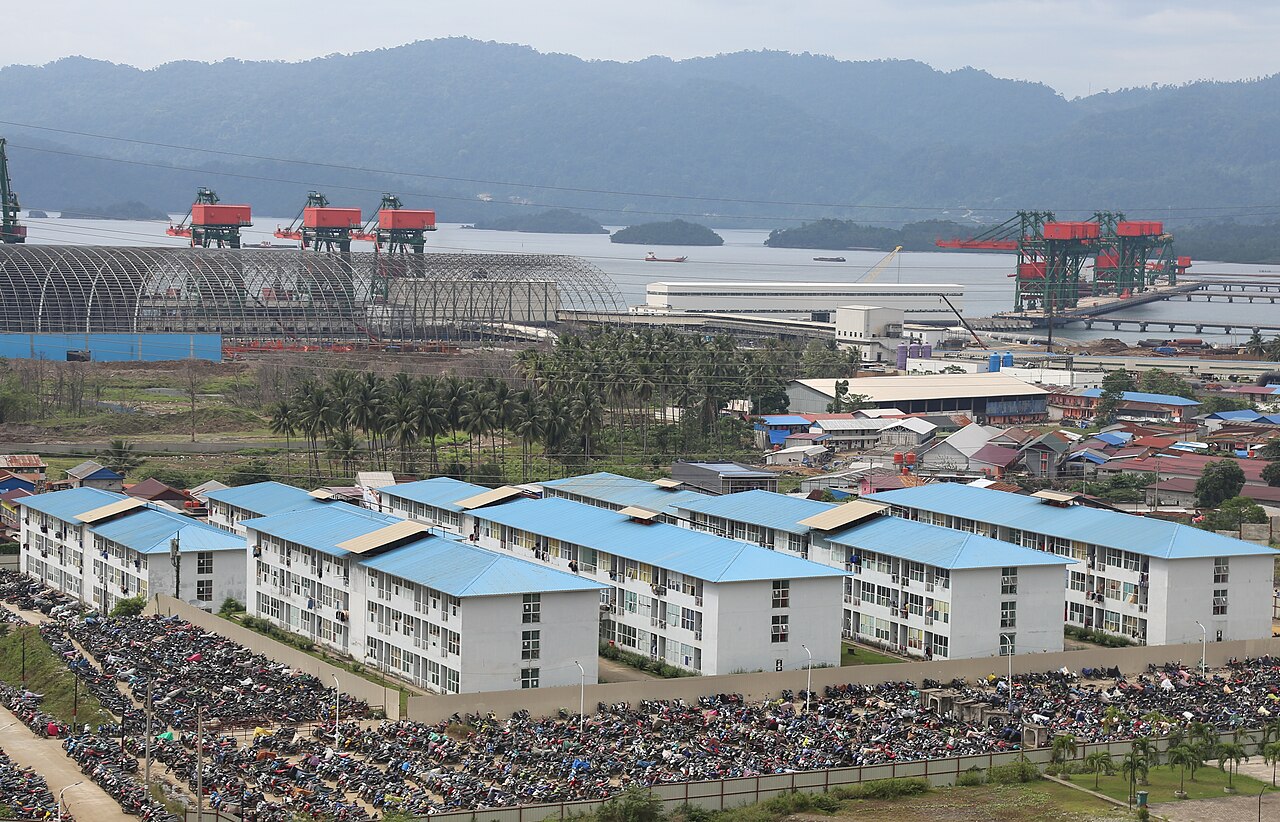
Top image: Photo: Ministry of Public Works of Indonesia, Public domain, via Wikimedia Commons


Chinese nickel producers operating in Indonesia are discussing coordinated output cuts, including at plants that make a key feedstock for electric-vehicle batteries, after a slide in nickel prices squeezed their margins.
Executives from companies including Tsingshan Group, Huayou Cobalt, CNGR Advanced Material, Lygend Resources and GEM met on Tuesday, 20 October, to discuss curbs, Reuters reported, following an earlier report by Bloomberg. No decision had been taken on the size or length of any cut. Reuters cited three sources as saying the firms were weighing halving output of mixed hydroxide precipitate (MHP), an intermediate product used to make battery chemicals, and four sources as saying a 20 per cent cut to nickel pig iron (NPI), used mainly in stainless steel, was under consideration.
Australian-listed Nickel Industries, which holds a 10 per cent stake alongside Huayou in the Huayue nickel-cobalt project at the Indonesia Morowali Industrial Park (IMIP) in Central Sulawesi, said cuts were coming. Managing director Justin Werner told an earnings call there would be “coordinated cuts across all of the operations within the IMIP”, without giving a percentage, and said producers without integrated operations would be hit hardest. The company has already reduced its own Indonesian NPI output to 75 per cent of capacity this month, according to Reuters.
Prices, costs and quotas
Nickel had fallen nearly 25 per cent from its 2026 peak of about US$20,000 a tonne to US$15,070 last week, its lowest level since December 2025, Reuters said. Talk of cuts has since lifted prices: The Edge Malaysia reported that nickel rose for a fourth straight day on 21 October to above US$16,000 a tonne on the London Metal Exchange, and Reuters said LME nickel gained 3.7 per cent that day. An earlier attempt to agree cuts, in August, failed, The Edge noted.
Producers are also dealing with sulphur shortages, which push up the cost of making MHP, and with tighter ore-mining quotas set by the Indonesian government. Jakarta has separately been weighing a halt to new semi-finished nickel smelters because of oversupply.
Indonesia produced about two-thirds of the world’s mined nickel in 2025, according to US Geological Survey figures cited by Reuters, so decisions taken at Morowali ripple through global supply chains for both steel and batteries.
What it means for Indonesia’s EV ambitions
MHP links Indonesia’s nickel mines to its battery ambitions: it feeds the precursor and cathode materials used in nickel-based lithium-ion cells. A deep MHP cut would tighten supply for battery-chemical makers, though it could also support prices that have been under pressure. Indonesia only recently shipped its first EV batteries from the Weda Bay nickel hub, and the industry’s reliance on captive coal power has also drawn scrutiny.
For car and motorbike buyers in Indonesia, there is no direct effect on showroom prices in the short term, and many lower-priced EVs use lithium iron phosphate (LFP) batteries that contain no nickel. The cuts matter more for the longer-term case that Indonesia can turn its nickel reserves into a domestic battery and EV industry, which underpins the government’s local-content rules and incentives.
Sources: Reuters via MINING.COM; The Edge Malaysia; Bloomberg.