Top image: Photo: Government of North Morowali, Indonesia, Public domain, via Wikimedia Commons
Indonesia wants to do more than buy electric vehicles. It wants to make them, from the nickel in the ground to the finished battery pack. That goal has shaped policy for more than five years, including export bans, tax incentives and billion-dollar deals with Chinese and Korean partners. This guide explains how the strategy works, who the main players are, what has been built so far, what the government is aiming for by 2030 and where it could go wrong.
Why nickel matters
Nickel is a key ingredient in the NMC (nickel-manganese-cobalt) and similar battery chemistries used in many long-range EVs. Indonesia dominates the supply. The US Geological Survey estimates that Indonesia mined about 2.6 million tonnes of nickel in 2025, around two-thirds of the world’s 3.9 million tonnes. It also holds some 62 million tonnes of reserves out of a global total of more than 140 million tonnes.
Downstreaming: the export ban and what followed
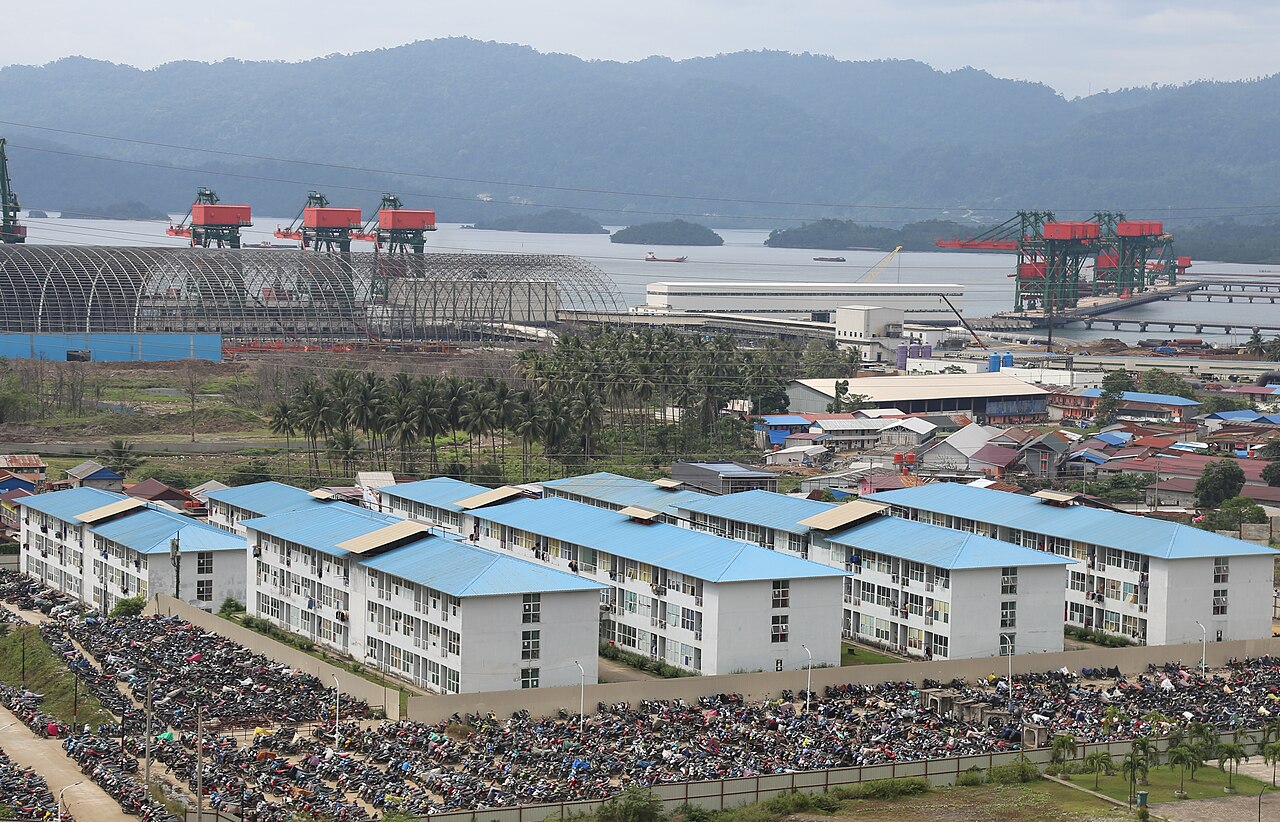
In 2020 Indonesia reinstated a ban on exporting raw nickel ore. The aim was to force processing to happen at home. A March 2026 policy paper from the London School of Economics’ Centre for Economic Transition Expertise (CETEx) found that the ban brought a wave of mostly foreign investment in smelters. That investment went largely into huge industrial parks such as the Indonesia Morowali Industrial Park (IMIP) in Central Sulawesi and Weda Bay (IWIP) in North Maluku. According to the paper, Indonesia has produced more than half of the world’s nickel since 2023, and its exports have moved from ore towards higher-value products, including the nickel sulphate used in batteries.
Output has grown so fast that the government is now holding it back. For 2026 the energy ministry cut the approved ore quota (RKAB) to about 260 million tonnes, from 379 million tonnes in 2025, to ease oversupply and support prices, CNBC Indonesia reported. Indonesia also imported about 15.8 million tonnes of ore in 2025, mostly from the Philippines, to keep its smelters supplied.
Indonesia Battery Corporation and the big projects
Indonesia Battery Corporation (IBC), or PT Industri Baterai Indonesia, is a state-owned holding company set up to be the government’s partner in battery projects. There are three projects to know about.
Hyundai–LG: the first cell plant
HLI Green Power in Karawang, West Java, was opened by President Joko Widodo in July 2024 as Indonesia’s first large EV battery-cell factory (CNBC Indonesia). It was the first 10 GWh of a planned 30 GWh “Indonesia Grand Package” agreed with LG Energy Solution. LG pulled out of the remaining stages in early 2025, and China’s Huayou took over. The Antam–IBC–Huayou consortium agreement was signed in January 2026, Antara reported.
CATL: an integrated project worth about US$6 billion
In June 2025 a CATL subsidiary broke ground with Antam and IBC on a project costing nearly US$6 billion. It covers nickel mining and processing, cathode materials and recycling in East Halmahera, and cell manufacturing in Karawang. CATL says the Halmahera facilities will eventually produce 142,000 tonnes of nickel and 30,000 tonnes of cathode material a year. The Karawang cell plant, run by the joint venture PT CATIB, has a first-phase capacity of 6.9 GWh. It began phased operations in August 2026, according to the energy ministry, and is expected to make both LFP and nickel-based batteries (Suara).
Vehicle makers moving in
Carmakers are building factories too. BYD opened its plant in Subang, West Java, on 3 September 2026, which is expected to employ around 5,000 local workers (Antara). Several other Chinese brands now assemble in Indonesia. That is partly because tax breaks for fully imported EVs ended in December 2025, and brands that imported cars under the scheme promised to build the same number locally between 2026 and 2027.
Policy levers
- Local content (TKDN). EVs must meet rising local-content minimums to qualify for incentives: 40% in 2026, 60% in 2027–2029 and 80% in 2030 (Antara).
- Incentives that favour nickel. The VAT incentive announced in 2026 gives a larger discount to cars with nickel-based batteries. The then finance minister said this was meant to get Indonesia’s own nickel used (CNBC Indonesia).
- A national motorbike programme. The Molinas initiative, launched in August 2026, aims to connect nickel refining, cell making and two-wheeler assembly in one domestic supply chain (Antara).
The road to 2030: targets
- Production of 600,000 electric cars and 2.45 million electric motorbikes a year by 2030, set by the industry ministry (Kompas).
- 62,918 four-wheel public chargers by 2030, compared with about 4,892 in May 2026 (Periskop).
- The ministry’s TKDN roadmap, reaching 80% in 2030.
Domestic demand is growing. BEV wholesales passed 101,000 in the first eight months of 2026 (Kompas).
The challenges
- The shift to LFP. Many of the best-selling EVs in Indonesia and worldwide use lithium iron phosphate (LFP) batteries, which contain no nickel. IBC’s own chief executive has said LFP now dominates the local market (Suara). That makes it harder to argue that nickel will automatically turn into battery value.
- Prices and oversupply. Data cited by the USGS shows the global nickel market in surplus every year since 2022. That squeezes margins and is the reason for the production quota cuts.
- Environmental and social costs. CETEx notes that nickel miners cleared more than 75,000 hectares of forest in 2007–2022, and that much of the processing runs on captive coal power plants. New mining in sensitive areas such as Raja Ampat has caused public concern.
- Concentration and policy risk. CETEx also points to the dominance of Chinese-Indonesian smelting groups. Repeated delays to consumer incentives in 2026 have made demand less predictable.
This guide describes policy and investment as reported at the time of writing. Targets, quotas and incentive rules are revised often, so check the latest announcements from the ministries concerned.
FAQ
What is nickel downstreaming?
It is the policy of processing nickel ore in Indonesia instead of exporting it raw. It is backed by an ore export ban that was reinstated in 2020.
What is Indonesia Battery Corporation?
It is a state-owned battery holding company that partners with foreign firms such as CATL, Huayou and LG on cell and materials projects.
Does Indonesia make EV batteries yet?
Yes. The Hyundai–LG plant in Karawang has operated since 2024, and the CATL–IBC plant began phased operations in August 2026.
What are the 2030 targets?
Annual production of 600,000 electric cars and 2.45 million electric motorbikes, with 80% local content and nearly 63,000 public car chargers.
Sources: USGS – Mineral Commodity Summaries 2026: Nickel; CETEx (LSE) – How Indonesia’s ban on raw nickel exports provides lessons; CNBC Indonesia – Produksi Bijih Nikel RI Dipangkas Jadi 260-an Juta Ton; Antara – Indonesia targets 2026 groundbreaking for Huayou EV battery project; CATL – CATL and Partners Break Ground on US$6 Billion Battery Integration Project in Indonesia; Suara – Pabrik Baterai PT CATIB di Karawang Sudah Beroperasi; CNBC Indonesia – Siap-Siap Pabrik Baterai EV Raksasa Ke-2 RI Segera Beroperasi; Antara – Pemerintah kaji insentif kendaraan listrik berbasis TKDN; CNBC Indonesia – Purbaya Tunda Insentif Mobil Listrik; Kompas – Kemenperin Targetkan Produksi Mobil Listrik 600.000 Unit pada 2030; Periskop – Konsumsi SPKLU Tembus 62,4 Juta kWh; CNN Indonesia – Daftar Insentif Mobil Listrik yang Disetop; Antara (English) – Molinas marks new chapter; Kompas – Daftar Mobil Listrik Terlaris hingga Agustus 2026