Tag: TKDN

  • Parts makers say EV local-content rules leave little room for suppliers

    Parts makers say EV local-content rules leave little room for suppliers

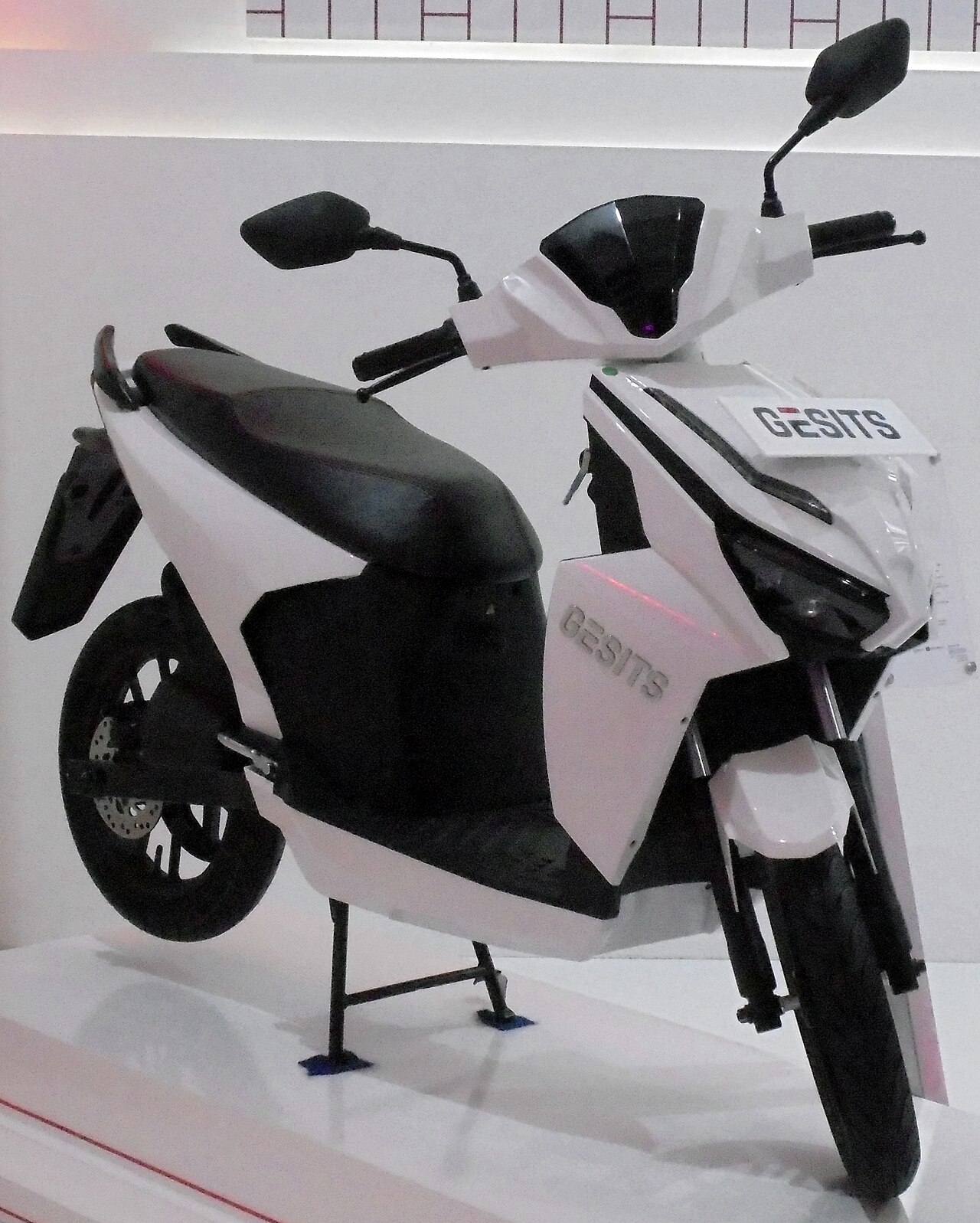
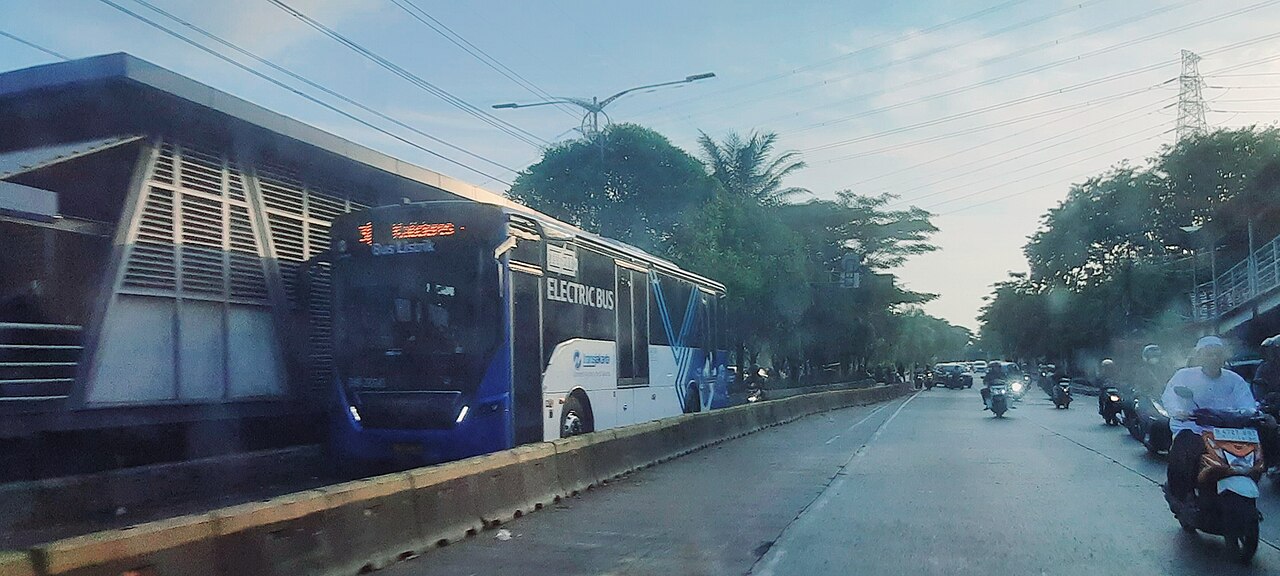
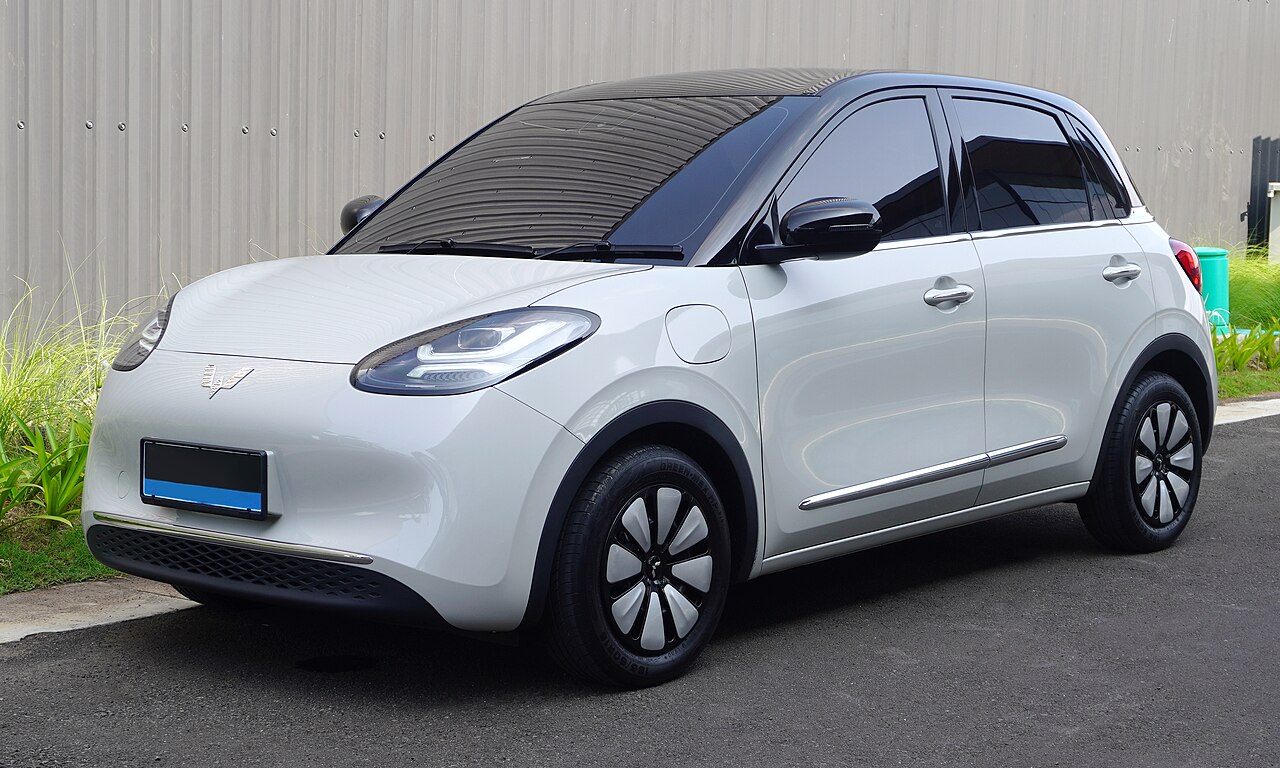
    Top image: Photo: Andra Febrian, CC BY-SA 4.0, via Wikimedia Commons

    Indonesia’s rule that locally built electric cars must reach 40% local content (TKDN) this year is doing less for domestic parts makers than the headline figure suggests, according to the country’s automotive component industry association.

    Rachmat Basuki, secretary general of GIAMM (Gabungan Industri Alat Mobil dan Motor), told CNBC Indonesia on Monday 28 September that only a narrow range of EV parts is currently sourced from Indonesian suppliers. He listed tyres, wheel rims, safety glass, wiring harnesses and some interior parts as the main examples.

    How the 40% is reached

    The explanation lies in how the TKDN score for electric cars is weighted. As Rachmat described it to CNBC Indonesia, the calculation gives:

    • 30% for carrying out vehicle assembly in Indonesia;
    • 40% for localising the battery, down to cell level;
    • 10% for localising other main or supporting components.

    That means a manufacturer that assembles its cars locally already has three-quarters of the 2026 target in hand. In Rachmat’s words, the remaining gap is closed by localising a handful of components, “although not yet on a large scale” (translated from Indonesian).

    For component makers, the practical effect is that a carmaker can clear the current bar without buying much from them. Rachmat said suppliers want a bigger role and noted that the government has twice organised business-matching sessions between parts makers and EV producers, on top of the contacts carmakers make on their own.

    The bar rises from 2027

    The pressure on the supply chain is set to grow. The Industry Ministry’s local-content path for EVs rises from 40% in 2026 to 60% for 2027–2029 and 80% from 2030, Antara reported earlier this month. Under the weighting described by GIAMM, those higher thresholds are hard to meet through assembly alone; they point towards local battery cells and a far deeper parts base. (This is our reading of the figures, not a statement by GIAMM.)

    The government is also looking at tying future incentives more directly to local content. Speaking at the opening of BYD’s Subang plant on 3 September, Industry Minister Agus Gumiwang Kartasasmita said his ministry had been asked to study incentive schemes linked to TKDN and would work with the Finance Ministry on the design, according to Antara. He said the higher a product’s TKDN score, the more attention it should get from government. Antara reported on 26 September that this work on TKDN-based EV incentives is continuing.

    We covered the BYD factory opening and its local-content plans at the time, and the parallel debate on the motorbike side, where ALVA told lawmakers local suppliers are the bottleneck as TKDN requirements climb.

    Why batteries matter most

    With battery localisation carrying the single largest weight in the formula, cell production is the lever that will decide whether carmakers can hit 60% and later 80%. That links the car market directly to Indonesia’s nickel and battery investment push, including the CATL–IBC plant in Karawang. Our guide to Indonesia’s EV and battery industry explains how those pieces fit together.

    What it means for buyers

    The 40% rule for 2026 is already in place, so nothing changes at the showroom as a result of these comments. The bigger question is 2027. If incentives are rewritten to reward higher TKDN scores, brands that have invested in local cells and parts could gain a price advantage, while those relying mainly on local assembly may have to absorb costs or raise prices. Buyers comparing models over the next year may find it worth asking dealers whether a car is locally assembled and what its TKDN rating is. Our electric car buying guide covers the current line-up and prices.

    Update, 30 September: The Ministry of Industry has confirmed that the requirement will rise to 60% local content from 2027 and 80% from 2030. Read our follow-up.

    Sources: CNBC Indonesia, 28 Sep 2026; Antara, 3 Sep 2026; Antara, 26 Sep 2026
  • ALVA tells lawmakers local suppliers are the hurdle as TKDN bar rises

    ALVA tells lawmakers local suppliers are the hurdle as TKDN bar rises

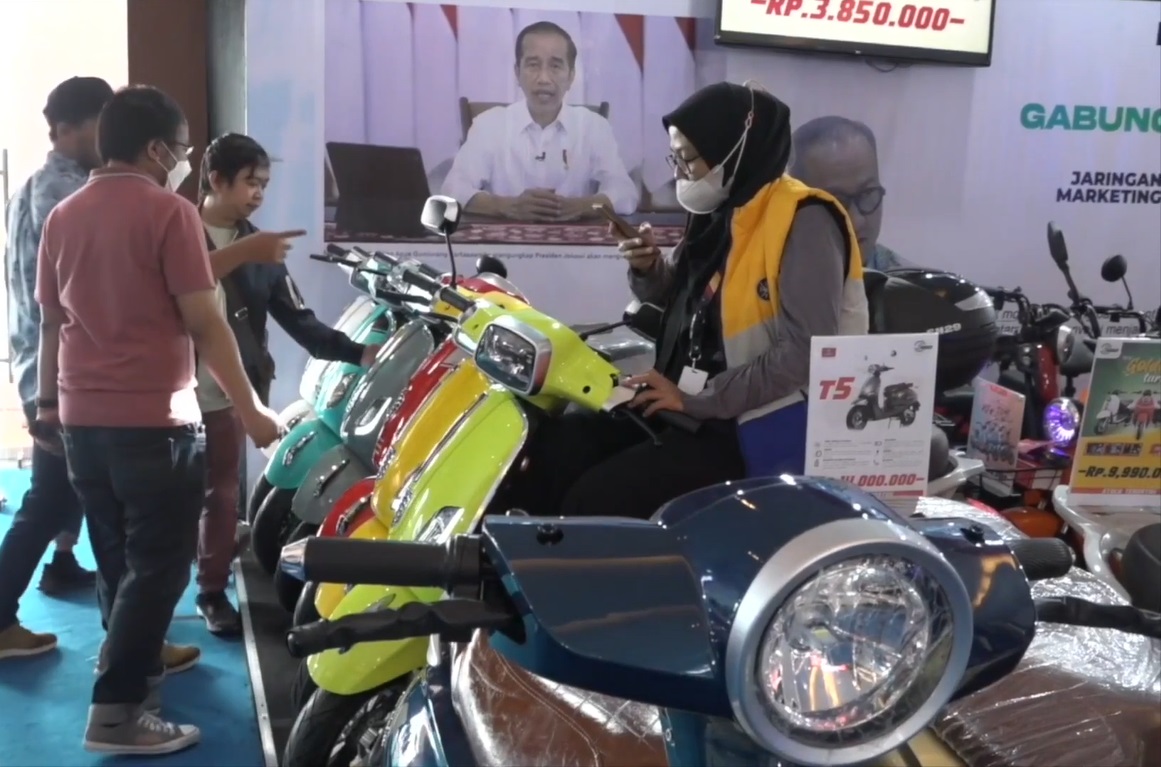
    Top image: Photo: AntaraTV, CC BY 3.0, via Wikimedia Commons

    Indonesian electric-motorbike maker ALVA has told members of parliament that building a local supply chain, not factory capacity, is the main obstacle to raising the share of domestic parts in its scooters. The message comes as the government’s local-content (TKDN) requirements for EVs are set to climb in stages towards 80%.

    Parliamentary visit to Bekasi

    A working committee (Panja) of the House of Representatives’ Commission VII, which is preparing a bill on industrial estates, visited the plant of PT Ilectra Motor Group, ALVA’s maker, in the Lippo industrial zone in Bekasi on 25 September, Suara reported. Chief executive Purbaja Pantja told the delegation that developing the EV industry is about building a supporting ecosystem as much as production capacity.

    The company presented these figures, according to the report:

    • annual production capacity of 100,000 units;
    • local content above 40% across all its products, with frames, body panels and braking systems sourced locally, plus battery boxes and brackets from two state-backed small and medium-sized suppliers;
    • more than 590 “Boost Charge” fast-charging connectors nationwide, up from about 150 previously; and
    • 19 sales points, 10 experience centres and over 130 after-sales service locations.

    Four problems with going more local

    ALVA listed the obstacles to pushing localisation further: a small market, local suppliers that are not yet ready, the cost of investing in tooling, and the need for policy certainty. The first and last are linked. Electric-motorbike sales have slumped this year as buyers wait for a promised purchase incentive, as we reported earlier this week, and lower volumes make it harder to justify investing in local parts.

    The TKDN staircase

    According to a Jawa Pos report published the same day, the roadmap for EV local content sets a minimum of 40% in 2026, rising to 60% in 2027–2028 and 80% by 2030. Components maker Dharma Polimetal (DRMA) said it is ready to supply more locally made parts if the thresholds rise. “TKDN is very important, because it will help local industry grow and absorb workers,” director Darmawan Widjaja said (translated from Indonesian). He added that localisation pays off once volumes are large enough.

    That last point echoes ALVA’s case to lawmakers: suppliers will commit to local production when they can see steady demand, and demand depends partly on incentives that themselves are usually tied to TKDN levels.

    What it means for buyers

    Local-content rules matter to buyers because government incentives for EVs are generally linked to them, so a brand that meets the threshold is better placed to offer a subsidised price when a scheme is running. More local parts should, over time, also mean easier access to spares and repairs. For now, ALVA’s figures suggest its range already clears the 40% bar. If you are comparing electric scooters, our electric motorbike buyer’s guide and the motorbike section of our EV directory list the main brands and prices.

    Related: Parts makers say EV local-content rules leave little room for suppliers

    Sources: Suara: ALVA outlines e-motorbike and TKDN challenges to DPR (25 Sep 2026); Jawa Pos: EV TKDN to rise in stages to 80%, DRMA ready (25 Sep 2026)

  • Electric Motorbikes in Indonesia: A Buyer’s Guide

    Electric Motorbikes in Indonesia: A Buyer’s Guide

    Top image: Photo: オーバードライブ83, CC BY-SA 4.0, via Wikimedia Commons

    Indonesia is one of the world’s biggest motorcycle markets, with annual sales of around 6 million to 7 million units. Electric models have still only managed roughly 60,000 to 70,000 sales a year, about 1% of the total, according to Antara. That leaves a lot of room to grow, and the government wants to fill it. This guide covers the brands and price bands in 2026, where purchase incentives stand, what local content (TKDN) means for you, how charging and battery swapping work, and the programme for converting petrol bikes to electric.

    The market in 2026: a pause while buyers wait

    E-motorbike sales have been hit by uncertainty over incentives. The electric motorcycle industry association Aismoli said sales were about 77,000 units in 2024, when a subsidy was in place, and around 70,000 in 2025 without one. From January to August 2026 they fell to about 18,900, as reported by detikFinance. Aismoli puts the drop down to shoppers holding off until a promised subsidy starts. By April 2026 there were about 242,909 electric motorbikes on Indonesian roads, according to industry ministry data cited by Otodream.

    Brands and price bands

    VIVA’s September 2026 OTR Jakarta price list shows how wide the market is:

    Budget: under Rp20 million

    • Polytron Fox-200: Rp12.1 million with battery rental, or Rp21.1 million with the battery included.
    • Selis (Neo Scootic Rp13.5 million, E-Max Rp15.5 million), Avand SC121 (Rp13.5 million) and Yadea GT20 (Rp15.5 million).
    • United T1800, MX-1200 and MT1500 at around Rp16–17 million.
    • Volta eX, 401, Eagle and Virgo at around Rp17.9–19.1 million.

    Mid-range: roughly Rp20 million to Rp60 million

    • ALVA: N3 from Rp16.5 million with battery rental. The N3 Next Gen and ONE XP cost around Rp31.5 million.
    • Honda: ICON e: Rp28 million, EM1 e: about Rp40 million, CUV e: Rp54.45 million.
    • MAKA Cavalry: around Rp39.5 million. Omoway: Rp46.9 million to Rp76.9 million.

    Premium

    Kawasaki’s Z e-1 and Ninja e-1 cost about Rp148–151 million. The Vespa Elettrica is listed at Rp198 million.

    Subsidy and incentive status

    In 2024 buyers of qualifying e-motorbikes got a Rp7 million discount, provided the bike had at least 40% local content, Kompas notes. There was no subsidy in 2025. In May 2026 the finance ministry announced Rp5 million per unit for 100,000 bikes. In August that was revised to Rp3 million per unit, with a budget of Rp3 trillion aimed at up to one million domestically made bikes. Officials expected only about 100,000 to be taken up by the end of 2026 because factory capacity is limited.

    At the time of writing the incentive still was not in force. After a change of finance minister, the industry minister said on 23 September that the technical rules were ready and only the finance ministry regulation (PMK) was needed (detikFinance). The deputy industry minister said the government still aimed to deliver it this year. If you are ready to buy, ask dealers whether they will honour the subsidy for bikes delivered before it officially starts. Most will not.

    Molinas, the national e-motorbike programme

    On 13 August 2026 President Prabowo launched the Motor Listrik Nasional (Molinas) programme at ALVA’s factory in Cikarang. He promised lower loan interest, work towards zero-down-payment financing and a trade-in scheme for petrol bikes, Kompas reported. Industry ministry figures quoted by Antara show 69 two- and three-wheel EV makers with a combined capacity of about 2.5 million units a year.

    What TKDN means for buyers

    TKDN, or Tingkat Komponen Dalam Negeri, measures how much of a vehicle is made in Indonesia. It matters because incentives usually go only to models above a threshold. The current minimum is 40%, rising to 60% in 2027–2029 and 80% in 2030, according to the industry minister (Antara). A high-TKDN bike is more likely to qualify for future subsidies. Local assembly can also make spare parts easier to find.

    Charging at home or swapping batteries?

    Home charging

    Most budget and mid-range scooters use a removable battery that you charge from a standard wall socket. The main drawback is time. Even with a fast charger, a full charge usually takes 2–3 hours. If you park at home or at work every day, this is the simplest and cheapest way to charge.

    Battery swapping (SPBKLU)

    At a swap station you exchange a flat battery for a charged one in about a minute. This suits ride-hailing drivers and couriers. Aismoli counted 1,907 SPBKLU nationwide by March 2026, with 1,480 of them on Java, and just 20 in Kalimantan and one in Nusa Tenggara (Otodream). PLN Mobile also listed 1,118 PLN-run swap cabinets and 603 two-wheeler SPKLU. The catch is that swap networks usually only work with particular brands, so check that your bike is compatible and that there are stations on your usual routes.

    Converting a petrol bike

    The energy ministry runs a programme to convert petrol motorbikes to electric at certified workshops. In late 2023 it raised the grant to Rp10 million per bike under Energy Minister Regulation 13/2023. Take-up was low, partly because a typical conversion cost about Rp15 million, leaving owners to pay the difference. The ministry is now redesigning the scheme for 2027 and has proposed a budget of Rp635.24 billion. Check the current terms with the ministry before you book a conversion.

    Prices, tariffs and incentive rules in Indonesia change often, sometimes month to month. Figures here were correct according to the sources linked at the time of writing; always confirm current prices, promotions and eligibility with an authorised dealer or the relevant provider before you commit.

    For the rules, typical costs and the outlook for the grant in more detail, see our guide to converting a petrol motorbike to electric.

    FAQ

    Is there an electric motorbike subsidy right now?

    Not yet. A Rp3 million per unit subsidy has been approved in principle, but in late September 2026 it was still waiting for its finance ministry regulation.

    What is the cheapest electric motorbike in Indonesia?

    Prices start at around Rp12 million on battery-rental plans. VIVA listed the Polytron Fox-200 at Rp12.1 million.

    Can I charge an electric scooter at home?

    Yes. Most models with removable batteries charge from a normal household socket, usually in a few hours.

    Is battery swapping available everywhere?

    No. Stations are concentrated in Java and are usually tied to particular brands.

    Sources: VIVA – Daftar Harga Motor Listrik September 2026; detikFinance – Insentif Motor Listrik Tunggu Keputusan Menteri Keuangan; Matamata – Pemerintah Targetkan Insentif Motor Listrik Cair Tahun Ini; CNBC Indonesia – Insentif Motor Listrik Turun Jadi Rp 3 Juta/Unit; Kompas – Menkeu Targetkan Insentif Mobil dan Motor Listrik Mulai Juni 2026; Kompas – Banyak Motor Listrik RI Sudah Capai TKDN 40 Persen; Antara – Pemerintah kaji insentif kendaraan listrik berbasis TKDN; Kompas – Prabowo Resmikan Motor Listrik Nasional; Antara (English) – Molinas marks new chapter in Indonesia’s EV industrialization; Otodream – Infrastruktur SPLU dan Penukaran Baterai Dinilai Belum Sebanding; Kementerian ESDM – Bantuan Konversi Sepeda Motor Listrik Jadi Rp10 Juta; KilasJatim – Program Konversi Motor Listrik 2027

  • BYD opens 150,000-unit Subang factory, eyes 60% local content by 2027

    BYD opens 150,000-unit Subang factory, eyes 60% local content by 2027

    Top image: Photo: Exynoss78739, CC BY 4.0, via Wikimedia Commons

    BYD has formally opened its first Indonesian car factory, a 126-hectare site in the Subang Smartpolitan industrial estate in West Java, marking the Chinese brand’s shift from importing cars to building them locally. The plant was inaugurated on Thursday 3 September 2026 and has an annual production capacity of 150,000 vehicles.

    Investment, jobs and first models

    CNN Indonesia reported the investment at Rp11.6 trillion. The facility covers the core stages of car manufacturing – stamping, welding, painting and final assembly – and currently employs around 5,000 local workers, a figure that could rise to more than 20,000 once the plant runs at full capacity. The first model off the line was the BYD M6 DM plug-in hybrid MPV, which CNN Indonesia said carries local content of more than 40%.

    According to Antara, the plant’s line-up also includes the Atto 1, the battery-electric M6 and models from BYD’s premium Denza brand (since renamed Danza in Indonesia). detikOto reported that the factory is already producing around 10,000 units a month.

    Local-content targets and batteries next

    The opening comes as Indonesia tightens its local-content rules for electric vehicles. As The Jakarta Post noted, the domestic component threshold (known as TKDN) stands at 40% this year, rises to 60% from January 2027 and is set to reach 80% by 2030. BYD Indonesia president director Eagle Zhao told Antara that the company would be ready for the higher bar:

    “In 2027, we will certainly be the first to stand in support of the TKDN requirement, which will become 60 per cent.” – Eagle Zhao, BYD Motor Indonesia, to Antara (translated from Indonesian)

    Mr Zhao said battery assembly would form the next phase of BYD’s Indonesian investment, arguing that a product cannot truly be called Indonesian-made without a comprehensive local production process. BYD has also sent hundreds of Indonesian technicians and engineers to its research and development centre in China, according to Antara. The Jakarta Post reported that Mr Zhao sees Subang as a potential regional export base as well as a supplier to the home market.

    Government message

    President Prabowo Subianto did not attend the ceremony. Industry Minister Agus Gumiwang Kartasasmita delivered a message on his behalf, telling the audience that the transition of the market towards green mobility and electric vehicles needed to move faster, detikOto reported. CNN Indonesia said the minister described the plant as a milestone in moving from simply dominating sales to strengthening domestic components within the EV ecosystem.

    BYD Co. vice-president Liu Xueliang called the opening important not only for the company but for the Indonesian government. detikOto noted that Indonesian EV sales reached 83,758 units in January–July 2026, up 88.6% year on year – a market in which BYD has become the leading brand.

    What it means for buyers

    Local assembly matters for Indonesian buyers in several ways. The tax exemptions that allowed brands to import fully built EVs ended in 2025, so producing locally is now the main route for manufacturers to keep prices competitive. A domestic plant should also mean shorter waiting times, easier access to parts and, eventually, locally assembled batteries. Buyers comparing BYD models should check which variants are built in Subang and what local-content level they carry, as this can affect eligibility for government incentives.

    Several other brands, including VinFast, are pursuing local production in Indonesia, and the BYD opening raises the stakes for competitors ahead of the 60% local-content deadline in January 2027.

    Related on IndoEVs

    Related: Parts makers say EV local-content rules leave little room for suppliers

    Sources: CNN Indonesia – Pabrik BYD senilai Rp11 triliun di Subang akhirnya diresmikan; Antara – Usai resmikan pabrik Subang, BYD siapkan perakitan baterai di RI; detikOto – Pesan Presiden Prabowo buat BYD yang baru resmikan pabrik di Subang; The Jakarta Post – EV push gains traction as factories expand