Tag: Subsidy

  • Converting a petrol motorbike to electric in Indonesia: costs and rules

    Converting a petrol motorbike to electric in Indonesia: costs and rules

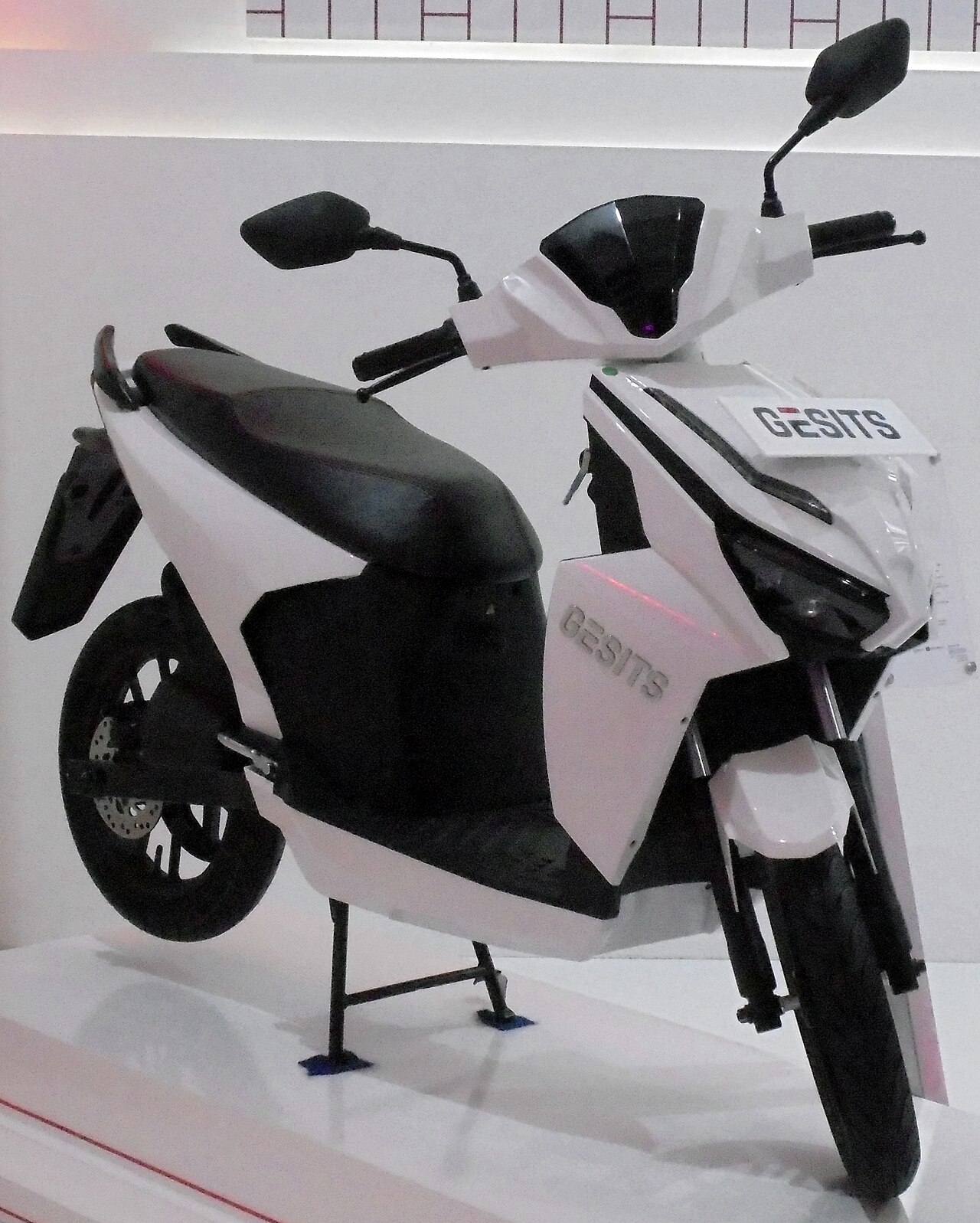
    Top image: Photo: Tri Mega Widyawan, CC BY-SA 4.0, via Wikimedia Commons

    Indonesia’s energy minister has talked about speeding up the conversion of as many as 120 million petrol motorbikes to electric power, CNN Indonesia reported. One route is to buy a new electric motorbike. The other is to keep the bike you already own and have a workshop swap its engine for an electric motor and battery pack. This guide explains how conversion works in Indonesia, what the rules require, what it typically costs, and where the government’s conversion grant stands in late 2026.

    What conversion involves

    In a conversion, a workshop removes the petrol engine and its related parts, such as the fuel tank and exhaust, and fits an electric motor (typically a brushless BLDC unit), a lithium battery pack, a controller and new wiring for the lights and instruments. Consumer guides say automatic scooters are the most common candidates, because the battery can sit in the space under the seat. A 2026 guide from Mobil123 describes typical kits with a motor of about 2–3 kW and a 60V or 72V battery, giving roughly 50–70 km per charge. Those are the publication’s estimates rather than official figures, and real range depends on battery size and riding style.

    The legal rules: certified workshops and a new type test

    Conversion is legal, but you cannot do it yourself and ride on public roads. The basis is Transport Ministry regulation PM 65 of 2020 on converting combustion-engine motorbikes into battery-electric ones. When the rule came in, a Transport Ministry official told detikOto that only workshops holding a ministry permit may carry out conversions, and that each converted bike must be tested again to receive a new type-test certificate (SUT).

    The regulation also sets out what a conversion workshop needs. As summarised by Tirto, this includes at least one installation technician and one maintenance technician, special tools for fitting the electric drive, and equipment to test insulation resistance and protection against electric shock. In practice, this means that a cheap kit fitted by a general mechanic will leave you with a bike that does not match its registration papers.

    After conversion and testing, the vehicle’s registration documents (STNK and BPKB) have to be updated at Samsat to reflect the new electric motor. Mobil123 also notes that the bike must have complete, valid papers and no unpaid vehicle tax before work starts.

    How much it costs

    Estimates vary, and none is an official price list:

    • The energy ministry (ESDM) has put the typical cost of a conversion at around Rp15 million, according to Bisnis.com. The think tank INDEF puts it at Rp12–16 million.
    • The original 2023 programme rules capped the workshop fee at Rp17 million, CNN Indonesia reported.
    • Mobil123’s 2026 breakdown is higher, at Rp17.5–22.5 million before any grant. It covers the motor and controller (Rp8–10 million), the battery (Rp7–9 million), labour (Rp1.5–2 million) and testing and paperwork (Rp1–1.5 million).

    Energy minister Bahlil Lahadalia has suggested that cheaper technology could bring the cost down to about Rp5–6 million per bike, CNN Indonesia reported in July. That is a target, not a price you can get today.

    The government grant: lapsed for now, relaunch proposed for 2027

    The ministry’s conversion programme began with pilots in 2022. Under ESDM regulation 13 of 2023, the grant rose from Rp7 million to Rp10 million per bike. Eligible bikes had petrol engines of 100–150cc, according to CNN Indonesia, while Mobil123 gives the range as 110–150cc. Take-up fell far short of the targets. The rules aimed for up to 50,000 conversions in 2023 and 150,000 in 2024. Bisnis.com reports that only hundreds were done in 2023 and about 1,500 in 2024. In February 2026, Eniya Listiani Dewi, director general of renewable energy at ESDM, put the running total at 2,250 bikes.

    Under the previous scheme, the Rp10 million grant was topped up with company CSR funds so that owners paid nothing. Eniya described the arrangement to Bisnis.com:

    “At the time I mobilised CSR funds to cover the Rp5 million, so it was free for the public.” (translated from Indonesian)

    The regulation behind the grant ran only until 2024, and in July officials said its replacement was still in draft, with the ministry still studying whether to keep the old design. On 31 August, Bahlil told parliament’s Commission XII that the ministry was proposing Rp635.24 billion to convert 63,000 motorbikes in the 2027 budget. By our calculation, that works out to just over Rp10 million per bike. The figure was a proposal and could change during budget talks.

    Some consumer articles published this year still describe a Rp10 million grant as available now. Before you commit, check the ministry’s official conversion portal or ask a certified workshop whether any quota is actually open.

    Why take-up has been low

    Analysts quoted by Bisnis.com point to several problems:

    • Many older bikes lack complete papers, so they cannot qualify for the grant.
    • Owners worry about resale value and the safety of converted bikes.
    • Even after a grant, the cost is high relative to what an older scooter is worth.
    • Certified workshops are few and mostly in Greater Jakarta. CNN Indonesia counted 25 registered on the programme’s website.

    INDEF’s Andry Satrio Nugroho has argued for a scrap-and-replace scheme instead, in which old bikes are retired in exchange for new locally made electric ones. He has also suggested that ride-hailing and delivery fleets should come first.

    Convert or buy new? What it means for buyers

    For most private riders, conversion only makes sense when a grant is available. Without one, a conversion costing Rp15 million or more has to be weighed against the price of a new electric scooter, which comes with a factory warranty and dealer support. Our electric motorbike buyer’s guide covers the models and price bands. The purchase incentive for new e-motorbikes is also on hold, though, and buyers have been waiting for a decision for months.

    If you do go ahead:

    • Use only a workshop with Transport Ministry certification for conversions.
    • Make sure the price includes the type test and the update to your STNK and BPKB.
    • Ask what the battery chemistry and battery management system are, and what the warranty covers. Mobil123 suggests looking for at least three years on the battery.
    • Plan your charging. A converted bike charges like any e-motorbike, and our charging guide explains home charging and battery swapping.

    If the 2027 budget line survives, a new round of grants could make conversion cheap or free again for eligible owners. Until the rules are published, it is safest to treat any offer of a subsidised conversion with caution.

    FAQ

    Can I convert my own motorbike at home?

    No, not if you want to ride it legally on the road. Under PM 65/2020, a permitted workshop must do the conversion, and the bike must pass a new type test.

    Is there a conversion subsidy right now?

    The grant regulation ran only until 2024. As of July, officials said the replacement rules were still in draft, and the energy ministry has proposed funding for 63,000 conversions in 2027. Check the ministry’s official portal for current quotas.

    Which bikes can be converted?

    Under the past grant scheme, petrol bikes in roughly the 100–150cc range qualified, and sources differ on the exact lower limit. Automatic scooters are the most common choice. The bike also needs valid registration papers.

    Update, 25 October 2026: Bali’s governor has asked South Korea for partners to convert petrol vehicles to electric at no cost to owners; no scheme exists yet. Read our report.

    Sources: Bisnis.com; CNN Indonesia (Feb 2026); CNN Indonesia (Jul 2026); Periskop; Mobil123; detikOto; Tirto.
  • New industry minister inherits stalled e-motorbike incentive as sales sink

    New industry minister inherits stalled e-motorbike incentive as sales sink

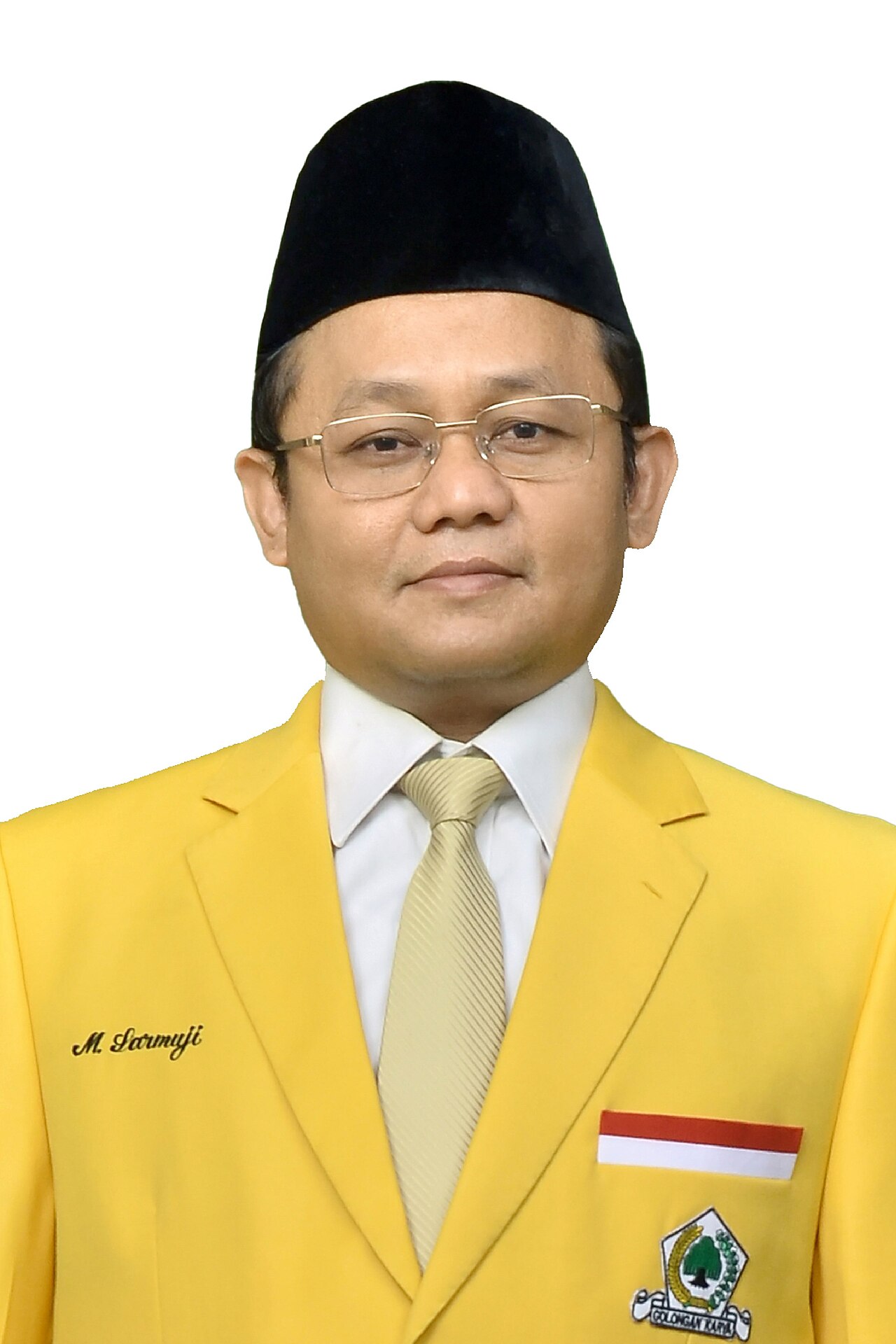
    Top image: Muhammad Sarmuji. Photo: KPU (General Election Commission), Public domain, via Wikimedia Commons

    Indonesia has a new Industry Minister, and one of the first files on his desk is an electric motorbike incentive that has been close to ready for months. Muhammad Sarmuji, until now secretary-general of the Golkar party, was sworn in by President Prabowo Subianto at the State Palace on 1 October, replacing Agus Gumiwang Kartasasmita, Antara reported. It was Prabowo’s seventh cabinet reshuffle since he took office in October 2024.

    The change comes at an awkward moment for the EV industry. As we reported on 27 September, Agus had said the Industry Ministry’s technical work on the e-motorbike purchase incentive was finished and that the decision rested with the Ministry of Finance. A week later, the money has still not been released.

    A promise of continuity

    At his handover ceremony in Jakarta on 2 October, Sarmuji signalled that he would build on his predecessor’s programmes rather than tear them up.

    “We must carry forward what has been achieved and further strengthen the foundations that have been laid.” – Muhammad Sarmuji, Industry Minister, quoted by Antara

    He did not mention electric vehicles in those remarks. But the ministry he now runs sets the local-content (TKDN) thresholds that decide which EVs qualify for tax breaks, and it designed the motorbike incentive. Kumparan listed sustaining EV incentives, strengthening local component supply chains, emission standards and reviving weak car and motorbike demand among his immediate challenges. A member of the House commission that oversees industry, Gandung Pardiman, told Republika the new minister should look beyond finished vehicles and also strengthen the component industry, echoing complaints from parts makers last month.

    Incentive still waiting for a Finance Ministry rule

    The incentive itself has shrunk while it waited. The original plan was Rp5 million per motorbike; the figure now under discussion is Rp3 million, with a proposed budget of Rp3 trillion covering up to one million locally made units, according to detikFinance.

    Industry Ministry spokesperson Febri Hendri Antoni Arief told OtoDream on 3 October that the scheme was still waiting for a Finance Minister regulation (PMK), and that the Finance Ministry would set the amount based on the state’s fiscal capacity. The ministry is not announcing details until the rule is signed, he said, to avoid raising false expectations.

    On 4 October, Coordinating Minister for Economic Affairs Airlangga Hartarto said the incentive would still take effect this year, telling detikOto that the matter sat with the Industry and Finance ministries and that his office would monitor it. He added that this year’s budget allocation (DIPA) is held by the Energy and Mineral Resources Ministry, a further sign of how many hands the scheme passes through. He gave no start date.

    Dealers say the market is frozen

    Moeldoko, chairman of the electric vehicle industry association Periklindo, said the repeated delays were hurting sellers because buyers keep postponing purchases until they know whether a discount is coming.

    “All our dealers and manufacturers are stuck now.” – Moeldoko, Periklindo, to detikOto (translated from Indonesian)

    The sales figures support him. According to detikFinance, electric motorcycle sales from January to August 2026 totalled about 18,900 units, compared with around 77,000 for the whole of 2024 and roughly 70,000 in 2025. By our own calculation, that is an average of about 2,400 a month this year against about 5,800 a month last year. Budi Setiyadi, chair of the electric motorcycle association Aismoli, described the fall as very steep and said many people were waiting to see when the subsidy would arrive. We first reported on the slump in September.

    What it means for buyers

    • No incentive is available today. Until a Finance Ministry regulation is published, dealers cannot apply a government discount, whatever the headlines say.
    • Rp3 million, not Rp5 million, is the likely figure if the scheme goes ahead, and it is expected to cover locally produced models only.
    • Waiting has a cost too. With less than three months of 2026 left and no start date, buyers who need a bike now may find that dealer promotions are worth as much as the uncertain subsidy. Our electric motorbike buyer’s guide and 2026 EV tax and incentive guide explain current prices and rules, and our EV directory lists the brands on sale.

    Whether Sarmuji can push the regulation through faster than his predecessor will be the first test of his promise of continuity. IndoEVs will report when the rule is signed.

    Update, 9 October 2026: Coordinating Economic Minister Airlangga Hartarto has since said the incentive will take effect this year. See Motorbike sales jump 15% in September as e-motorbikes wait on incentive.

    Sources: Antara (1 Oct); Antara (2 Oct); Kumparan; Republika; OtoDream; detikOto; detikFinance

  • E-motorbike subsidy rules are ready, minister says, but Finance must sign off

    E-motorbike subsidy rules are ready, minister says, but Finance must sign off

    Top image: Photo: Daddynnoob, CC0 (public domain dedication), via Wikimedia Commons

    Indonesia’s long-promised purchase incentive for electric motorcycles is ready to go as far as the Ministry of Industry is concerned, according to Industry Minister Agus Gumiwang Kartasasmita. The final call, he says, now belongs to the Ministry of Finance, which changed hands earlier this month.

    The update is the latest turn in a saga we covered on 24 September, when industry groups warned that e-motorcycle sales had slumped as buyers waited for the discount to appear.

    “The technical side is ready”

    Speaking at the Fairmont hotel in Jakarta, Agus said his ministry had done its part, CNN Indonesia reported on 25 September:

    “We, the technical ministry, are ready. If the Finance Minister decides to grant the incentive…” – Agus Gumiwang Kartasasmita, Industry Minister, to CNN Indonesia (translated from Indonesian)

    He made a similar point earlier in the week, telling reporters that the technical guidelines (petunjuk teknis) had been prepared, IDN Times reported on 23 September. What is still missing is a Finance Minister regulation (PMK) to give the scheme its legal footing, Medcom.id noted, adding that Deputy Industry Minister Faisol Riza had described that regulation as almost finished.

    A new minister in charge

    The person who publicly promised the subsidy is no longer in the job. President Prabowo Subianto replaced Finance Minister Purbaya Yudhi Sadewa with Suahasil Nazara on 14 September, according to Medcom.id, which listed the e-motorbike incentive among the unfinished business Purbaya left behind. Purbaya had said the subsidy should already have been running in September.

    The scheme on the table is unchanged: a Rp 3 million discount per domestically produced electric motorcycle, from a total budget of Rp 3 trillion aimed at up to one million units. That is well below earlier plans of Rp 5 million per unit, and less than half the Rp 7 million incentive offered in 2023, IDN Times pointed out.

    Sales still under pressure

    The uncertainty continues to weigh on the market. Budi Setiyadi, chairman of the electric motorcycle industry association Aismoli, told CNN Indonesia that sales reached only about 18,900 units in January–August 2026, compared with roughly 77,000 in 2024 and 70,000 in 2025.

    Even if the scheme starts soon, it is unlikely to use its full budget this year. CNN Indonesia reported that realistic take-up in 2026 is around 100,000 units, limited by domestic production capacity. By our own calculation, 100,000 units at Rp 3 million each would draw about Rp 300 billion, or roughly a tenth of the Rp 3 trillion allocation.

    Some analysts also question whether the amount is enough. Deon Arinaldo, a director at the Institute for Essential Services Reform (IESR), warned that “incentives that are too small risk not being enough to close the price gap” with petrol motorbikes (translated from Indonesian), IDN Times reported.

    What it means for buyers

    • No start date yet. Until the Finance Ministry issues its regulation, there is no official discount at dealers, whatever sales staff may suggest.
    • Only local models qualify. The scheme targets domestically produced e-motorbikes, so check that a model meets the local-content rules before counting on the discount. Our report on Alva and rising TKDN requirements explains why this matters.
    • Weigh waiting against dealer offers. With sales weak, some brands are already discounting. Rp 3 million is a useful saving on a budget scooter, but a current dealer promotion may be worth as much.

    For model and price comparisons, see our electric motorbike buyer’s guide and the motorbike brands in the IndoEVs EV directory, such as Volta and Alva.

    Related: EV taxes and incentives in Indonesia in 2026: what buyers now pay

    Update, 5 October 2026: Agus Gumiwang has since been replaced as Industry Minister by Muhammad Sarmuji, and the incentive is still waiting for a Finance Ministry regulation. Read our follow-up.

    Sources: CNN Indonesia (25 Sept 2026); IDN Times (23 Sept 2026); Medcom.id (14 Sept 2026).

  • Electric Motorbikes in Indonesia: A Buyer’s Guide

    Electric Motorbikes in Indonesia: A Buyer’s Guide

    Top image: Photo: オーバードライブ83, CC BY-SA 4.0, via Wikimedia Commons

    Indonesia is one of the world’s biggest motorcycle markets, with annual sales of around 6 million to 7 million units. Electric models have still only managed roughly 60,000 to 70,000 sales a year, about 1% of the total, according to Antara. That leaves a lot of room to grow, and the government wants to fill it. This guide covers the brands and price bands in 2026, where purchase incentives stand, what local content (TKDN) means for you, how charging and battery swapping work, and the programme for converting petrol bikes to electric.

    The market in 2026: a pause while buyers wait

    E-motorbike sales have been hit by uncertainty over incentives. The electric motorcycle industry association Aismoli said sales were about 77,000 units in 2024, when a subsidy was in place, and around 70,000 in 2025 without one. From January to August 2026 they fell to about 18,900, as reported by detikFinance. Aismoli puts the drop down to shoppers holding off until a promised subsidy starts. By April 2026 there were about 242,909 electric motorbikes on Indonesian roads, according to industry ministry data cited by Otodream.

    Brands and price bands

    VIVA’s September 2026 OTR Jakarta price list shows how wide the market is:

    Budget: under Rp20 million

    • Polytron Fox-200: Rp12.1 million with battery rental, or Rp21.1 million with the battery included.
    • Selis (Neo Scootic Rp13.5 million, E-Max Rp15.5 million), Avand SC121 (Rp13.5 million) and Yadea GT20 (Rp15.5 million).
    • United T1800, MX-1200 and MT1500 at around Rp16–17 million.
    • Volta eX, 401, Eagle and Virgo at around Rp17.9–19.1 million.

    Mid-range: roughly Rp20 million to Rp60 million

    • ALVA: N3 from Rp16.5 million with battery rental. The N3 Next Gen and ONE XP cost around Rp31.5 million.
    • Honda: ICON e: Rp28 million, EM1 e: about Rp40 million, CUV e: Rp54.45 million.
    • MAKA Cavalry: around Rp39.5 million. Omoway: Rp46.9 million to Rp76.9 million.

    Premium

    Kawasaki’s Z e-1 and Ninja e-1 cost about Rp148–151 million. The Vespa Elettrica is listed at Rp198 million.

    Subsidy and incentive status

    In 2024 buyers of qualifying e-motorbikes got a Rp7 million discount, provided the bike had at least 40% local content, Kompas notes. There was no subsidy in 2025. In May 2026 the finance ministry announced Rp5 million per unit for 100,000 bikes. In August that was revised to Rp3 million per unit, with a budget of Rp3 trillion aimed at up to one million domestically made bikes. Officials expected only about 100,000 to be taken up by the end of 2026 because factory capacity is limited.

    At the time of writing the incentive still was not in force. After a change of finance minister, the industry minister said on 23 September that the technical rules were ready and only the finance ministry regulation (PMK) was needed (detikFinance). The deputy industry minister said the government still aimed to deliver it this year. If you are ready to buy, ask dealers whether they will honour the subsidy for bikes delivered before it officially starts. Most will not.

    Molinas, the national e-motorbike programme

    On 13 August 2026 President Prabowo launched the Motor Listrik Nasional (Molinas) programme at ALVA’s factory in Cikarang. He promised lower loan interest, work towards zero-down-payment financing and a trade-in scheme for petrol bikes, Kompas reported. Industry ministry figures quoted by Antara show 69 two- and three-wheel EV makers with a combined capacity of about 2.5 million units a year.

    What TKDN means for buyers

    TKDN, or Tingkat Komponen Dalam Negeri, measures how much of a vehicle is made in Indonesia. It matters because incentives usually go only to models above a threshold. The current minimum is 40%, rising to 60% in 2027–2029 and 80% in 2030, according to the industry minister (Antara). A high-TKDN bike is more likely to qualify for future subsidies. Local assembly can also make spare parts easier to find.

    Charging at home or swapping batteries?

    Home charging

    Most budget and mid-range scooters use a removable battery that you charge from a standard wall socket. The main drawback is time. Even with a fast charger, a full charge usually takes 2–3 hours. If you park at home or at work every day, this is the simplest and cheapest way to charge.

    Battery swapping (SPBKLU)

    At a swap station you exchange a flat battery for a charged one in about a minute. This suits ride-hailing drivers and couriers. Aismoli counted 1,907 SPBKLU nationwide by March 2026, with 1,480 of them on Java, and just 20 in Kalimantan and one in Nusa Tenggara (Otodream). PLN Mobile also listed 1,118 PLN-run swap cabinets and 603 two-wheeler SPKLU. The catch is that swap networks usually only work with particular brands, so check that your bike is compatible and that there are stations on your usual routes.

    Converting a petrol bike

    The energy ministry runs a programme to convert petrol motorbikes to electric at certified workshops. In late 2023 it raised the grant to Rp10 million per bike under Energy Minister Regulation 13/2023. Take-up was low, partly because a typical conversion cost about Rp15 million, leaving owners to pay the difference. The ministry is now redesigning the scheme for 2027 and has proposed a budget of Rp635.24 billion. Check the current terms with the ministry before you book a conversion.

    Prices, tariffs and incentive rules in Indonesia change often, sometimes month to month. Figures here were correct according to the sources linked at the time of writing; always confirm current prices, promotions and eligibility with an authorised dealer or the relevant provider before you commit.

    For the rules, typical costs and the outlook for the grant in more detail, see our guide to converting a petrol motorbike to electric.

    FAQ

    Is there an electric motorbike subsidy right now?

    Not yet. A Rp3 million per unit subsidy has been approved in principle, but in late September 2026 it was still waiting for its finance ministry regulation.

    What is the cheapest electric motorbike in Indonesia?

    Prices start at around Rp12 million on battery-rental plans. VIVA listed the Polytron Fox-200 at Rp12.1 million.

    Can I charge an electric scooter at home?

    Yes. Most models with removable batteries charge from a normal household socket, usually in a few hours.

    Is battery swapping available everywhere?

    No. Stations are concentrated in Java and are usually tied to particular brands.

    Sources: VIVA – Daftar Harga Motor Listrik September 2026; detikFinance – Insentif Motor Listrik Tunggu Keputusan Menteri Keuangan; Matamata – Pemerintah Targetkan Insentif Motor Listrik Cair Tahun Ini; CNBC Indonesia – Insentif Motor Listrik Turun Jadi Rp 3 Juta/Unit; Kompas – Menkeu Targetkan Insentif Mobil dan Motor Listrik Mulai Juni 2026; Kompas – Banyak Motor Listrik RI Sudah Capai TKDN 40 Persen; Antara – Pemerintah kaji insentif kendaraan listrik berbasis TKDN; Kompas – Prabowo Resmikan Motor Listrik Nasional; Antara (English) – Molinas marks new chapter in Indonesia’s EV industrialization; Otodream – Infrastruktur SPLU dan Penukaran Baterai Dinilai Belum Sebanding; Kementerian ESDM – Bantuan Konversi Sepeda Motor Listrik Jadi Rp10 Juta; KilasJatim – Program Konversi Motor Listrik 2027