
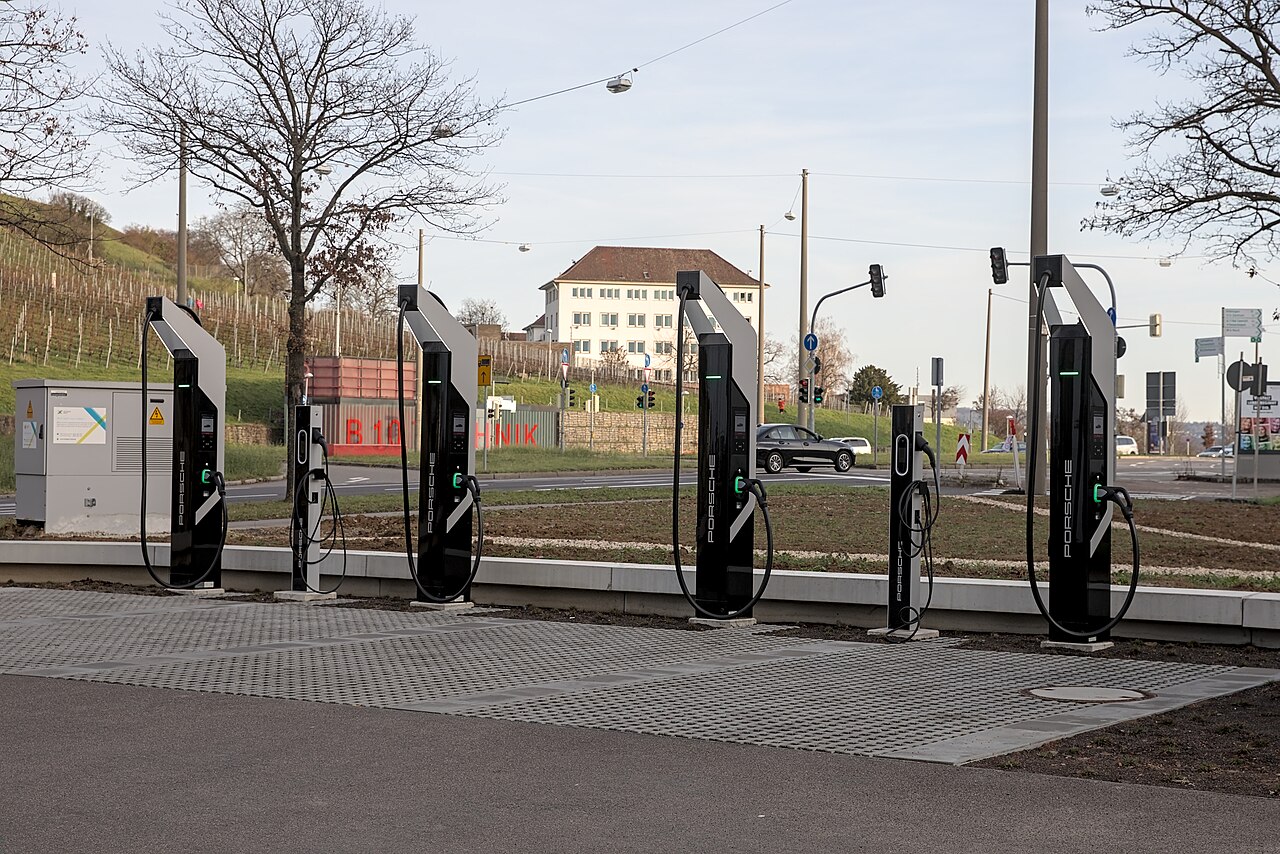
Top image: Photo: Alexander Migl, CC BY-SA 4.0, via Wikimedia Commons
Electricity drawn from Indonesia’s public electric vehicle charging stations in the first half of 2026 exceeded the total for the whole of 2025, according to state utility PLN, which says it is expanding its network and opening it further to private partners in response.
Usage outpaces last year
PLN recorded 62.4 million kWh of electricity consumption at public charging stations – known locally as SPKLU (Stasiun Pengisian Kendaraan Listrik Umum) – between January and June 2026, VIVA reported. That compares with 48.5 million kWh for the whole of 2025, meaning six months of charging this year was already about 28% higher than all of last year.
The network itself has grown more slowly. PLN operated 5,016 SPKLU units at 3,132 locations as of June 2026, according to VIVA and Periskop. Periskop reported that 361 units were added in the first half, from 4,655 at the end of 2025 – a figure PLN also gave in a February press release. Periskop added that average spacing between charging facilities is around 22 km, and that usage during the Ramadan and Idul Fitri travel season was 4.14 times higher than in the same period of 2025.
PLN’s response
M. Fahrur Rozy, PLN’s director of retail and commerce, told VIVA that growth in SPKLU consumption had been consistent over the past three years.
“Public demand for reliable and affordable SPKLU is already our priority in supporting the acceleration of EVs in Indonesia.” – M. Fahrur Rozy, PLN, to VIVA (translated from Indonesian)
A central part of the utility’s plan is its SPKLU partnership scheme, under which private businesses can take part as landowners, suppliers of charging equipment or operators of charging sites. PLN says it supports partners with simplified procurement, certainty over grid connection, discounted connection fees and a revenue-sharing arrangement. The company is also adding features to its PLN Mobile app, including AntreEV, a digital queuing tool for busy chargers, and a Trip Planner that locates stations along a route.
A long way to the 2030 target
The government’s ambitions are considerably larger than today’s network. Ferry Triansyah, electricity services coordinator at the Ministry of Energy and Mineral Resources’ Directorate General of Electricity, told Periskop that there were about 4,892 four-wheel SPKLU units in May 2026, against a target of 62,918 by 2030. Reaching that would require the network to grow more than twelvefold in under five years.
Demand for charging is being driven by rapid growth in EV sales. Periskop cited figures showing that around 117,000 electrified vehicles were sold in the first half of 2026, up 69.4% year on year, including about 69,000 battery electric vehicles. Electrified models accounted for 26.8% of passenger car sales in that period.
What it means for EV owners
For drivers, the figures confirm what many have experienced at busy chargers, particularly on holiday routes: usage is rising faster than the number of plugs. Most EV owners in Indonesia still do the bulk of their charging at home, and home charging is generally the cheapest option. For longer trips, the PLN Mobile app’s queuing and route-planning tools should help reduce waiting times, and the partnership scheme could bring more chargers to shopping centres, hotels and petrol stations. Owners outside Java and Bali, where coverage is thinner, should plan long journeys with care.
Sources: VIVA – PLN Perkuat Infrastruktur EV Respons Melonjaknya Konsumsi Listrik SPKLU; Periskop – Konsumsi SPKLU Tembus 62,4 Juta kWh, PLN Perluas Jaringan; PLN – PLN Operasikan 4.655 SPKLU Sepanjang 2025